Resource Libraries
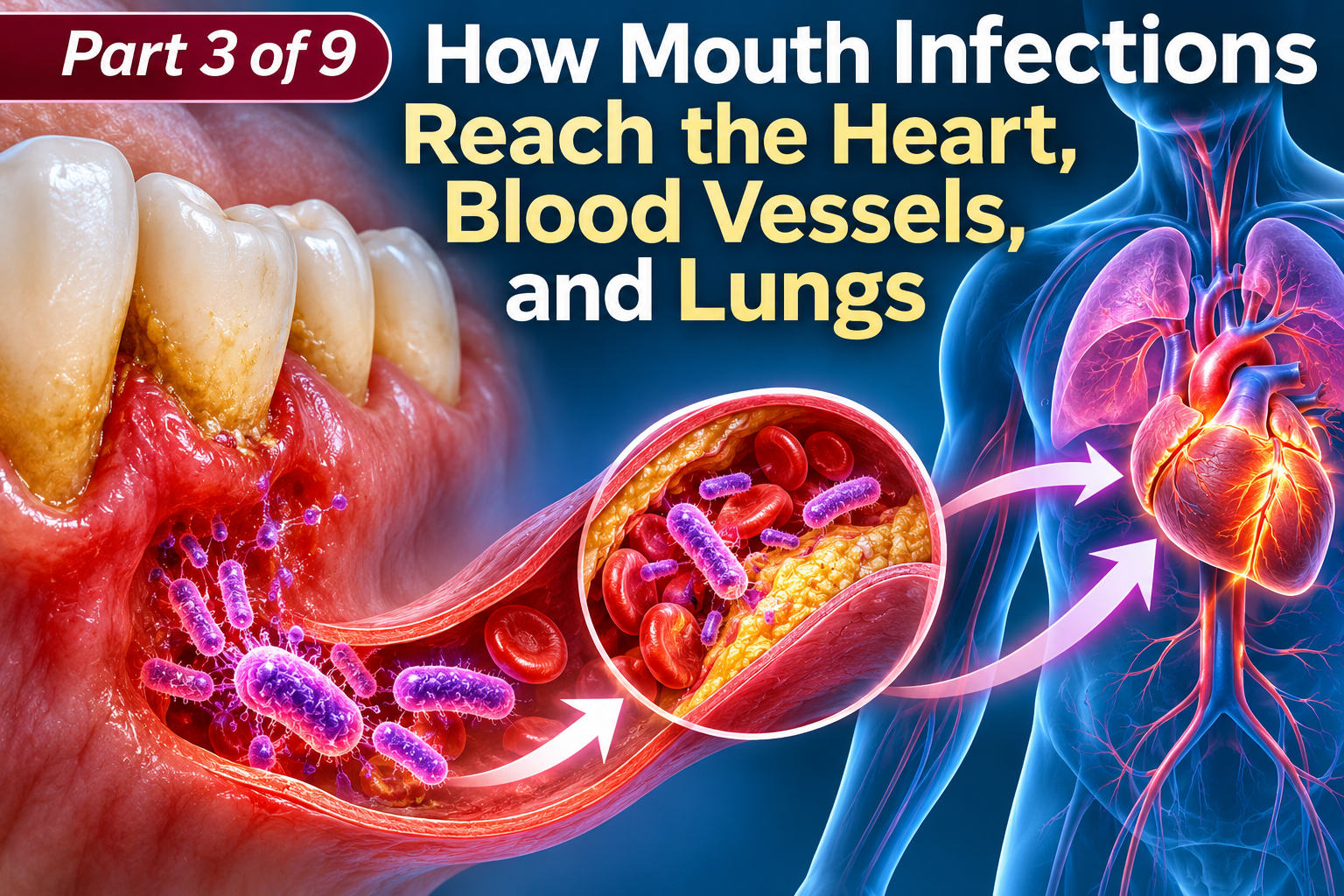
How Mouth Infections Reach the Heart, Blood Vessels, and Lungs
Can gum disease affect your heart, blood pressure, and risk of stroke? Discover what researchers have found about oral infections and cardiovascular health.
Part 3 of the Periodontal Disease Series
This is Part 3 of my 10 -part series exploring periodontal disease and the science behind its effects on our health. If you'd rather explore everything in one place, I've also written a much larger master article HERE that brings all of this research together. Each article in this series explores a different aspect of periodontal disease, and each one can stand on its own. You don't have to read the previous articles to understand this one, although you're certainly welcome to!
One quick note about the research references: I'm keeping the same reference numbers used in my periodontal disease master article so you can easily find the original studies in either place. That's why the numbers may skip around. Additional studies introduced in this series are labeled [A1], [A2], and so on, with their complete references included at the end.
What on earth do your gums have to do with your HEART?
Imagine going to your cardiologist because your blood pressure has been running high. Your physician reviews your medications, discusses your diet, asks about exercise, and considers your family history. All perfectly reasonable things to investigate. But when was the last time your cardiologist asked whether you have periodontal disease? And when was the last time your dentist asked what was happening with your cardiovascular health?
I've been practicing dentistry for more than thirty years, and one of my greatest frustrations has been the artificial separation between medicine and dentistry. We have an entire organ system sitting right there in our mouths, complete with blood vessels, lymphatic vessels, nerves, immune cells, connective tissue, and bone. Yet we've spent decades treating dental disease as though it belongs in a completely separate category from everything else happening in someone's body.
Our heads aren't disconnected from the rest of us!
And the research connecting periodontal disease with cardiovascular health is a particularly good example of why that separation needs to change. We're talking about studies involving millions of people, researchers examining actual blood clots removed during heart attacks and strokes, and clinical trials showing measurable improvements in blood pressure and blood vessel function after periodontal treatment. That's an awful lot of science involving something most people still think of as a problem with bleeding gums!
How can bacteria from the mouth enter the bloodstream?
Our gums contain thousands of tiny blood vessels that carry oxygen and nutrients to the tissues and allow immune cells to reach areas where they're needed. In healthy periodontal tissues, protective barriers help keep the microorganisms living in our mouths separated from the tissues underneath. But when periodontal disease develops, those tissues can become chronically inflamed and damaged.
The lining of a deep periodontal pocket may become ulcerated, allowing bacteria and substances they produce to enter the surrounding tissues. And sometimes those organisms enter the bloodstream. Researchers call this bacteremia. Now, bacteremia isn't something that happens only when someone undergoes dental surgery. Bacteria can enter our bloodstream during ordinary activities such as brushing, flossing, and chewing, particularly when the gums are already inflamed. And researchers have actually measured how frequently this occurs.
What happens during ordinary brushing and dental treatment?
In a systematic review published in 2024, researchers examined 89 controlled studies investigating bacteria entering the bloodstream following dental procedures and ordinary daily activities. They found that bacteremia could occur after several different activities. [A8].
- After toothbrushing, bacteria were detected in approximately 8–26% of participants, depending on the studies and circumstances.
- After activities such as flossing and chewing, the figure was approximately 16%.
- After periodontal procedures such as scaling and root planing, researchers reported bacteremia in approximately 36–44%.
- And after tooth extractions, the estimates were approximately 62–66%.
Now, those numbers represent findings across different studies. They aren't the probability that any particular person will experience bacteremia every time they brush their teeth. But they show that oral bacteria really CAN enter the bloodstream. The researchers also found that bacteremia generally reached its highest measured frequency within the first five minutes after the activity or procedure and then declined.
Our immune systems are ordinarily quite good at clearing bacteria that enter the bloodstream. But a person with chronically inflamed periodontal tissues may experience repeated opportunities for bacteria and their products to enter the circulation. And bacteria aren't the only things leaving the mouth.
Bacteria don't have to travel everywhere to create problems
The bacteria living inside periodontal pockets produce substances that interact with our immune systems. Those substances can affect nearby tissues, but some can also enter the circulation. Meanwhile, our immune cells produce chemical messages called cytokines. Cytokines help immune cells communicate with one another and coordinate inflammation. When an infection remains active for months or years, that inflammatory activity can influence processes elsewhere in the body. [26] [29]
Scientists are also studying tiny packages released by cells and microorganisms called extracellular vesicles. These packages can carry proteins and other biological materials that influence how neighboring or distant cells behave. So bacteria don't necessarily have to travel all the way to someone's heart, brain, or kidneys to affect what's happening there. The inflammatory response itself can become part of the conversation. And one of the places where that conversation matters is inside our blood vessels.
The inside of a blood vessel is living tissue
Most of us think of blood vessels as tubes that carry blood around our bodies. But the inner surface of those vessels is covered by a layer of living cells called the endothelium. And those cells do a LOT more than line the plumbing! They help control how much our blood vessels relax or tighten, how blood interacts with the vessel walls, and how inflammation and clotting are regulated.
When the endothelium isn't functioning properly, the blood vessels may have difficulty responding to the body's changing needs. And researchers have found that certain bacteria associated with oral infections can interact with these cells. Laboratory experiments have demonstrated that some oral bacteria can attach to endothelial cells and even enter them. Researchers have also investigated how periodontal infection and inflammation may influence the development of atherosclerosis, which involves the buildup of deposits inside arteries. Those deposits can narrow the arteries and interfere with normal blood flow. And when a plaque inside an artery ruptures, a blood clot may form around it. Which brings us to something particularly interesting.
What researchers discovered about platelets
Platelets are tiny components of our blood that help stop bleeding. If you cut your finger, platelets gather around the injury and help form a clot. That's an important protective function. But we certainly don't want a large blood clot forming inside an artery supplying blood to our heart or brain! Researchers have demonstrated in laboratory experiments that certain bacteria commonly found in the mouth can encourage platelets to stick together.
They have also investigated how oral bacteria and their products influence inflammation inside blood vessels. But perhaps some of the most compelling research has come from examining the actual material removed from patients who were experiencing heart attacks and strokes. Because researchers have found evidence of oral microorganisms inside those blood clots.
Oral bacteria inside blood clots from heart attacks
In 2013, researchers published a study involving 101 patients who had experienced serious heart attacks. These patients had suffered what physicians call an ST-elevation myocardial infarction, or STEMI. That's a heart attack in which a coronary artery becomes blocked, interrupting blood flow to part of the heart muscle.
During treatment, physicians removed material from the blocked arteries. The researchers examined those blood clots for bacterial DNA. And they found genetic material associated with bacteria that commonly live in the mouth! [35]. Some of the detected organisms were associated with infected dead teeth and root canal infections. Others were associated with periodontal disease.
Periodontal pockets and infected dead teeth are different kinds of oral infection. But both provide examples of microorganisms that may become involved in processes outside the mouth. The connection between the mouth and systemic health is intimate and intricate. And the researchers weren't simply asking whether people with poor dental health had more heart attacks. They were examining the actual material removed from the arteries during those heart attacks!
Now, finding bacterial DNA doesn't automatically tell us whether the organisms were alive when the clot formed or exactly what role they played. But it's evidence that material associated with oral microorganisms was present in those clots. And researchers have found something similar in patients experiencing strokes.
What researchers found inside stroke-related blood clots
A stroke occurs when blood flow to part of the brain is interrupted or when a blood vessel ruptures and causes bleeding. One common type is an ischemic stroke, which happens when a blood clot blocks an artery supplying blood to the brain. In a 2023 study, researchers examined 61 blood clots removed from patients who had experienced ischemic strokes. They tested the clots for evidence of bacteria called viridans streptococci. These bacteria commonly live in our mouths, although some can also be found elsewhere in the body. And the researchers detected bacterial antigens in 84.8% of the clots! [36]
Let's do some Mom Math.
There were 61 clots examined. Approximately 85% of those clots contained the bacterial material being investigated. That's about 52 out of 61 clots.
FIFTY-TWO!
And that wasn't the only stroke-related study examining oral bacteria. Researchers have also investigated a bacterium called Porphyromonas gingivalis, which is strongly associated with periodontal disease. This organism produces protein-breaking enzymes called gingipains. In a 2024 study examining 175 cerebral blood clots, researchers identified gingipain-associated material in approximately one-third of the samples. [37]. So we're seeing multiple studies in which researchers have identified substances associated with oral microorganisms inside the blood clots involved in cardiovascular emergencies. That's worth paying attention to. And it becomes even more important when we examine research looking at what happens to cardiovascular measurements AFTER periodontal disease is treated.
What happened to blood pressure after treating periodontal disease?
In 2019, researchers published a randomized clinical trial involving 101 people who had both hypertension and periodontal disease. Hypertension is the medical term for high blood pressure. The researchers divided the participants into two groups. One received intensive periodontal treatment, while the other received more limited periodontal care. Two months later, they measured what happened to everyone's blood pressure. And they found a difference of approximately 11.1 mmHg in systolic blood pressure favoring the group receiving intensive periodontal treatment. [32]
Now, let's translate that into something useful. When a physician tells you that your blood pressure is 140 over 90, the first number is your systolic blood pressure. That's the pressure inside your arteries when your heart contracts and pumps blood. The second number is your diastolic blood pressure, which measures the pressure when your heart relaxes between beats. Normal blood pressure ranges between 95-130 for systolic and 65-80 for diastolic. If it goes higher than 130/80, doctors start looking concerned. If it reaches 140/90 consistently, they will start trying to put people on blood pressure medications.
Now, Imagine someone's systolic blood pressure is 140. An 11.1-point reduction would bring that number to approximately 129, taking it to the normal level. That's a meaningful difference! And the researchers weren't relying on one blood pressure reading taken while someone was sitting in a dental chair. The participants wore monitors that measured their blood pressure over an entire 24-hour period. The investigators also examined inflammation and blood vessel function. And all of these measurements were being studied in people receiving treatment for their GUM DISEASE.
What happens when researchers combine multiple treatment trials?
One clinical trial is useful. But when several clinical trials investigate the same question, researchers can combine their findings to see whether the effects are consistent. In 2026, researchers published a systematic review and meta-analysis involving 12 randomized clinical trials examining periodontal treatment, blood pressure, and systemic inflammation. [A10]
They found that periodontal treatment was associated with an average additional reduction of approximately:
-
4.64 mmHg in systolic blood pressure
-
1.84 mmHg in diastolic blood pressure
-
0.58 mg/L in C-reactive protein, a blood marker of inflammation
Notice that the average systolic blood pressure difference was smaller than the 11.1-point improvement reported in the 2019 trial. That's one reason I like examining the combined results rather than relying exclusively on one study. Different people, treatment methods, and study populations can produce different outcomes. But we're seeing measurable changes in cardiovascular and inflammatory markers following periodontal treatment. And that brings us to another study that examined the blood vessels themselves.
Can periodontal treatment improve blood vessel function?
In 2007, researchers published a randomized trial involving 120 people with severe periodontal disease. They wanted to know what happened to the participants' blood vessels after intensive periodontal treatment. One of the measurements was called flow-mediated dilation. That's a way of measuring how well an artery can widen when the body needs more blood flow. Healthy arteries need to be able to relax and expand as our bodies' needs change. The researchers measured the participants' blood vessel function before treatment, shortly afterward, and again over the following months. And they found that during the first 24 hours after intensive periodontal treatment, inflammation temporarily INCREASED.
The participants also experienced a temporary worsening in the measurement of blood vessel function. But as the tissues healed, those measurements changed. Six months after treatment, the intensive-treatment group showed approximately two percentage points better flow-mediated dilation than the comparison group. [31]. Now, that's a measurement of how well the artery widened, rather than someone's blood pressure. But it's a measurable improvement in vascular function.
And the temporary inflammatory response immediately after treatment is important, too. Because someone with significant cardiovascular disease may already be dealing with a body that's struggling to maintain its balance. We need to consider the WHOLE person when planning periodontal treatment.
Why treatment planning matters for high-risk patients
I have a patient who experienced a stroke after receiving periodontal treatment at another dental office. The other dentists had followed the standard of care treatment approach, but his medical circumstances made him particularly vulnerable. I can't establish that the periodontal procedure caused his stroke. However, his experience and the devastating consequences for him and his family made me reconsider how I approach patients with significant cardiovascular risks.
The 2007 trial demonstrated that intensive periodontal treatment can temporarily increase systemic inflammation and worsen endothelial function before longer-term improvement occurs. [31]. That finding matters when we're planning care for medically vulnerable patients. I changed my approach to place greater emphasis on evaluating cardiovascular risk and reducing bacterial burden before more extensive periodontal treatment in selected patients.
We don't have clinical trial evidence establishing that my particular modified protocol prevents strokes. But I want dentists and physicians communicating about patients whose medical histories suggest they may be at greater risk. Because treating periodontal disease should involve understanding the health of the person attached to those teeth! And the cardiovascular research has continued to develop.
What happened to the arteries after TWO YEARS?
In 2025, researchers published a randomized clinical trial involving 135 adults with periodontal disease. They wanted to investigate whether intensive periodontal treatment could influence measurable structural changes in the arteries over time. The participants were divided into two groups. One group received intensive periodontal treatment, including more extensive therapy when necessary. The comparison group received more limited cleaning above the gumline. Then the researchers followed them for 24 MONTHS. [A9]
They examined the carotid arteries, the major blood vessels in the neck that carry blood toward the brain. One measurement was called carotid intima-media thickness, or cIMT. That's the thickness of the inner layers of an artery wall, measured using ultrasound. Researchers use it as one way to evaluate changes associated with cardiovascular health. After two years, the intensive-treatment group had an average carotid wall thickness approximately 0.023 mm lower than the comparison group. Now, that's a tiny measurement!
But we're talking about changes inside the wall of an artery, where fractions of a millimeter can be meaningful research findings. The researchers also measured how well the arteries widened in response to blood flow. And those measurements improved within two months in the intensive-treatment group and remained better throughout the study. This is particularly important because the investigators followed the participants long enough to examine changes in arterial structure, rather than measuring only inflammation over a few weeks. It's another piece of evidence connecting successful periodontal treatment with measurable improvements in cardiovascular biology.
What about the risk of having a stroke?
Large studies following people over time have repeatedly reported associations between periodontal disease and higher rates of cardiovascular events, including ischemic stroke. In a 2023 meta-analysis, researchers examined 39 prospective studies involving approximately 4.39 MILLION people. They found that periodontal disease was associated with increased risks involving several cardiovascular outcomes, including coronary heart disease, heart attacks, strokes, and cardiovascular death. [30]. Other studies have reported higher ischemic stroke risks among people with periodontal disease, with estimates varying according to the population and severity of disease. [33] [34]
Imagine we have 1,000 people, and 10 of them experience a stroke during a particular period. That's 1%. If another group has a 50% higher risk, that would mean approximately 15 people out of every 1,000 experiencing a stroke instead of 10. That's five additional strokes. But imagine we're examining an older population where 100 out of every 1,000 people would ordinarily experience a stroke during the same period. A 50% increase would mean approximately 150 instead of 100. Now we're talking about 50 additional strokes per 1,000 people. The same relative increase can represent very different numbers of people depending on their starting risk. These are hypothetical examples to explain the math, rather than actual stroke rates from those studies. But when a condition affects a large percentage of the population, differences in cardiovascular risk deserve serious attention.
Our lymphatic system is involved, too
We've spent a lot of time discussing blood vessels, but they're only part of the body's transport and immune systems. We also have an extensive network called the lymphatic system. You may have noticed swollen lymph nodes in your neck when you've been sick. Well, those little glands are part of a much larger system that helps transport tissue fluid, immune cells, and other biological material. Our gums and periodontal tissues contain lymphatic vessels, too. And scientists have been studying what happens to those vessels during periodontal inflammation.
Researchers have found that inflammation can interfere with normal lymphatic drainage and influence immune activity in the tissues surrounding teeth. [27]. Animal experiments have also investigated a substance called VEGF-C, which helps regulate lymphatic vessel growth and function. By changing VEGF-C signaling, researchers were able to influence lymphatic function and reduce inflammatory bone loss in experimental periodontal disease. [28]. That's another way the tissues surrounding our teeth interact with the immune system. We're looking at bacteria, blood vessels, lymphatic vessels, immune cells, and supporting bone, all influencing one another. And there's another route out of the mouth that deserves attention.
What about the lungs?
Every time we breathe, air passes through our nose or mouth toward the lungs. And when we swallow, saliva carries microorganisms from the mouth into the digestive system. Occasionally, small amounts of saliva or other material can enter the airway instead. That's called aspiration. Many people aspirate tiny amounts of oral material without developing a serious problem. But the situation can become more concerning when someone's ability to swallow or protect their airway has been compromised.
Think about someone recovering from a stroke, someone with advanced neurological disease, or an elderly patient who has difficulty swallowing. Those patients may have more trouble keeping material from entering the lungs. And when the mouth contains large amounts of potentially harmful microorganisms, oral hygiene becomes especially important.
Researchers have also investigated the relationship between periodontal disease and chronic respiratory conditions. In a systematic review published in 2023, investigators examined 75 studies involving respiratory diseases and periodontal health. They found associations between periodontitis and conditions including chronic obstructive pulmonary disease (COPD) and obstructive sleep apnea. [25]
COPD is a chronic lung disease that makes it difficult to move air through the lungs. Obstructive sleep apnea is different. It involves repeated narrowing or collapse of the upper airway during sleep. Both can affect someone's health in significant ways, and researchers have been investigating how they interact with periodontal inflammation. The practical importance becomes especially clear when we care for people whose medical conditions make ordinary brushing, flossing, or swallowing difficult. Someone recovering from a stroke or living with a neurological condition may need help maintaining their oral health. And providing that help can become an important part of their overall care.
The mouth and gut connection
There's one more route I want to mention because it helps explain how oral microorganisms interact with other parts of the body. Every day, we swallow an enormous amount of saliva. And that saliva carries bacteria and other microorganisms from our mouths directly into our digestive systems. Stomach acid destroys many of those organisms, but some can survive and interact with the microbial communities living farther along in the intestines.
Researchers have investigated relationships between oral microorganisms and conditions affecting the intestines, liver, and other digestive organs. [29]. The relationship can work in both directions. Someone with inflammatory bowel disease, for example, may have nutritional problems, immune changes, or medications that affect their periodontal health. Meanwhile, researchers are investigating whether microorganisms from the mouth can contribute to changes in the digestive environment. We'll return to some of these microbial connections when we explore periodontal disease and cancer later in the series.
What I want patients and physicians to understand
We've now looked at several different ways periodontal infection and inflammation can interact with the rest of the body. We've seen research demonstrating that bacteria can enter the bloodstream following ordinary oral activities and dental procedures. We've examined studies identifying bacterial material associated with oral microorganisms inside blood clots from heart attack and stroke patients. And we've looked at clinical trials showing improvements in blood pressure, inflammation, and blood vessel function following periodontal treatment.
The newer carotid artery trial adds something especially valuable because it followed patients for two years and measured changes inside the arterial walls themselves. This research deserves a place in conversations about cardiovascular health. When a patient has hypertension, coronary artery disease, a history of stroke, or another significant cardiovascular condition, I want their periodontal health evaluated. And when someone has serious periodontal disease, I want their dentist to understand their cardiovascular history before recommending extensive treatment. Our medical and dental teams should be working together.
The health of the mouth and the health of the rest of the body are parts of the SAME job.
Coming Next in the Periodontal Disease Series
In Part 4 of this 9-part series, titled "Gum Disease, Diabetes, and Kidney Health," we'll explore another important connection between periodontal inflammation and the rest of the body. We'll look at how poorly controlled blood sugar can make periodontal disease worse, why periodontal inflammation can make diabetes more difficult to manage, and what researchers discovered when they treated gum disease in people who already had diabetes. And we're going to do some Mom Math with HbA1c measurements, because the numbers from those clinical trials deserve a proper explanation!
We'll also examine research involving kidney disease and why chronic inflammation can become especially important when someone is already struggling with kidney function.
Continue reading: Part 4 — Gum Disease, Diabetes, and Kidney Health
Scientific References
Reference numbers correspond to the complete periodontal disease master article. New studies introduced in this series use the [A] numbering system.
Account required
Sign in to see more
Create an account or sign in to unlock the full list.