Resource Libraries
Why Are My Gums Receding? The Real Causes of Gum Recession
The causes of receding gums, from periodontal disease and bite trauma to airway dysfunction, orthodontics and hormones, and how to find the root cause first.
Why Gums Recede: The Real Causes
People understandably become concerned when they notice their gums receding. Gum recession can make teeth look longer, feel more sensitive, and sometimes compromise long-term stability. But gums don’t recede for “no reason.” There is always a root cause, most often involving one or more of the factors below.
1. Periodontal Disease (Gum Infection)
Periodontal disease is more than “not flossing enough.” It is a chronic bacterial infection that destroys gum tissue and the bone that supports teeth. Gums cannot attach to bone that is no longer present.
What it may look like:
-
Dark red or purple, puffy, or bleeding gums
-
Bad breath
-
Significant bone loss visible on X-rays
-
Gums creeping downward on lower teeth or upward on upper teeth
-
Slight looseness or shifting of teeth
Why it causes recession:
As bone drops, the gumline follows. Gums sit only about 2–3 mm above the bone (biologic width), so when bone is lost, the gumline naturally moves with it.
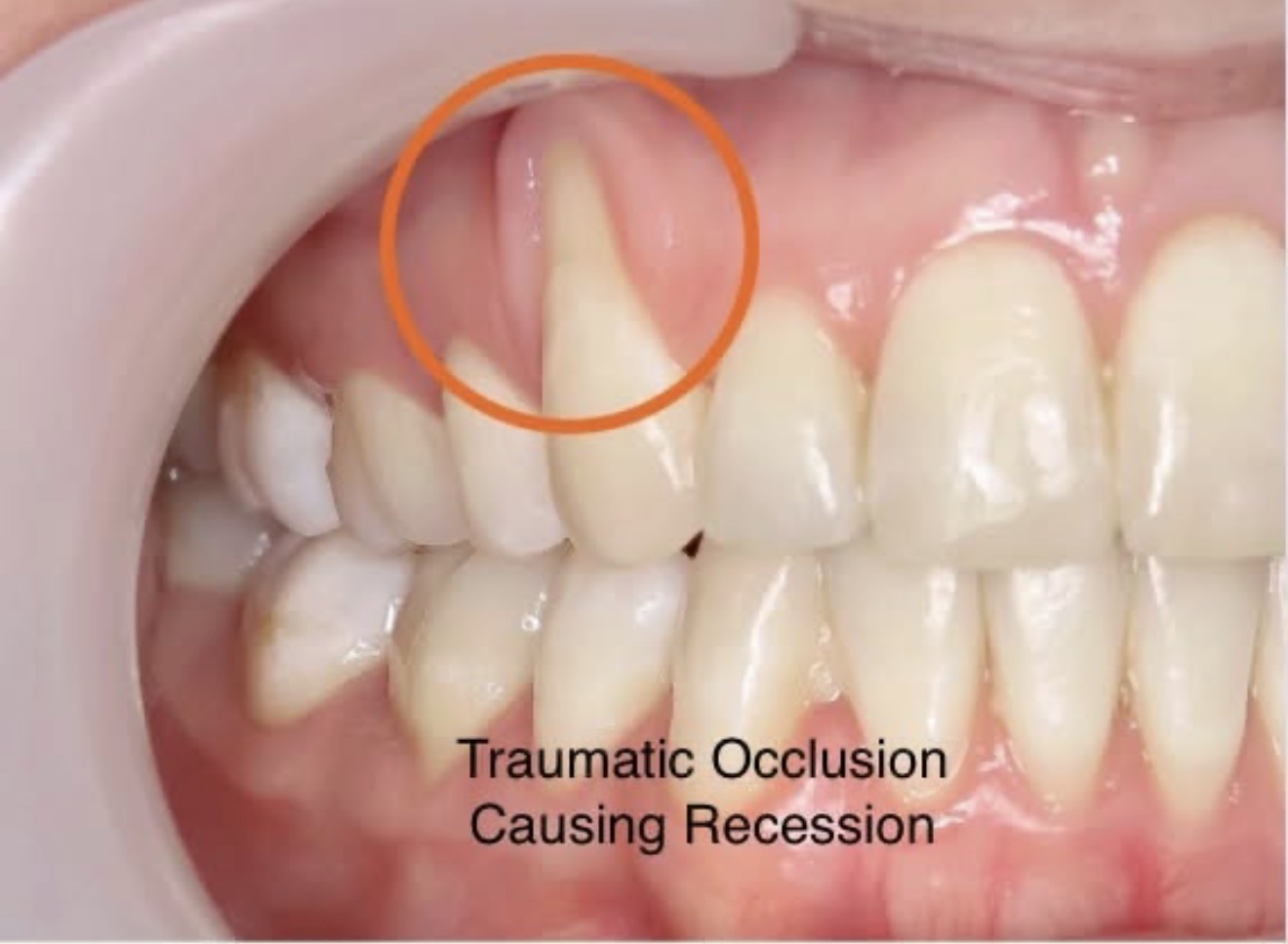
2. Traumatic Bite Relationship (Occlusal Trauma)
Even with excellent hygiene and a clean diet, recession can occur if the bite is misaligned. When certain teeth take too much force at the wrong angle, they experience ongoing micro-trauma.
What it may look like:
-
Notches at the gumline (abfraction lesions)
-
Recession on one or two isolated teeth
-
A tooth that feels “high” or hits harder
-
Grinding or clenching patterns
Why it causes recession:
Inflamed ligaments → bone pulls back → gums follow.
Recession on a single tooth is often tied to bite trauma.
3. Dental Work Below the Gumline
Deep decay, deep crown margins, crown removal, or manipulation of gum tissue can sometimes lead to recession if the tissue does not return to its original height. A key factor here is biologic width.
Biologic width refers to the space the body requires (2–3 mm) between the bone and any restoration margin. If a restoration is too close to the bone, the body may lower the gumline to protect this space.
What it may look like:
-
Recession around a new crown or filling
-
A previously hidden margin becoming visible
-
One tooth showing more root after treatment
Why it happens:
The body protects the biologic width by lowering the gumline if needed. This is a biological response, not necessarily a technical error.
4. Aggressive Brushing Combined With Acidic Exposure
Brushing alone rarely causes recession. But brushing aggressively while acids (soda, citrus, vinegar drinks, kombucha, flavored waters) are softening the root surface can accelerate wear.
What it may look like:
-
Recession following the pattern of brushing strokes
-
Smooth, shiny, scooped-out areas near the gumline
-
Sensitivity to cold
-
Thin or rolled gum edges
Why it causes recession:
Acid weakens the root surface → brushing wears it away → gums retreat as the surface erodes.
5. Thin Gum Biotype (Genetics or Connective Tissue Disorders)
Some people naturally have thinner, more fragile gum tissue. This can be influenced by genetics or connective tissue conditions such as EDS (Ehlers–Danlos Syndrome).
What it may look like:
-
Thin, translucent gums
-
Recession occurring “for no reason”
-
Early onset recession
-
Easy bruising or hypermobility
Why it causes recession:
Thin gum tissue cannot withstand normal forces as well, making it more vulnerable to trauma or inflammation.
6. Orthodontics (Teeth Moved Outside the Bone)
Orthodontics is beneficial, but moving teeth too far outside their natural bone housing can cause the gumline to thin and eventually recede.
What it may look like:
-
Recession on lower front teeth
-
Recession after Invisalign or braces
-
A tooth pushed too far forward
-
Gums looking thin or stretched
Why it causes recession:
If a tooth is moved outside the bone, the gum loses structural support and pulls back.
7. Oral Tethers (Lip, Cheek, and Tongue Ties)
A tight frenum can physically pull on the gumline every time you talk, smile, or move your lips.
What it may look like:
-
Recession directly below a frenum attachment
-
Whitening/blanching of tissue when the lip lifts
-
Difficulty keeping the area clean
-
Recession returning after grafts
Why it causes recession:
A frenum that constantly pulls on the tissue creates mechanical stress, causing the gum to retreat.
8. Airway Issues, Tongue Thrusting, and Mouth Breathing
Airway dysfunction affects saliva, tongue posture, and breathing patterns — all of which influence gum health.
What it may look like:
-
Dry, irritated gums
-
Recession on front teeth
-
Scalloped tongue, worn teeth
-
Chronic congestion or open-mouth posture
Account required
Sign in to see more
Create an account or sign in to unlock the full list.