Resource Libraries
Why Is Gum Disease So Common? 75% of Adults Have It
Why 75 percent of adults have some form of gum disease yet most go undiagnosed, how rushed cleanings miss it, and why diagnosis needs more than a polish.
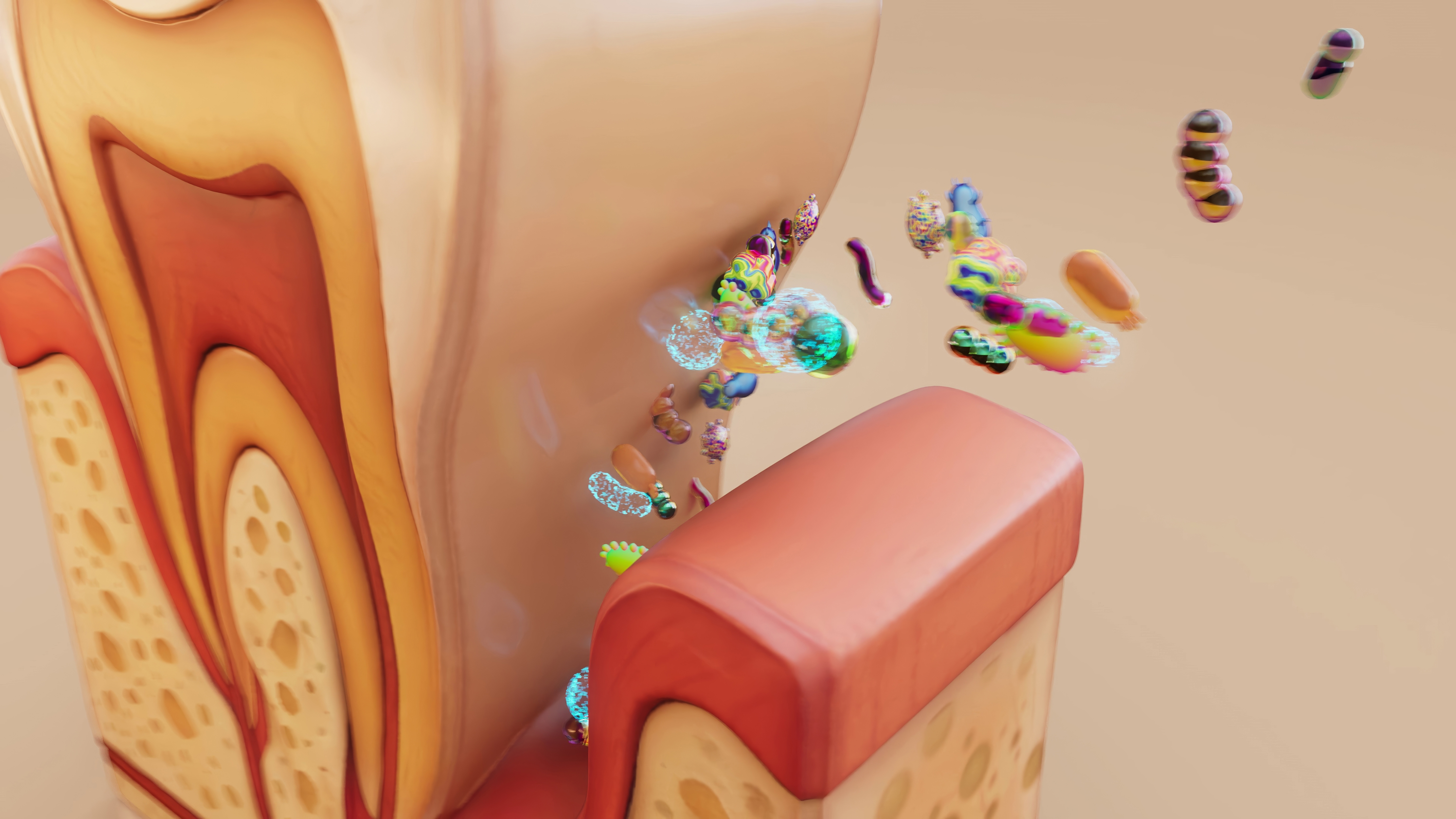
Why 75% of People Have Some Form Of Gum Disease
Why It’s Still Being Missed
AND, this is where I tell you why it's VALUABLE to you to see your biological dentist's office and your biological hygienist for your cleanings. Many biological patients choose to see their biological office as a place to get their dental work done, but they go to conventional offices for their cleanings. This article is my attempt to explain to you why you want to see your vetted biological offices even for your cleanings.
If three out of four adults have gingivitis or periodontal disease, but full periodontal probing isn’t being performed consistently, the problem is not patient compliance. It’s visibility.
Periodontal disease does not announce itself loudly in its early stages. It progresses quietly and painlessly beneath the gumline, long before teeth feel loose or discomfort appears. If we don’t actively look for it, we don’t see it. If we don’t see it, we don’t diagnose it. And if we don’t diagnose it, we certainly can’t treat it ethically.
Yet this is the current reality in dentistry:
Roughly 75% of adults worldwide show signs of gingivitis or periodontal disease
And a significant percentage of dental offices do not consistently record full-mouth periodontal probing
This disconnect is not because hygienists or dentists don’t care. It’s because the system is not designed to support proper diagnosis. So why am I covering this subject on our platform? Because it leads in to the oral systemic connection, which is intimate and intricate. In one study of 101 heart attack patients, bacterial DNA typical of dental infections was found in 78% of the coronary blood clots examined (Pessi et al., Circulation, 2013). That is an association, not proof of cause, and gum disease is one of the oral infections researchers continue to study. To read more about these pathogens that destroy our health, here are more links within our library.
The Science: Periodontal Disease Is Widespread, Persistent, and Often Underestimated
Large-scale epidemiologic data consistently show that periodontal disease is one of the most prevalent chronic inflammatory diseases on the planet:
1. GBD 2021 Oral Disorders Collaborators (2025) - Most Comprehensive Global Data
PMID: 40024264 .
3.69 billion people worldwide affected by oral conditions in 2021, including 1.07 billion with severe periodontitis. The burden has remained at epidemic levels for 30+ years despite population growth and aging.
https://pubmed.ncbi.nlm.nih.gov/40024264
2. Trindade et al. (2023) - Highest Prevalence Estimates PMID: 36631982
Systematic review and meta-analysis (2011-2020) found pooled periodontitis prevalence of 61.6% using confident case definitions (CDC/AAP), with severe periodontitis at 23.6%. These results show unusually high prevalence compared to 1990-2010 estimates.
https://pubmed.ncbi.nlm.nih.gov/36631982
3. Eke et al. (2020) - US National Gold Standard Data PMID: 31850640
Using full-mouth examinations and standardized case definitions, 42.2% of US adults aged 30-79 had periodontitis, with 7.8% experiencing severe disease. Previous partial-mouth protocols underestimated prevalence by more than 50%.
https://pubmed.ncbi.nlm.nih.gov/31850640
4. Bernabe et al. (2020) - GBD 2017 Global Analysis PMID: 32122215
Globally, 3.5 billion cases of oral conditions in 2017, including 796 million with severe periodontitis. Demonstrates that oral conditions remain a substantial population health challenge worldwide.
https://pubmed.ncbi.nlm.nih.gov/32122215
5. Peres et al. (2019) - Lancet Commission on Oral Health. PMID: 31327369
Oral diseases affect more than 3.5 billion people globally, making them highly prevalent despite being largely preventable. Emphasizes the progression from gingivitis (reversible) to periodontitis (irreversible tissue destruction) in susceptible individuals.
https://pubmed.ncbi.nlm.nih.gov/31327369
6. Albandar (2005) - Comprehensive Epidemiology Review. PMID: 15978239
Gingivitis is ubiquitous in populations of children and adults globally. Approximately 48% of US adults have chronic periodontitis, with moderate and advanced periodontitis reaching 70% or more in certain populations, particularly older age groups.
https://pubmed.ncbi.nlm.nih.gov/15978239
7. Oliver et al. (1998) - US Epidemiologic Survey with Gingivitis Data. PMID: 9526927
Over 50% of adults had gingivitis on an average of 3-4 teeth. Subgingival calculus present in 67%. Adult periodontitis (pockets ≥4mm) found in about 30% of the population. Critical for establishing combined gingivitis + periodontitis burden.
https://pubmed.ncbi.nlm.nih.gov/9526927
8. Jin et al. (2011) - WHO Global Burden Report. PMID: 21490234
WHO reported that severe periodontitis exists in 5-20% of adult populations, and most children and adolescents exhibit signs of gingivitis. Periodontal diseases constitute one of the major global oral health burdens.
https://pubmed.ncbi.nlm.nih.gov/21490234
This isn’t a fringe problem. It’s a public health travesty.
Why Periodontal Disease Is Missed: Time Is the Limiting Factor
What Full-Mouth Periodontal Probing Actually Requires
A typical adult mouth has 28 teeth (wisdom teeth are often removed). Each tooth has 6 probing sites. That means a full periodontal exam requires measuring and recording:
168 individual sites!
Even working at top speed 12–16 sites per minute: full-mouth probing alone takes:
10–15 minutes
Not including charting, data entry, explanation, or comparison to prior measurements
Each site must also be documented, especially when there is:
bleeding on probing
suppuration (pus)
recession
furcation involvement (bone loss in the area where the roots of a tooth split)
mobility
changes from prior visits
This is diagnostic medicine, not a checkbox.
Now Compare That to a Conventional Hygiene Schedule
In many conventional practices, hygienists are scheduled:
every 30–50 minutes
seeing 10–14 patients per day
That single appointment must somehow include:
seating the patient
reviewing medical history
taking radiographs
supragingival cleaning
oral hygiene instruction
charting
room turnover and sterilization
a brief dentist exam
And this assumes:
the patient is on time
the dentist is on time
nothing unexpected happens
There is no “extra” time hidden in that schedule.
When Periodontal Disease Is Diagnosed, the Time Problem Gets Worse
Scaling and root planing (often called “deep cleaning”) is the process of removing hardened bacterial deposits and biofilm from below the gumline, along the root surfaces of the teeth, where toothbrushes and routine cleanings cannot reach.
In many conventional offices:
Half-mouth scaling and root planing (SRP) is scheduled for 60 minutes
If the hygienist is lucky, 70–80 minutes
This must include local anesthesia, which alone takes 5–10 minutes
That leaves insufficient time to:
thoroughly disrupt pathogenic biofilm in deep pockets
work carefully in inflamed, bleeding tissue
educate the patient
document findings
plan follow-up and monitoring
This is not a skill issue. It is a time issue.
What Periodontal Care Looks Like When Time Is Actually Respected
In biologically oriented practices, the schedule is fundamentally different:
One hour per quadrant
Two hours for half-mouth therapy
Account required
Sign in to see more
Create an account or sign in to unlock the full list.