Journal
Ozone and PRF: How Biologic Therapies Support Healing After Dental Treatment
Ozone reduces what works against healing. Platelet rich fibrin supplies what works for it. Here is what each therapy does, where they are used, and why biologic practices apply them together, featuring Dr. Jana Ledic in Port Washington, Wisconsin.
Ask a biologic dentist what changed their surgical outcomes most in the last decade and a surprising number will not name a device. They will name two supporting therapies that cost relatively little and are applied in minutes: ozone, and a fibrin matrix spun from the patient's own blood.
This article explains what ozone therapy and platelet rich fibrin do, where each fits in dental treatment, and why they appear together so often. It features Dr. Jana Ledic of Holistic Dentistry of Port Washington in Wisconsin, a practice that uses both as core parts of its healing protocol.
What is ozone therapy in dentistry?
Ozone therapy in dentistry is the clinical use of ozone gas, ozonated water or ozonated oil to reduce bacteria, viruses and fungi in the mouth and in surgical sites. Ozone is oxygen in a three atom form, and that extra atom makes it unstable and highly reactive, which is exactly the property that makes it useful.
Its appeal in biologic practice is selectivity. Ozone acts on the cell walls of pathogens without the collateral effects that come with systemic antibiotics, and it does not disrupt the gut the way a course of antibiotics does. It works locally, quickly, and then breaks back down into oxygen.
Where ozone is commonly applied
- Disinfecting an extraction socket before it is closed or grafted
- Treating early decay to reduce bacterial load in the lesion
- Managing periodontal pockets as part of gum therapy
- Irrigating dental waterlines and equipment, so the water reaching a patient is clean
- Reducing sensitivity and supporting tissue after surgical procedures
What is platelet rich fibrin?
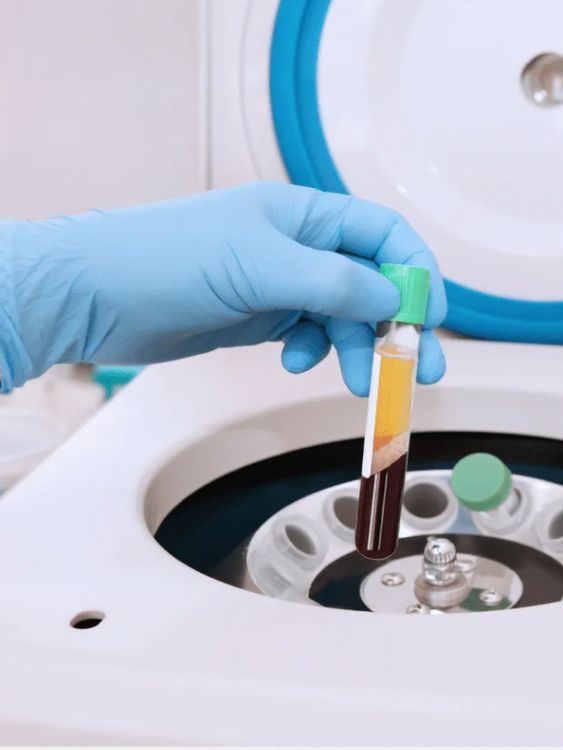
Platelet rich fibrin, generally shortened to PRF, is a concentrate made from the patient's own blood. A small sample is drawn at the appointment and spun in a centrifuge, which separates and concentrates platelets, white blood cells and growth factors into a fibrin scaffold. That scaffold is then placed directly into the surgical site.
Two things make PRF distinctive. First, because it is autologous, meaning it comes from the patient's own body, there is no biocompatibility question to resolve and no foreign material introduced. Second, the fibrin matrix releases its growth factors gradually rather than all at once, so the healing signal persists across the days when it is most needed.
Where PRF is commonly used
- Packed into extraction sockets to support bone and soft tissue healing
- Alongside implant placement
- In bone grafting and regenerative procedures
- In periodontal and soft tissue surgery
- In sinus procedures related to upper jaw implant work
Why the two are used together
They solve different halves of the same problem. Ozone reduces what is working against healing. PRF supplies what is working for it. Applying either alone leaves half the equation open.
The sequence in a typical biologic extraction shows the logic clearly. The tooth is removed atraumatically. The socket is thoroughly debrided, since leftover ligament tissue is a common reason sites heal poorly. Ozone is applied to disinfect. PRF is then packed in to give the site a scaffold and a concentrated healing signal. The bacterial load goes down and the regenerative capacity goes up, in that order, within a single appointment.
What patients actually notice
Patients tend to report the practical differences rather than the biological ones: less post operative discomfort, less swelling, and sites that close over more predictably. These are supportive therapies, so they do not replace sound surgical technique or good diagnosis, and no honest practice will promise a specific outcome. What they do is improve the conditions the body is healing under.
Practice highlight: Holistic Dentistry of Port Washington, Wisconsin
Holistic Dentistry of Port Washington delivers care through a biologic, whole body focused approach that considers oral health alongside its effect on overall wellness. The practice integrates advanced dental technology with minimally invasive technique, aiming for precise diagnosis and treatment while supporting the body's own healing capacity.
Dr. Jana Ledic, DDS, is SMART certified and an active member of the IAOMT and the Holistic Dental Association, with in depth training in ozone therapy. Her approach is personalized and patient centered, building a dental wellness plan with each patient and choosing the most biocompatible option for that individual.
The practice places particular emphasis on biocompatible materials, safe mercury removal protocols and non toxic care. Ozone and PRF are used specifically to enhance healing, improve outcomes and promote tissue regeneration, which is the pairing this article describes.
Preventive care and patient education are emphasized there, with the stated aim of bringing safe, non toxic dental care to families. Registered specialties cover airway, sleep and orthodontics, biocompatibility, cosmetic and aesthetic care, exams and prevention, oral surgery, extractions and implants, periodontal and soft tissue, regenerative therapies, and restorative and prosthetics.
Holistic Dentistry of Port Washington is a vetted OraBiologics practice. Visit the full directory listing to see the doctors, the services it was verified for, and to request an appointment. Free membership opens the listing, and it is free to create an account.
Questions to ask about these therapies
- Do you use ozone, and in what forms, gas, water or oil?
- Will PRF be used in my procedure, and what does it add in my specific case?
- Is the blood draw done in the office on the day of surgery?
- Are these included in the treatment fee or billed separately?
- Do you use ozonated water through the dental waterlines?
Frequently asked questions
Is ozone therapy safe in dentistry?
Applied clinically at controlled concentrations to a localized site, ozone has a long track record in biologic dental practice. It should never be inhaled, which is why trained clinicians control delivery carefully.
Does PRF require a blood draw?
Yes. A small sample is taken at the appointment and processed in a centrifuge in the office, usually while you are being prepared for the procedure.
Can PRF be rejected by the body?
It is made from your own blood, so there is no foreign material to react against. This is the main reason it is favored over synthetic alternatives in biologic practice.
Does ozone replace antibiotics?
It works locally and can reduce reliance on systemic antibiotics in some situations, but that is a clinical judgment for your provider based on your case. It is not a blanket substitute.
Are ozone and PRF used only in surgery?
No. Ozone is used in preventive and periodontal care as well as surgery. PRF is primarily surgical and regenerative, since it needs a site to be placed into.
Finding a provider
Not every practice describing itself as holistic offers both therapies, and fewer use them together as a routine protocol. Every practice in the OraBiologics directory has been vetted against biologic protocol standards, and free membership opens the full network, the resource library and the live Ask The Experts sessions.
If you have surgery scheduled and want to understand what support should surround it, an Oral Wellness Review or a health coaching session can help you prepare properly.
Membership
Go deeper with member-only resources
Access webinars, coaching, and curated wellness guidance backed by our vetting standards.