Journal
Safe Amalgam Removal: What the SMART Protocol Actually Involves
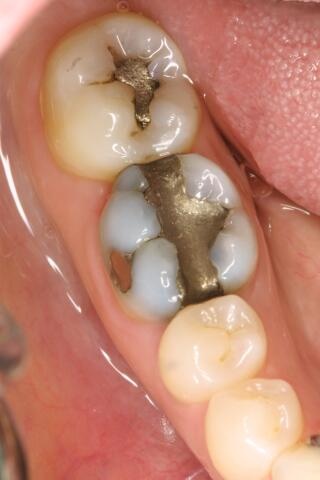
Removing a mercury filling is the moment of highest mercury exposure, not the years it sat in place. Here is the step by step protective protocol, why mercury safe and mercury free mean different things, and how Dr. Yolanda Cintron approaches it in Fort Lauderdale.
Removing an old silver filling sounds like a small procedure. Mechanically it is. Biologically it is the single moment when the mercury bound inside that filling is most likely to be released, as vapor and as fine particulate, into the air, the water, and the patient breathing above it. How a practice handles those few minutes is the whole question.
This article explains what safe amalgam removal actually involves, step by step, and why the protocol exists. It also highlights Dr. Yolanda Cintron of the International Center for Dental Excellence in Fort Lauderdale, a practice that has built more than twenty five years of clinical work around this standard.
What is safe amalgam removal?
Safe amalgam removal is a defined clinical protocol for taking out mercury containing silver fillings while minimizing the patient's, the clinician's and the environment's exposure to released mercury. In the biologic field the recognized standard is SMART, which stands for Safe Mercury Amalgam Removal Technique, developed by the International Academy of Oral Medicine and Toxicology.
Amalgam fillings are roughly half mercury by weight. That mercury is not inert. Drilling generates heat and friction, and heat drives mercury vapor release sharply upward. A removal done without protective measures can expose a patient to more mercury in twenty minutes than the filling would have released in years of sitting still.
What the protocol involves
A properly executed removal has layers, because no single measure captures everything.
Isolating the tooth
A rubber dam isolates the tooth being worked on, so debris and water are kept out of the mouth and away from the throat. A non latex dam is used where latex sensitivity is a factor.
Controlling heat
Copious water irrigation and high volume suction run throughout. The aim is to keep the filling cool, because cooler material releases dramatically less vapor. Skilled operators also section the filling into chunks and lift them out rather than pulverizing the whole restoration, which reduces the total surface area exposed to the drill.
Capturing what is released
High volume evacuation sits close to the tooth. Many practices add a dedicated external suction unit positioned near the patient's mouth to capture vapor that escapes the field. Room air filtration runs during and after the procedure.
Protecting the airway and skin
The patient is given a separate source of clean air to breathe through the nose, so that even air escaping the isolation is not inhaled. Protective covering is placed over the patient's face, eyes and body. The clinical team wears its own respiratory protection.
Clearing afterward
The mouth is thoroughly rinsed and suctioned before the dam comes off. Captured amalgam waste goes to a separator rather than the wastewater system, which is where the environmental half of the protocol lives.
Why the sequence matters more than any single step
Patients sometimes ask which of these steps is the important one. The honest answer is that the protocol works as a system. Isolation without cooling still generates vapor. Cooling without a separate air supply still leaves the patient breathing the room. A practice that performs three of the six measures is not performing safe amalgam removal, it is performing amalgam removal with some precautions.
This is precisely why vetting matters. The phrase "mercury free" only means a practice does not place new amalgam. The phrase you are looking for is "mercury safe," which means the practice follows a removal protocol, and SMART certification is the clearest evidence of it.
Before and after: supporting the body around the procedure
Biologic practices generally treat removal as an event the body needs preparation for and recovery from, not an isolated dental appointment. That support typically includes nutritional preparation in the weeks beforehand, attention to the pathways the body uses to clear metals, and a recovery plan afterward. Sequencing matters too, since removing several fillings across staged visits is usually gentler than clearing the whole mouth at once.
This is coaching territory rather than chairside work, and it is worth arranging before the appointment rather than after.
Practice highlight: International Center for Dental Excellence, Fort Lauderdale
The International Center for Dental Excellence is a biologic and holistic practice in Fort Lauderdale, Florida, built around dentistry that supports whole body health. It follows strict protocols for safe amalgam and silver filling removal, and it performs biocompatibility testing so that whatever replaces the old filling is matched to the individual patient's chemistry rather than chosen by default.
Dr. Yolanda Cintron, DMD, is an accredited member of the IAOMT and holds IABDM certification. She brings more than twenty five years of experience to a practice whose range runs from preventive and cosmetic dentistry through full mouth reconstruction, TMJ therapy and oral surgery.
Patients seeking biologic alternatives for missing teeth are offered zirconia implants. The practice uses advanced healing therapies including PRGF, meaning plasma rich in growth factors, autologous exosomes, ozone and laser dentistry to promote healing and keep treatment as minimally invasive as the case allows. A range of sedation options including IV sedation is available for longer or more complex appointments, which matters for patients staging multiple quadrants.
The practice welcomes out of town patients and helps coordinate travel for longer treatment visits, which is common for this kind of protocol driven care. Dr. Cintron is among the most referred providers in the OraBiologics network.
International Center for Dental Excellence is a vetted OraBiologics practice. Visit the full directory listing to see the doctors, the services it was verified for, and to request an appointment. Free membership opens the listing, and it is free to create an account.
Questions to ask before you book
- Are you SMART certified, and who on the clinical team holds the certification?
- Will I be given a separate air source to breathe during the procedure?
- Do you section the filling out rather than drilling it away entirely?
- Do you use an amalgam separator for waste?
- How many visits would you stage my removals across, and why that number?
- Do you test material compatibility before choosing what replaces the filling?
Frequently asked questions
What does SMART certified mean?
SMART stands for Safe Mercury Amalgam Removal Technique, a protocol developed by the International Academy of Oral Medicine and Toxicology. Certification means the clinician has completed the training and follows the defined removal standard.
Is mercury free the same as mercury safe?
No. Mercury free means the practice does not place new amalgam fillings. Mercury safe means it follows a protective protocol when removing existing ones. A practice can be the first without being the second.
Should all my amalgam fillings be removed at once?
That is a clinical decision made with your provider. Many biologic practices stage removals across several visits rather than clearing the mouth in one appointment, and your overall health picture is part of that judgment.
What replaces an amalgam filling?
Options include composite and ceramic restorations. Biologic practices commonly run biocompatibility testing first so the replacement material is matched to your individual immune reactivity.
Why does the dentist wear so much protective equipment?
Because the clinical team is exposed to mercury vapor repeatedly across a career, not once. A practice protecting its own staff properly is a good sign it is protecting you properly too.
Finding a provider
Every practice in the OraBiologics vetted directory has been reviewed against biologic protocol standards, including how amalgam removal is handled. Free membership opens the full directory, the resource library and the live Ask The Experts sessions.
If you have been given a removal plan and want an independent read on the sequencing before you begin, an Oral Wellness Review provides exactly that.
Membership
Go deeper with member-only resources
Access webinars, coaching, and curated wellness guidance backed by our vetting standards.