Journal
Hidden Oral Infections: What Cavitations Are and How a Biologic Dentist Finds Them
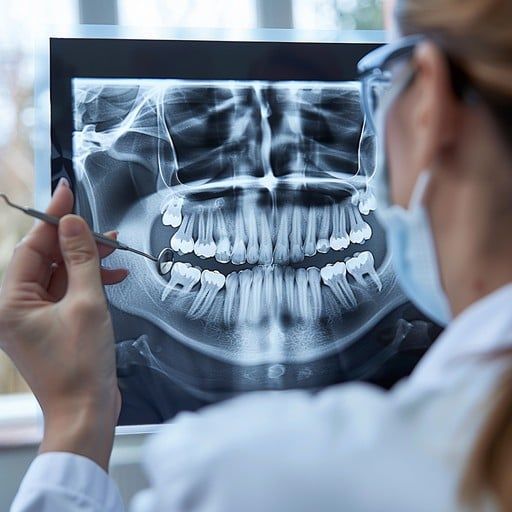
Some of the most persistent infections in the body cause no pain and never show on a standard x-ray. Here is what jawbone cavitations are, why they are so easy to miss, and how a biologic dentist uses 3D imaging, ozone and PRF to find and treat them.
Some of the most persistent infections in the body produce no toothache, no swelling and nothing visible in the mirror. They sit inside the jawbone, often at the site of a tooth that was removed years ago, and they can go unnoticed through decades of routine checkups because a standard two dimensional x-ray was never designed to show them.
This article explains what hidden oral infections are, why cavitations in particular are so easy to miss, and how a biologic dentist goes about finding and treating them. It features Dr. Darryl Azouz of Sacramento Natural Dentistry in Citrus Heights, California.
What is a hidden oral infection?
A hidden oral infection is a chronic, low grade infection in the teeth, gums or jawbone that does not announce itself with obvious pain. Because it is quiet, it is rarely looked for, and because it is rarely looked for, it can persist for years.
Biologic dentists commonly look for three sources:
- Cavitations, areas of jawbone that did not heal completely after an extraction
- Root canal treated teeth, which biologic dentistry regards as dead teeth that can harbor bacteria in the microscopic tubules of the root, where they cannot be reached or cleaned
- Deep periodontal pockets, where infection can sit below the gumline
What is a cavitation?
A cavitation is a hollow or incompletely healed area in the jawbone, most often found at an old extraction site. When a tooth is removed and the socket is not thoroughly cleaned, the gum can close over the top while the bone underneath never fully fills in. What remains can be a pocket of soft, poorly vascularized or dead bone.
Sacramento Natural Dentistry describes these voids as places that can harbor bacteria, viruses and fungi, and notes that wisdom tooth sites are a common location. Wisdom teeth are frequently removed in the late teens or early twenties, which means a site may have been sitting quietly for decades before anyone takes a closer look.
Why cavitations are so easy to miss
They often cause no symptoms
Some patients report chronic jaw or facial pain, inflammation or fatigue. Many report nothing at all. A site that does not hurt is not a site anyone thinks to investigate.
Standard x-rays rarely show them
A conventional dental x-ray is a flat, two dimensional image. It layers bone on top of bone, and an area of compromised bone surrounded by healthy bone can disappear in that overlap. This is the main reason cavitations are so often described as hidden.
They are not part of a routine exam
Conventional dentistry generally treats a healed extraction site as finished business. The gum has closed and there is nothing to see. In biologic dentistry, an old extraction site is something to evaluate, particularly when a patient has unexplained inflammation or symptoms that have not responded to other care.
How a biologic dentist finds them
3D cone beam imaging
The central tool is cone beam computed tomography, usually called CBCT or a 3D scan. Instead of one flat image, it produces a three dimensional view of the jaw that can be examined slice by slice, so changes in bone density at old extraction sites can be seen in a way a 2D film cannot show. Sacramento Natural Dentistry uses 3D cone beam scans to diagnose cavitations, and notes that these areas are often not evident on the regular 2D x-rays taken in other offices.
A full health history
Imaging is interpreted alongside the patient's history: which teeth were removed and when, any root canal treated teeth, past infections, and the symptoms that prompted the visit. A biologic dentist is asking where the body may be carrying an ongoing burden, not only which tooth hurts today.
Clinical examination
Tenderness on pressure over an old site, changes in the gum and the patient's own description of where discomfort sits all add to the picture. No single finding settles the question, which is why imaging and history matter so much.
How cavitations are treated
When a cavitation is confirmed, treatment is surgical. The aim is to remove what should not be there and give the bone a real chance to heal this time.
- Debridement: the site is opened and infected or necrotic tissue is carefully removed down to healthy bone
- Ozone: applied to disinfect the area and help create a clean environment for healing
- Platelet rich fibrin: a concentrate made from a small sample of the patient's own blood, placed into the site to support regeneration of bone and gum tissue
- Aftercare and support: nutrition and recovery planning so the body meets the procedure well prepared
Sacramento Natural Dentistry describes this same sequence: careful debridement of infected or necrotic tissue, ozone therapy to help ensure a sterile environment, and L-PRF to aid in regenerating healthy bone and gum tissue.
Why it matters beyond the mouth
Biologic dentistry views the mouth as part of the whole person rather than a separate system. Chronic oral infection has been associated in research with systemic inflammation, and many patients who seek a cavitation evaluation do so because they are looking for possible contributors to symptoms that have not resolved elsewhere. An association is not a guarantee, and finding and treating a cavitation is one part of a broader picture, best considered alongside your physician and other practitioners.
Prevention starts at the extraction
The most reliable way to avoid a cavitation is to prevent one from forming. A biological extraction removes the tooth atraumatically, fully debrides the socket including the periodontal ligament, and supports healing with therapies such as ozone and PRF. If you have an extraction coming up, ask about technique before the appointment. Our article on biological extractions explains what that involves.
Practice highlight: Sacramento Natural Dentistry, Dr. Darryl Azouz DDS, Citrus Heights, California
Sacramento Natural Dentistry in Citrus Heights, serving the greater Sacramento area, is a biological and integrative practice built on the view that the whole body works together to achieve balance.
Dr. Darryl Todd Azouz, DDS, AIAOMT, has practiced biological dentistry since 2006 and brings more than 20 years of experience. He is accredited by the International Academy of Oral Medicine and Toxicology, is listed with the International Academy of Biological Dentistry and Medicine, and is SMART certified for safe mercury amalgam removal.
Cavitations are a core part of the practice's work. The team uses 3D cone beam imaging to identify areas of jawbone that did not heal properly after extraction, then treats them with careful surgical debridement, ozone therapy and L-PRF made from the patient's own blood. It is the protocol described in this article, carried out by a practice that leads with it.
Dr. Azouz believes in minimally invasive dentistry that saves as much natural tooth structure as possible, uses the most biocompatible materials available, and puts weight on educating patients about the root cause of their problem. When a missing tooth needs replacing, the practice offers zirconia ceramic implants, a metal free alternative to titanium. Services also include mercury safe dentistry, ozone therapy and biological extractions.
View the full directory listing here:
https://orabiologics.com/vetted-practices/sacramento-natural-dentistry
Sacramento Natural Dentistry is a vetted OraBiologics practice. Visit the full directory listing to see the doctor, the services the practice was verified for, and to request an appointment. Free membership opens the listing, and it is free to create an account.
Questions to ask about hidden infections
- Do you evaluate old extraction sites for cavitations?
- Will you take a 3D cone beam scan, or rely on 2D x-rays?
- How do you read bone density changes on the scan, and will you walk me through them?
- If a cavitation is found, what does your surgical protocol include?
- Do you use ozone and PRF during treatment?
- How should I prepare, and what does recovery look like?
Frequently asked questions
What is a dental cavitation?
An area of jawbone that did not heal completely after a tooth was removed, leaving a hollow or poorly healed space that may hold chronic, low grade infection.
Can a cavitation be present without pain?
Yes. Many cavitations cause no noticeable symptoms, which is a large part of why they go undiscovered for years.
Why didn't my regular x-rays show anything?
Standard dental x-rays are two dimensional and layer bone on top of bone. Compromised bone surrounded by healthy bone is often not visible on them. 3D cone beam imaging is generally needed.
How is a cavitation treated?
Surgically. The site is opened, infected or dead tissue is removed down to healthy bone, and the area is disinfected and supported with therapies such as ozone and platelet rich fibrin to encourage new bone to form.
Can cavitations be prevented?
The best prevention is a biological extraction, where the socket is fully cleaned, including the periodontal ligament, and healing is actively supported rather than left to chance.
Finding a provider
Evaluating old extraction sites is not part of a standard checkup, so it is worth seeking out a dentist who looks for hidden infection on purpose. Every practice in the OraBiologics directory has been vetted against biologic protocol standards, and free membership opens the full network, the resource library and the live Ask The Experts sessions.
If you suspect a hidden infection and want help planning next steps, health coaching covers surgical preparation and recovery, and an Oral Wellness Review can give you a second read on your imaging and treatment plan.
Membership
Go deeper with member-only resources
Access webinars, coaching, and curated wellness guidance backed by our vetting standards.