Journal
Ceramic Implants Placed at the Time of Extraction: How Immediate Placement Works
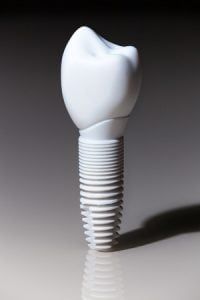
Bone starts to resorb the moment a tooth is gone. Immediate ceramic implant placement puts a metal free implant into the fresh socket, supported by ozone, PRF and laser therapy. Here is how it works, when it is not appropriate, and what to expect.
For a long time, replacing a tooth meant accepting a piece of titanium in the jaw and a waiting period measured in months. Neither of those is the only option now. Ceramic implants have matured into a well documented metal free alternative, and in the right case they can be placed the same day the failing tooth comes out.
This article explains how immediate ceramic implant placement works, which cases suit it, and what the supporting biologic protocol contributes. It also features Dr. Carmen Burke of Family Holistic Dentistry in Boulder, Colorado, a practice known well beyond its own patient base for this technique.
What is a ceramic dental implant?
A ceramic dental implant is a tooth root replacement made from zirconia, a strong biocompatible ceramic, rather than titanium alloy. It performs the same mechanical job of anchoring a crown into the jawbone, without introducing metal.
Patients choose ceramic for several reasons. There is no metal to corrode or release ions into surrounding tissue. Zirconia is white, so it does not produce the grey shadow at the gumline that titanium can create as gums recede. And for patients managing autoimmune conditions or documented metal sensitivities, removing metal from the equation removes a variable.
What immediate placement means
Immediate placement means the implant goes into the socket at the same appointment the tooth is extracted, rather than waiting for the site to heal and then reopening it months later.
The advantage is biological as much as it is convenient. Bone begins to resorb as soon as a tooth is gone, because the bone that held the root no longer has a job. Placing an implant into the fresh socket gives that bone something to maintain itself around, which can preserve both volume and the shape of the gum tissue. It also means one surgical event instead of two.
When immediate placement is not appropriate
It is not universal. Active infection at the site, insufficient bone to stabilize the implant, or anatomy that will not allow correct positioning all point toward a staged approach instead. A practice that offers immediate placement in every case is not assessing carefully enough. The 3D scan is what settles the question.
The biologic protocol around the implant
The implant is the hardware. What surrounds it determines how well the site heals, and three therapies do most of that work.
Ozone
Ozone is used to disinfect the socket after the tooth is out. This matters most in immediate placement, because the site is being sealed with an implant rather than left open, so bacterial reduction beforehand is not optional.
Platelet rich fibrin
Platelet rich fibrin, usually shortened to PRF, is made from the patient's own blood. A small draw is spun in a centrifuge to concentrate platelets and growth factors into a fibrin matrix, which is then packed into the surgical site. Because it comes from the patient, there is no compatibility question. It supplies concentrated healing signals exactly where they are needed.
Laser therapy
Laser is used for decontamination and to stimulate the tissue response. Combined with ozone and PRF, the intent across all three is the same: reduce the bacterial load, support the body's own repair mechanisms, and shorten the window in which something can go wrong.
Practice highlight: Family Holistic Dentistry, Boulder
Family Holistic Dentistry began in 2017 with a single dental chair in Boulder, Colorado, and has grown into a full service holistic practice. Its stated mission is to combine advanced technology with a biologically minded approach.
The practice has deep experience with ceramic implants, around 625 placed to date, and specifically with placing them immediately at the time of extraction using the biologic protocol of laser therapy, ozone and platelet rich fibrin described above. The approach is designed to support healing and keep discomfort minimal.
Dr. Carmen Burke, DDS, is an accredited member of the IAOMT, where she sits on the perio committee, an IABDM member and SMART certified. Notably, the practice does not only perform this work, it teaches it, hosting training classes for other dentists alongside the CEO of CeraRoot. That is a meaningful signal for patients, since a practice teaching a technique has volume and outcomes behind it. Dr. Burke practices alongside Dr. Alexis Brown, DDS, who focuses on restorative care.
Beyond implants, Family Holistic Dentistry emphasizes airway and functional health through myofunctional therapy, addressing breathing and jaw development rather than tooth alignment alone. The practice uses advanced laser dentistry for minimally invasive treatment and 3D CBCT imaging for diagnosis and surgical planning. Its wider range covers preventive and pediatric care, restorative work, BioClear esthetics and clear aligners.
Family Holistic Dentistry is a vetted OraBiologics practice. Visit the full directory listing to see the doctors, the services it was verified for, and to request an appointment. Free membership opens the listing, and it is free to create an account.
What to expect as a patient
A well run immediate placement case usually follows this shape:
- A 3D CBCT scan to assess bone volume, infection and the position the implant would need to occupy
- A conversation about whether immediate or staged placement fits your specific site
- Blood drawn on the day of surgery for PRF preparation
- Atraumatic extraction, meaning the tooth is removed with the surrounding bone preserved rather than levered against
- Socket debridement and ozone treatment
- Implant placement, with PRF packed around the site
- A healing period before the final crown is fitted
Frequently asked questions
Are ceramic implants as strong as titanium?
Modern zirconia implants are designed to handle normal functional load. Material selection is a clinical decision that depends on the site, the bite forces involved and your own health picture, and it is a fair question to put directly to your provider.
Can any extraction site take an immediate implant?
No. Active infection, inadequate bone or unfavorable positioning all point toward staged placement. A 3D scan is what determines suitability, which is why the scan comes before the plan.
What is PRF and why is my own blood used?
Platelet rich fibrin is a concentrate of your own platelets and growth factors, produced by spinning a small blood sample. Using your own tissue removes any question of material compatibility and delivers healing signals directly to the surgical site.
Why is ozone used during implant surgery?
To reduce bacterial contamination in the socket before it is sealed with an implant. Disinfection is particularly important in immediate placement, where the site is closed rather than left open to heal.
Is a ceramic implant more expensive than titanium?
Costs vary by practice, case complexity and region. Ask for a written treatment plan that itemizes the surgical phase, the biologic therapies and the final restoration separately, so you can see what you are comparing.
Finding a provider
Ceramic implant placement rewards experience, and immediate placement more so. Every practice in the OraBiologics directory has been vetted against biologic protocol standards, and free membership opens the full network along with the resource library and live Ask The Experts sessions.
If you are holding an implant treatment plan and want a second read before committing, an Oral Wellness Review is built for that decision.
Membership
Go deeper with member-only resources
Access webinars, coaching, and curated wellness guidance backed by our vetting standards.