Journal
Airway Conscious Dentistry: How Your Bite and Your Breathing Are Connected
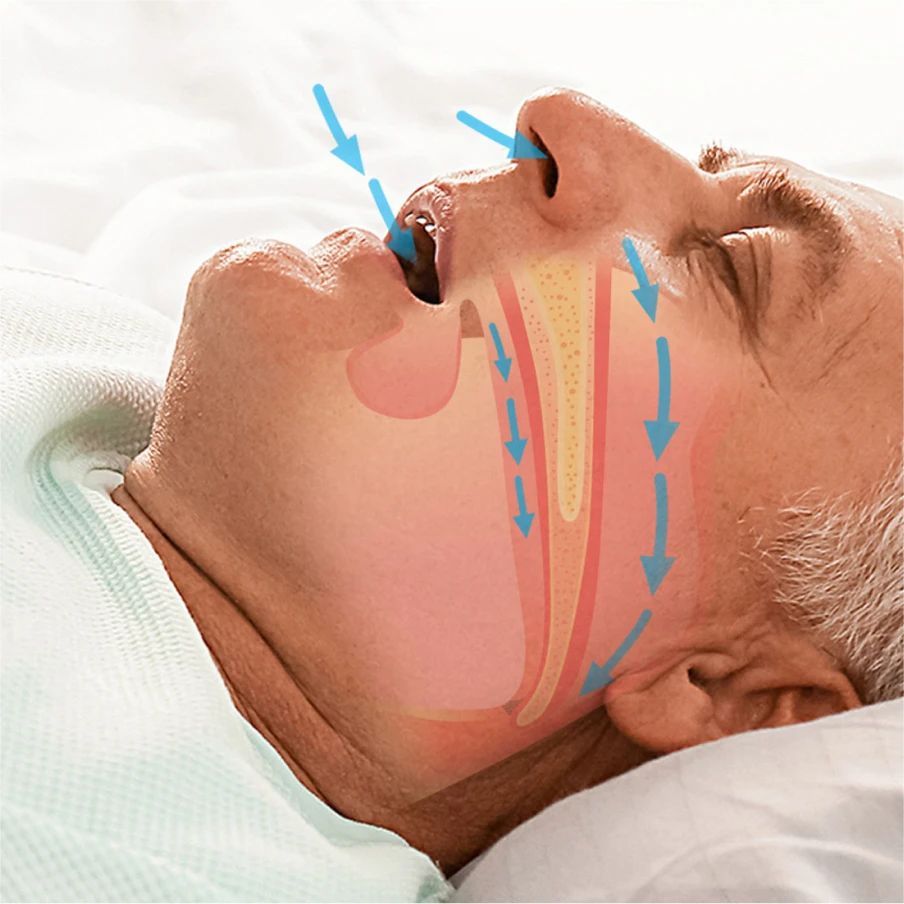
A narrow jaw, crowded teeth, worn enamel and broken sleep are often one problem seen from four angles. Here is what airway conscious dentistry assesses, the signs a trained dentist looks for, and why it matters most in children.
A narrow jaw, crowded teeth, worn enamel and broken sleep look like four separate problems. Often they are one problem observed from four angles. The shape of the airway influences how the face develops, how the teeth are positioned, how the jaw is held at night and how well a person actually rests.
This article explains what airway conscious dentistry is, the signs a dentist is trained to look for, and why the dental chair is frequently where an airway problem is first identified. It features Dr. Gene Sambataro of the Julian Center for Comprehensive Dentistry in Ellicott City, Maryland.
What is airway conscious dentistry?
Airway conscious dentistry is an approach that evaluates how a patient breathes, particularly during sleep, as part of dental assessment and treatment planning, on the basis that the structures dentists work with are the same structures that form and maintain the upper airway.
The reasoning is anatomical. The upper and lower jaws form the framework of the airway. The tongue occupies it, and where the tongue rests changes how the palate develops. The palate is also the floor of the nasal cavity, so a narrow palate means a narrower nasal passage above it. None of that is separable from dentistry, because it is dentistry's own territory viewed functionally rather than cosmetically.
Why the dentist often notices first
Patients see a dentist more regularly than most other health professionals, and the visible evidence of disrupted breathing accumulates in the mouth.
Signs a trained dentist looks for
- Worn or flattened tooth surfaces, indicating clenching or grinding
- Scalloped edges along the sides of the tongue, where it presses against teeth
- A narrow, high or vaulted palate
- Crowded teeth, or crowding that returned after orthodontic treatment
- A restricted tongue tie limiting tongue position
- Enlarged tonsils or adenoids
- Dry mouth and gum inflammation consistent with habitual mouth breathing
- Recessed lower jaw position
Individually each has other possible explanations. Together they form a pattern, and pattern recognition is what an airway trained clinician brings.
The connection to grinding and worn teeth
Grinding is commonly attributed to stress, and stress does contribute. There is a second mechanism worth understanding. When the airway becomes restricted during sleep, the body responds to protect breathing, and jaw movement is one of the responses that can help reopen the airway.
Where that is the driver, a night guard protects the teeth from damage but does nothing about the reason the jaw is moving. The teeth stop wearing down and the sleep stays disrupted. This is why an airway assessment belongs in the conversation before a guard is fitted as a complete answer.
Why it matters most in children
The jaws and face develop through childhood, and the way a child breathes during those years influences how that development proceeds. Chronic mouth breathing, whether from allergies, enlarged tonsils or a restricted tongue, is associated with a narrower upper jaw and less forward facial growth, which leaves less room for both teeth and airway.
The timing is the point. Guiding growth while it is happening is a different proposition from managing the results decades later. Signs worth raising with a dentist include habitual open mouth posture, snoring, restless sleep, persistent bedwetting, daytime tiredness and difficulty concentrating.
What airway conscious treatment involves
Dentistry does not treat sleep apnea in isolation, and appropriate cases are co-managed with physicians and sleep specialists. Within its own scope, the dental contribution can include:
- Screening and referral for a formal sleep study where indicated
- Oral appliance therapy to position the lower jaw forward during sleep
- Palatal expansion to widen a narrow upper jaw
- Myofunctional therapy, retraining tongue posture and breathing patterns
- Frenectomy where a tongue tie restricts tongue position
- Functional orthodontics that considers airway alongside alignment
- Bite adjustment and restorative work planned with jaw position in mind
Practice highlight: Julian Center for Comprehensive Dentistry, Ellicott City, Maryland
The Julian Center for Comprehensive Dentistry is dedicated to biologic, holistic dentistry that prioritizes the health of the entire body rather than the teeth alone. Its philosophy centers on preserving natural tooth structure, minimizing toxic exposure and using advanced diagnostics to build personalized treatment plans.
Airway conscious care sits within a comprehensive biologic service range that also includes biocompatibility testing, safe mercury amalgam removal, metal free zirconia implants, ceramic restorations, cosmetic dentistry and preventive therapy delivered with modern minimally invasive technique. Digital imaging and comprehensive health evaluation are used to keep treatment decisions aligned with each patient's broader health goals.
Dr. Gene Sambataro, DDS, who has practiced for more than 44 years, leads the practice alongside Dr. Zachary Reicher, DDS, combining decades of clinical experience with an evidence informed whole body philosophy. Dr. Sambataro is a member of the American Academy of Dental Sleep Medicine. The Julian Center serves patients throughout Maryland and the surrounding region who are looking for a healthier approach to dentistry.
The practice's placement of airway conscious care alongside material safety and structure preservation reflects a coherent view: breathing, materials and conservation are three expressions of the same standard rather than separate service lines.
Julian Center for Comprehensive Dentistry is a vetted OraBiologics practice. Visit the full directory listing to see the doctors, the services it was verified for, and to request an appointment. Free membership opens the listing, and it is free to create an account.
Questions to raise at your next appointment
- Do you assess airway as part of your examination?
- I grind my teeth. Could my airway be contributing, and how would we find out?
- My child mouth breathes and snores. Is that worth investigating now?
- Would you refer me for a sleep study if the signs pointed that way?
- Do you offer myofunctional therapy or work with someone who does?
Frequently asked questions
Can a dentist diagnose sleep apnea?
Dentists screen for signs and refer for formal diagnosis, which requires a sleep study interpreted by a physician. Dentists can then provide oral appliance therapy as part of co-managed treatment.
What is myofunctional therapy?
A form of exercise therapy that retrains the muscles of the tongue, face and mouth to establish correct tongue posture, lip seal and nasal breathing. It is often used alongside orthodontic or airway treatment.
Why would grinding be related to breathing?
When the airway becomes restricted during sleep, jaw movement can be part of the body's response to reopen it. Where that is the cause, a night guard protects the teeth without addressing the underlying disruption.
At what age should a child be assessed for airway issues?
Early, since facial growth is happening throughout childhood and guiding development is easier than correcting its results. Raise mouth breathing, snoring and restless sleep with your dentist whenever you notice them.
Does palatal expansion work in adults?
Options exist for adults, though the approach differs from a growing child and outcomes vary. It is a case specific question for a provider trained in airway focused care.
Finding a provider
Airway focused dentistry requires training beyond standard dental education, so it is worth choosing a provider deliberately rather than assuming it is offered. Every practice in the OraBiologics directory has been vetted against biologic protocol standards, and free membership opens the full network, the resource library and the live Ask The Experts sessions.
For parents specifically, OraBiologics offers pediatric airway consultations with Dr. Julia Sadove-Lopez, whose focus is pediatric facial growth and airway health.
Membership
Go deeper with member-only resources
Access webinars, coaching, and curated wellness guidance backed by our vetting standards.