Resource Libraries
Is Dental Amalgam Mercury Safe? Why SMART and PROTECT Matter
Why a 50 percent mercury filling is called safe yet handled as hazardous waste, the toxicology behind the harm, and why SMART and PROTECT are non-negotiable.
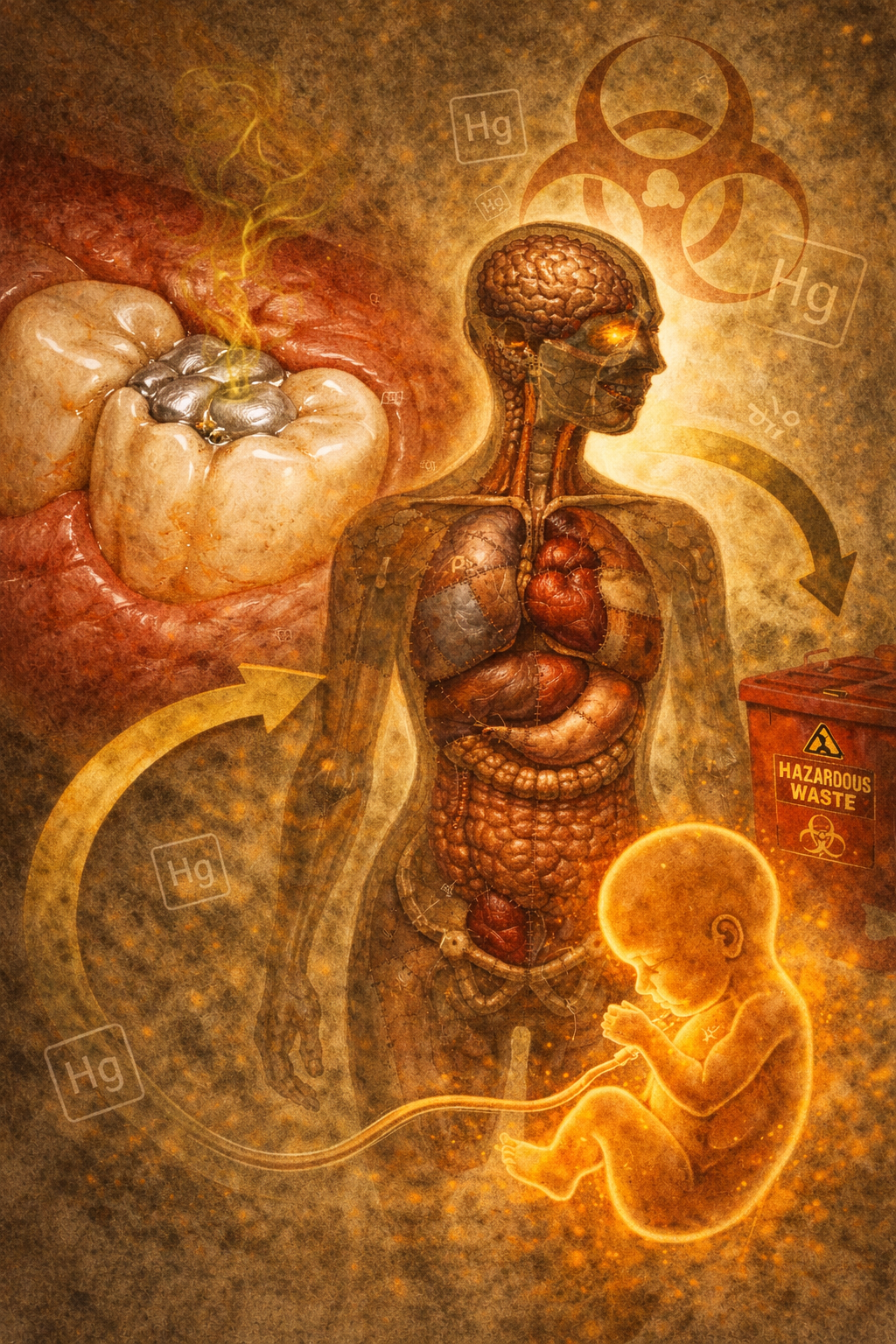
The Science on Mercury Amalgam and the Damage it has in the Human Body - Why SMART / PROTECT Protocols Are Non-Negotiable
Mercury Is Hazardous Waste: Not a Restorative Material
There is a fundamental contradiction embedded in modern dentistry that most patients, and many dentists, have never been asked to confront: The same material dentists place into human teeth must be disposed of as hazardous waste. MAKE THAT MAKE SENSE.
Dental amalgam is made up of 50% elemental mercury.
Mercury is a KNOWN neurotoxin,
nephrotoxin,
immunotoxin, and
mitochondrial poison.
In toxicology, there is NO ESTABLISHED SAFE LEVEL OF MERCURY exposure, particularly for developing brains, pregnant women, and genetically susceptible individuals.
Yet conventional dentistry continues to defend mercury amalgam as “safe,” while simultaneously treating it as a regulated environmental toxin the moment it leaves the tooth. That contradiction alone should give pause.
SMART (IAOMT)and PROTECT (IABDM) protocols exist because mercury is biologically active, continuously released, and dangerous to handle without protection. They are not ideological. They are risk-reduction protocols grounded in toxicology and occupational safety. And because I'm ultimately a science girl, of COURSE I'm going to show you the science!
Mercury From Dental Amalgam: What the Science Shows
A. Dental Amalgam Is the Primary Source of Mercury Exposure for Most People
For individuals with amalgam fillings, dental mercury, not fish or air pollution, is the largest ongoing source of mercury exposure in developed countries. Mercury vapor is continuously released from amalgam restorations and increases with:
chewing
brushing
temperature changes
clenching or grinding
placement and removal
Studies consistently demonstrate that urinary mercury levels rise with the number of amalgam surfaces and normalize after removal. Here is the science on it:
1. Richardson et al.
PMID: 21782213
https://pubmed.ncbi.nlm.nih.gov/21782213
Between 67 and 122 million Americans exceed safe mercury exposure limits from their amalgam fillings, depending on which regulatory standard is used (EPA vs California EPA).
2. Zwicker et al.
PMID: 25404430
https://pubmed.ncbi.nlm.nih.gov/25404430
People with amalgam fillings have twice the urinary mercury levels of those without fillings. After removal, mercury levels decline to match people who never had amalgams.
3. Yin et al.
PMID: 34453845
https://pubmed.ncbi.nlm.nih.gov/34453845
Kids with more than 5 amalgam fillings had 221% higher urine mercury compared to those without any fillings. The youngest children (under 6) showed the highest mercury levels.
4. Maserejian et al.
PMID: 18288327
https://pubmed.ncbi.nlm.nih.gov/18288327
Each additional amalgam surface in a child's mouth increased urine mercury by 9%. The study tracked 267 children over 5 years to measure this relationship.
5. Geier & Geier
PMID: 35786065
https://pubmed.ncbi.nlm.nih.gov/35786065
About 54 million American adults exceed California's safe mercury limits from their amalgam fillings. Each additional amalgam surface correlates with higher daily urine mercury.
6. Zwicker et al.
PMID: 25404430
https://pubmed.ncbi.nlm.nih.gov/25404430
Removing amalgam fillings decreased urine mercury to levels matching people who never had fillings. People who kept their fillings maintained higher mercury levels.
7. Geier et al.
PMID: 21803780
https://pubmed.ncbi.nlm.nih.gov/21803780
Urine mercury increased 18-52% in children with average amalgam exposure compared to those without fillings. The increase depended on age and number of fillings.
8. Baek et al.
PMID: 26833490
https://pubmed.ncbi.nlm.nih.gov/26833490
Children with at least one amalgam-filled tooth surface had significantly higher urine mercury than those without any amalgams across all measurement periods.
9. Gul et al.
PMID: 27464660
https://pubmed.ncbi.nlm.nih.gov/27464660
Mercury levels in people with amalgam fillings were 6-8 times higher than controls. Urine mercury was highest on day 1 after filling placement.
10. Al-Saleh & Al-Sedairi
PMID: 21601239
https://pubmed.ncbi.nlm.nih.gov/21601239
Children with amalgam fillings had urine mercury levels 2 times higher than those without. Hair mercury was over 5 times higher in the amalgam group.
11. Sandborgh-Englund et al.
PMID: 9539465
https://pubmed.ncbi.nlm.nih.gov/9539465
After removing all amalgam fillings, blood and urine mercury dropped to 60% of original levels within 60 days. Mercury continued declining with a half-life of 46 days.
12. Björkman et al.
PMID: 36383213
https://pubmed.ncbi.nlm.nih.gov/36383213
Removing all amalgam fillings significantly decreased blood mercury and silver levels after one year. The decrease confirmed amalgams as the source of daily mercury exposure.
13. Author: Clarkson et al.
PMID: 14522881
https://pubmed.ncbi.nlm.nih.gov/14522881
Ten amalgam surfaces roughly double background mercury levels in urine, raising concentrations by about 1 microgram per liter. Amalgam fillings are the main source of mercury vapor exposure in the general population.
This exposure is not theoretical. It is measurable, chronic, and involuntary once the material is placed.
B. Mercury Enters the Brain: Including the Developing Brain
Mercury vapor is lipid-soluble. It crosses the blood–brain barrier and the placental barrier with ease.
1. Berlin
PMID: 35623360
https://pubmed.ncbi.nlm.nih.gov/35623360
Mercury from dental fillings is the main source of mercury in adult and fetal brains in developed countries. Animal studies show mercury vapor can harm developing brains at very low levels. The author recommends stopping amalgam use, especially in children and women who might get pregnant, because mercury may interfere with brain development.
Studies on Mercury Crossing the Blood-Brain Barrier and Placental Barrier:
2. Cariccio et al.
PMID: 29777524
https://pubmed.ncbi.nlm.nih.gov/29777524
Mercury vapor is highly volatile and lipid-soluble, allowing it to easily cross the blood-brain barrier and cell membranes. Once inside cells, it accumulates in its inorganic form and causes damage.
3. Palkovicova et al.
PMID: 17851449
https://pubmed.ncbi.nlm.nih.gov/17851449
The human placenta does not block mercury transport, so fetuses are exposed when mothers have amalgam fillings. Cord blood mercury levels strongly correlate with the number of maternal amalgam fillings.
4. Richardson et al.
PMID: 21782213
https://pubmed.ncbi.nlm.nih.gov/21782213
Mercury from amalgam increases in amniotic fluid, placenta, cord blood, fetal tissues including brain, liver and kidney, and in breast milk. The amount increases with maternal amalgam load. An estimated 181 million Americans have filled teeth, mostly with amalgam. Mercury from fillings accumulates in organs including the brain, and passes from pregnant mothers to their babies. Based on population data, 67-122 million Americans may exceed safe mercury exposure levels depending on which safety standard is used.
5. Geier & Geier
PMID: 38316638
https://pubmed.ncbi.nlm.nih.gov/38316638
About 600,000 pregnant American women have amalgam fillings. Approximately 28-36% of pregnant women with amalgams exceed EPA mercury safety limits, potentially harming the developing fetus.
6. Bedir Findik et al.
PMID: 26898132
https://pubmed.ncbi.nlm.nih.gov/26898132
Pregnant women with amalgam fillings had significantly higher mercury in their blood and in their baby's umbilical cord blood compared to women without amalgams.
7. Ask et al.
PMID: 12003757
https://pubmed.ncbi.nlm.nih.gov/12003757
Inorganic mercury from amalgam fillings accumulates in the placenta and crosses to the fetus. Placental mercury levels increased with the number of maternal amalgam fillings.
Studies on Mercury Transfer Through Breastfeeding:
8. Vollset et al.
PMID: 31063889
https://pubmed.ncbi.nlm.nih.gov/31063889
Number of amalgam fillings was a significant predictor of mercury in breast milk. Together with seafood intake, amalgam explained 46% of mercury variation in breast milk.
9. Behrooz et al.
PMID: 39565512
https://pubmed.ncbi.nlm.nih.gov/39565512
The number of teeth filled with amalgam was associated with higher mercury levels in mothers' breast milk. Mercury concentration exceeded WHO normal levels in 8.5% of mothers studied.
10. Mohammadi et al.
PMID: 35575819
https://pubmed.ncbi.nlm.nih.gov/35575819
Mercury levels in breast milk of mothers with at least one amalgam-filled tooth were approximately three times higher than mothers without amalgam fillings in Iran.
11. Norouzi et al.
PMID: 21494835
https://pubmed.ncbi.nlm.nih.gov/21494835
Mothers with 4-8 amalgam fillings had mercury in breast milk nearly 5 times higher than mothers without fillings. Some breastfed infants exceeded WHO safe mercury intake levels.
12. Björnberg et al.
PMID: 16203251
https://pubmed.ncbi.nlm.nih.gov/16203251
Both methylmercury and inorganic mercury from amalgams transfer to breast milk. However, exposure to both forms of mercury is higher before birth than during breastfeeding.
Studies on Neurodevelopmental Effects and Autism:
13. Ryu et al.
PMID: 28667852
https://pubmed.ncbi.nlm.nih.gov/28667852
Higher mercury levels in late pregnancy and cord blood were associated with more autistic behaviors in children at age 5. Doubling mercury levels increased autism risk by 28-31%.
14. Netto et al.
PMID: 38344837
https://pubmed.ncbi.nlm.nih.gov/38344837
Out of 57 studies reviewed, 61% found a positive link between mercury exposure and autism. Most case-control studies found increased mercury in people with autism exposed after birth.
15. Shiani et al.
PMID: 36220469
https://pubmed.ncbi.nlm.nih.gov/36220469
Blood and hair mercury levels were significantly higher in children with autism compared to healthy controls. Mercury exposure is associated with increased risk of autism spectrum disorder.
16. Sulaiman et al.
PMID: 32990432
https://pubmed.ncbi.nlm.nih.gov/32990432
Mercury levels in hair, urine, and blood were all positively associated with autism. The findings support policies limiting mercury exposure for pregnant women and young children.
17. Kern et al.
PMID: 27473827
https://pubmed.ncbi.nlm.nih.gov/27473827
This review found that mercury from dental fillings may cause or worsen chronic fatigue, fibromyalgia, depression, and anxiety. Several studies showed that people felt better after having their amalgam fillings removed. The authors suggest doctors should consider mercury toxicity when treating patients with these chronic conditions. Out of 91 studies examining mercury and autism, 74% suggest mercury is a risk factor for autism through both direct and indirect effects on the developing brain.
18. da Silva et al.
PMID: 40869893
https://pubmed.ncbi.nlm.nih.gov/40869893
Review of 68 studies found that prenatal mercury exposure adversely affects cognitive and motor development in children. The developing brain is especially vulnerable during early pregnancy.
19. Dewey & Soomro
PMID: 41467739
https://pubmed.ncbi.nlm.nih.gov/41467739
Higher prenatal and childhood mercury exposure is linked with worse cognitive, motor, behavioral and mental health outcomes in children. These toxic effects have lasting consequences for development.
Studies on Kidney Injury and Oxidative Stress:
20. Al-Saleh et al.
PMID: 22683759
https://pubmed.ncbi.nlm.nih.gov/22683759
Mercury from amalgam fillings caused kidney damage in children through oxidative stress. The kidney damage occurred at mercury levels lower than previously thought to be safe.
21. Geier et al.
PMID: 22893351
https://pubmed.ncbi.nlm.nih.gov/22893351
Dental amalgams contribute to ongoing kidney damage in a dose-dependent way. Children with average amalgam exposure showed 10% increased kidney damage markers over 8 years.
22. Mortada et al.
PMID: 12018634
https://pubmed.ncbi.nlm.nih.gov/12018634
People with amalgam fillings had significantly higher kidney damage markers than those without. From a kidney health perspective, amalgam is an unsuitable filling material.
23. Han et al.
PMID: 34060062
https://pubmed.ncbi.nlm.nih.gov/34060062
Inorganic mercury causes kidney cell damage through excessive oxidative stress and disruption of mitochondria, the energy-producing parts of cells. Mercury accumulates most in the kidneys.
24. Escalante et al.
PMID: 39878105
https://pubmed.ncbi.nlm.nih.gov/39878105
Mercury from dental amalgams transfers from mother to fetus during pregnancy and through breastfeeding. Prenatal mercury exposure is linked to developmental delays, learning problems, and autism spectrum disorder. Low mercury levels may cause kidney damage through oxidative stress.
There is no ethical justification for exposing developing nervous systems to mercury when safer alternatives exist.
C. Individual Sensitivity to Mercury Is Highly Variable
One of the most persistent myths surrounding amalgam safety is that “most people tolerate it just fine.” Mercury toxicity does not present uniformly.
Genetic polymorphisms influence:
mercury detoxification
glutathione availability
excretion rates
neurologic vulnerability
Here is the science on it:
1. Homme et al.
PMID: 24420334
https://pubmed.ncbi.nlm.nih.gov/24420334
People's sensitivity to mercury varies based on their genes. Many people may receive unsafe mercury exposures from their fillings. The article notes that mercury poisoning is hard to diagnose because symptoms vary widely. Boys with certain common genetic variants experienced harmful brain effects from amalgam mercury that other kids didn't show. Mercury toxicity is hard to diagnose because symptoms vary widely between people and diagnostic tests are often misunderstood.
2. Jirau-Colón et al.
PMID: 30909378
https://pubmed.ncbi.nlm.nih.gov/30909378
Dental amalgams constantly release mercury vapor that people breathe in. Some mercury can convert to organic forms in the mouth. The article discusses how genes affect individual sensitivity to mercury and links amalgam exposure to Alzheimer's and Parkinson's diseases. Mercury amalgam safety has never been officially tested in the United States.
3. Woods et al.
PMID: 25109824
https://pubmed.ncbi.nlm.nih.gov/25109824
Boys with common genetic variants in 4 key genes showed brain and behavior problems from mercury exposure that girls and other boys didn't experience. These genetic differences make some children much more vulnerable to mercury damage.
4. Woods et al.
PMID: 24593143
https://pubmed.ncbi.nlm.nih.gov/24593143
Boys with common COMT gene variants experienced multiple brain function problems from mercury exposure, while girls with the same genes showed few effects. This gene affects how the brain processes certain chemicals and responds to mercury.
5. Berlin
PMID: 35623360
https://pubmed.ncbi.nlm.nih.gov/35623360
Genetic differences in protein structure cause people to have varying sensitivity to mercury. Side effects from dental amalgam likely affect at least 1% of people, similar to how potent medications affect different people differently.
6. Andreoli & Sprovieri
PMID: 28106810
Account required
Sign in to see more
Create an account or sign in to unlock the full list.