Resource Libraries
Oral Galvanism: When the Metals in Your Mouth Become a Battery
Can the metals in your mouth actually turn it into a battery? Believe it or not, YES! Researchers have SHOWN that dental metals can produce electrical currents, release metal particles, and affect living tissues, and one patient's remarkable experience shows why we need to take a closer look.
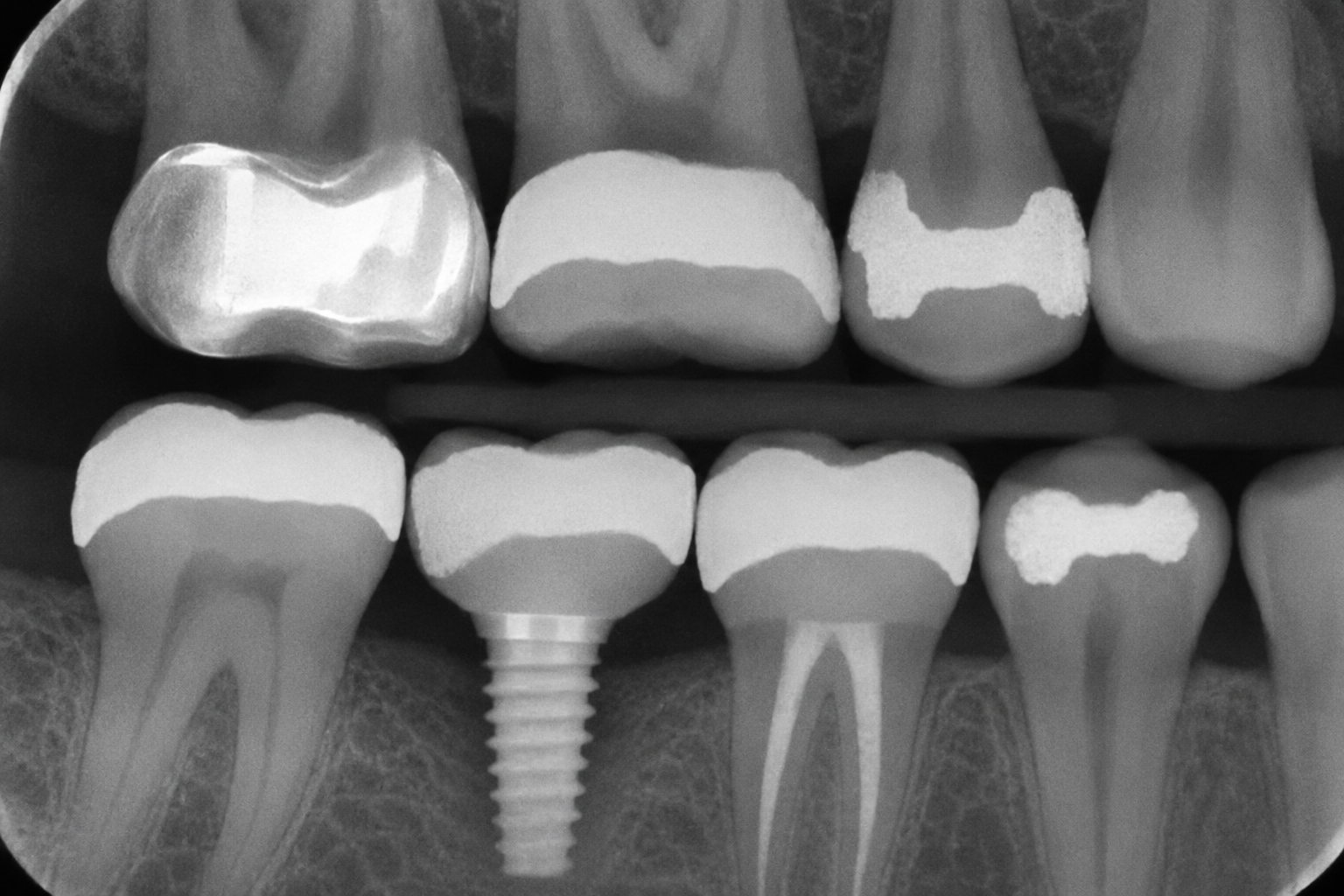
How dental fillings, crowns, and implants can produce electrical currents, release metal particles, and affect living tissues — and why a patient's incredible recovery made me want to examine the science even more closely.
Have you ever stopped to think about how many different metals dentists have been putting into people's mouths for decades? We've used silver-colored amalgam fillings containing mercury, gold crowns, nickel and chromium alloys, stainless steel, titanium implants, and all sorts of combinations of metals in dental restorations. And where exactly are we putting all these different metals?
In a warm, wet environment full of electrolytes that's constantly exposed to saliva, bacteria, food, drinks, and changes in acidity. Well, guess what? We may have just created the conditions for a battery. I'm not suggesting that you're going to charge your phone with your molars. 😂 But when different metals interact in an electrically conductive environment, they can produce measurable electrical currents.
This is called oral galvanism, and it's a real electrochemical phenomenon that researchers have been measuring and studying for decades. I got curious as to what happens AFTER those electrical reactions begin. Because the research isn't limited to proving that electricity can develop between metallic dental restorations. Researchers have also measured metal release, changes in inflammatory chemicals, damage to living cells, and changes in oral tissues.
And I've treated patients whose experiences have made me pay very close attention to this subject. One of them is a gentleman named Carl. His story is remarkable, and he and his wife, Tammy, have given me permission to share their experience for educational purposes. But before I tell you what happened to Carl, I want you to understand how oral galvanism works, because the science is actually pretty fascinating.
How Can Your Mouth Become a Battery?
Think back to your high school science class. You may remember learning that a battery uses different materials and chemical reactions to produce an electrical current. A galvanic battery generally needs two electrically connected materials with different electrochemical properties and something that allows charged particles to move between them. In your mouth, the different metals in dental restorations can provide those materials. And saliva is an electrolyte.
An electrolyte is simply a liquid containing dissolved substances that allow electrical charge to move through it. We are bioelectrical creatures - and we require a LOT of electrolytes to function. Think about how many we take in every day. Saliva contains minerals and salts, including sodium, potassium, calcium, and chloride. Those dissolved substances help make saliva electrically conductive. When different metallic dental restorations become electrically connected, such as when opposing metal crowns or fillings touch, saliva can help complete the electrochemical system. And electrical current can flow.
A 2023 scientific review by Kim examined 126 publications about oral galvanism, particularly involving titanium implants and other dental metals. The author discussed how differences between metallic materials, including implant bodies, abutments, and crowns, can contribute to galvanic currents and corrosion. [1]. A separate 2022 review examined 19 studies involving electrogalvanism in implant dentistry. Researchers found that the metals used, their surface characteristics, the saliva surrounding them, and the chemical conditions in the mouth could all influence the electrical reactions. [2]
That's a LOT of science supporting the fact that dental metals can interact electrically. Now let's look at what researchers actually measured.
Scientists Have Been Measuring Electricity in People's Mouths for Decades
In 1978, researchers studied 16 patients who reported discomfort they believed was related to oral galvanism. The researchers measured the electrical properties of the metallic restorations in their mouths and used those measurements to calculate possible currents between the restorations. [3]. They found conditions capable of producing galvanic currents. But they also found those conditions in people who didn't report symptoms.
That's an important finding, because some people don't notice as much. The presence of electrical activity doesn't automatically tell us how a particular person's body is responding to it. And it raises a question that I think deserves more attention. Could two people have similar electrical activity in their mouths but respond to it differently? After all, we're not cookie cutters.
A few years later, researchers developed equipment that could directly measure currents between metallic dental restorations. In 1984, Johansson and Lundmark tested their equipment on 175 contact pairs between dental restorations. They recorded electrical currents and found that those currents changed over time, generally decreasing after contact. [4]. So we're not talking about somebody imagining electricity. The researchers were actually MEASURING it.
What Happens When Gold and Amalgam Touch?
A 1986 study looked at something many patients have experienced: the sudden sharp sensation that can occur when different metal fillings or restorations touch. Researchers used extracted human teeth containing gold and amalgam restorations, placed them in a saltwater solution, and measured the electrical activity when the metals contacted one another. [5]. They found that the current generated in the tooth with amalgam could be as much as 18.2 times greater than the current measured in the tooth with gold. The electrical potential was also considerably higher in the amalgam-restored tooth.
It means that, under the conditions the researchers tested, one of those restored teeth generated MUCH greater electrical activity than the other. The study helped explain why patients sometimes experience a sudden unpleasant sensation when different metals touch. And if you've ever accidentally bitten aluminum foil against a metal filling, you may already have a pretty good idea of what I'm talking about. Yikes!
Oral Galvanism and Corrosion Aren't Exactly the Same Thing
This distinction matters because electrical currents and metal corrosion can happen together, but they aren't identical processes. Galvanism describes the electrical activity that can develop between different metals. Corrosion happens when chemical or electrochemical reactions cause a material to break down. When metals corrode, they may release ions or particles into their surroundings.
Think about an old metal object that's been exposed to moisture for years. The surface changes as the metal reacts with its environment. The chemistry isn't identical for every metal, but the basic idea is easy to understand. Metal surfaces can change, and some of the material can end up somewhere else. In the mouth, that somewhere else may be saliva, gum tissue, or the tissues surrounding a dental implant.
A 2000 study examined titanium implants connected to different dental alloys, including gold, silver-palladium, and chromium-nickel materials. Researchers measured corrosion behavior and the metal ions released into a saliva-like solution. [6]. They found that different combinations of metals produced different electrochemical reactions and patterns of metal release. And that brings us to a problem I have with assuming that a dental material is automatically safe simply because it has been used successfully for many years.
An implant can remain firmly attached to bone while the metal is interacting with its surrounding environment and affecting the body's immune response. Those are two different measurements of success.
Researchers Have Actually Measured Metals Released Into Saliva
In 2006, researchers examined 357 people who had metallic dental restorations. They measured galvanic currents and evaluated patients who reported oral discomfort. They identified 159 patients with electrical readings the researchers classified as abnormal. [7]. They then measured several metals in saliva and compared the results with a group of 21 healthy volunteers who didn't have metallic dental restorations. Patients with metal restorations had higher levels of several metals in their saliva, including mercury, tin, silver, copper, and gold. Now THAT'S interesting.
The researchers weren't guessing about whether metallic substances were present. They actually measured them. Thirty-three patients agreed to have the identified electroactive restorations replaced with nonmetallic materials. After treatment, the researchers measured the patients again. Both the galvanic currents and the concentrations of metals in saliva had decreased.
Think about what that tells us. When the metallic restorations were changed, the electrical activity and measured metal exposure changed, too. That shows that the dental materials themselves were contributing to measurable conditions in the mouth. The researchers SHOWED that changing the materials changed the measurable electrical and chemical environment. And that's pretty significant when we're talking about materials intended to remain inside a person's mouth for decades.
Can Those Electrical Currents Actually Damage Living Cells?
Now, the researchers wanted to know what the electrical current actually DID to living tissue. In 2023, they designed an experiment using a laboratory model of the lining of the mouth. They tested different combinations of dental alloys, including titanium alloy combined with silver-palladium alloy and nickel-chromium combined with silver-palladium alloy. Then they examined three different exposures:
-
The combined electrical current and corrosion products.
-
The electrical current by itself.
-
The released metal ions by themselves.
That's a pretty clever way to study the problem because it helps separate the effects of electricity from the effects of the metals being released. [8]. And what did they find? The electrical current itself caused damage to the cells in their experimental model.
The researchers measured changes in cell activity, growth, and survival. They also investigated inflammatory responses and changes in the structure of the tissue model. Under the conditions they tested, the electrical current appeared to be a major contributor to the cellular damage during the 28-day experiment. The released metal ions also contributed to harmful effects, particularly with nickel-containing alloys.
Now, there's an important detail here. The researchers deliberately used combinations of metals and electrical conditions that would allow them to study the effects within a relatively short period. The electrical exposure was stronger and more constant than what many people would experience in an ordinary mouth. So the researchers have actually SHOWN that electrical current can damage cells under certain conditions, even when they investigated that current separately from the released metal ions. And that opens up another question. What happens when someone is exposed to smaller, changing currents over 5, 10, 20, or 30 years? That wasn't what this study measured. And it's a question worth asking.
What About Inflammation?
When the body is exposed to something that irritates or damages tissue, the immune system may respond. Sometimes that's exactly what we want. Inflammation is part of normal healing. But when the irritation continues, inflammatory activity can become a problem. Researchers have identified changes in inflammatory signaling around certain dental materials. Some of the molecules they've measured are called cytokines. That's just a scientific word for proteins that cells use to communicate with one another.
Think of cytokines as messages being passed between cells. Some messages tell the immune system that there's a problem and that help is needed. Others help control inflammation and coordinate healing. But when the body keeps receiving inflammatory signals, those responses can interfere with normal tissue health.
What Happened to IL-6 and IL-8 After Amalgam Replacement?
A 2008 study examined 20 people with inflammatory lesions inside their mouths and compared them with 20 healthy volunteers. [10]. The researchers measured two inflammatory signaling molecules in saliva: IL-6 and IL-8. These are substances involved in immune activity and inflammation. The patients had reactions involving tissues near their amalgam fillings. After the amalgam restorations were replaced, the researchers examined the patients again. Sixteen of the twenty patients experienced complete healing of their oral lesions. Three more experienced major improvement.
Only one patient failed to improve.
Let's do some Mom Math. Out of 20 people, 16 healed completely and another three got significantly better. That's 19 out of 20 people who improved. And the researchers also found that the measured IL-6 and IL-8 levels decreased after the restorations were replaced. Now, I can't necessarily prove conclusively that electrical current was responsible for the lesions. (But if it looks like a duck and quacks like a duck...)
The patients were also being exposed to substances released from the amalgam, and many had evidence of metal sensitivity. But the study did show something important. Changing the dental materials was followed by improvements in both the patients' oral tissues and their measured inflammatory signals. That's exactly the kind of biological response we need to pay attention to.
The Connection Between Dental Metals and Oral Tissue Lesions
There are other studies that deserve attention here, especially research involving oral lichenoid lesions. That's a fancy name for certain inflammatory changes that can develop in the lining of the mouth. These lesions can look white, red, irritated, or ulcerated. Sometimes they cause burning or pain. And some have been linked to reactions involving dental materials.
A 2003 study compared 43 patients with oral lichen planus with 78 people who didn't have the condition. Researchers examined the patients' metallic dental restorations and looked at how much corrosion was visible. They found that greater amalgam corrosion was linked to a greater likelihood of oral lichen planus. [9]. The presence of amalgam alone didn't explain the difference nearly as well as the degree of corrosion. It suggests that the CONDITION of a dental material may matter, not just whether it's present.
A 1984 case report described a woman who had inflammatory lesions on both sides of her mouth near amalgam restorations. Testing identified a reaction to mercury compounds, and the lesions disappeared after the amalgam fillings were removed. [13]. That patient had a measurable material-related immune problem. Again, the findings don't separate the effects of electrical current from the effects of metal exposure and allergy. But they show why the biological environment surrounding dental materials matters.
What Happens When Amalgam Is Replaced?
A 2004 review examined research involving 1,158 patients with oral lichenoid lesions and amalgam restorations. [11]. The researchers found that replacing amalgam could lead to healing or improvement, particularly when the lesions were located directly against the restorations. And a newer 2026 review examined 35 studies of oral lichenoid lesions and amalgam replacement. [12]
The researchers again found that replacing amalgam was linked to a much greater chance of lesion improvement or resolution. The improvement was especially noticeable in patients whose lesions directly contacted amalgam. There's something important about those findings. When the irritated tissue is sitting right next to a particular dental material, and the tissue improves after that material is removed, that's useful clinical information.
The studies weren't all designed the same way, and people who improved may be more likely to have their results published. We also can't automatically attribute the changes to galvanic current when the treatment simultaneously changes metal exposure and potential allergic triggers. But those limitations don't erase the improvements that researchers actually observed. (But if it looks like a duck and quacks like a duck...). They tell us we need better studies that can separate the different mechanisms.
Why Titanium Implants Matter in This Conversation
Titanium has been used in dental implants for decades, but it doesn't exist in isolation from the chemistry of the mouth. Titanium oxidizes, and its surface can undergo changes under chemical and mechanical stress. Researchers have documented titanium corrosion, particle release, and inflammatory responses.
In 2008, researchers examined what happened when titanium was exposed to different levels of fluoride and acidity. They found that fluoride, particularly under acidic conditions, could damage the titanium surface oxide film and increase titanium release. [17]. Other research has SHOWN that titanium particles and ions can affect living cells and contribute to inflammatory signaling. [18–20].
And in 2010, researchers compared immune-cell responses to titanium, mercury, and nickel among patients with successful and failed dental implants. They found that stimulating immune cells with these metals could change the production of inflammatory cytokines, including IL-1β, IL-6, TNF-α, and interferon-gamma. [21]. What makes this important for oral galvanism is that different processes may be happening at the same time.
A patient may have electrical activity between certain metallic restorations. They may also have corrosion releasing metal ions or particles. And their immune system may respond to some of those substances. Those are different processes, but they can overlap in the same person. That's why I don't want the conversation reduced to whether a dentist can measure a little electricity between two crowns. The bigger question is what's happening in the biological environment around those restorations over time.
Does Oral Galvanism Explain Every Symptom?
No. And we need to be careful about that. People have reported a wide variety of symptoms in connection with metallic dental restorations, including metallic taste, burning sensations, unusual electrical sensations, pain, and discomfort. Some patients have also reported headaches, dizziness, fatigue, and other symptoms that aren't limited to the mouth, like shaking. My patient Carl was diagnosed with Parkinsons 2 years before he came to see me. I'll tell you below what changed him.
A 1991 published case report described a patient who experienced serious symptoms after receiving orthodontic appliances containing different metals. The authors suspected galvanic action might've contributed to her illness. [16]. That case is worth reading because the authors were investigating problems that went beyond a temporary metallic taste. The problem with any health issue that is uncommon is that sometimes they have symptoms that may be mistaken for something else, so medical professionals will ascribe those symptoms to the "something else" and quit looking. Or the symptoms may be vague enough that medical professionals don't give them enough credibility. Or worse, the patient may be experiencing a symptom they aren't even aware is a symptom and therefore doesn't tell their doctor.
Researchers have also tried to understand why some people with metallic restorations report symptoms while others don't. In 1982, Nilner and Nilsson compared people who reported unpleasant oral sensations with people who didn't. [15]. They found that the people reporting certain symptoms could be more sensitive to electrical taste stimulation, even though the measured electrical currents weren't necessarily greater.
Now THAT raises an interesting possibility. Maybe the amount of current isn't the only thing worth measuring. Maybe the person's sensitivity to that current matters, too. A 1983 study examined 68 patients referred because of symptoms they believed were related to oral galvanism. [14]. The researchers found a variety of possible explanations for symptoms, including allergies and other oral conditions. The measured electrical currents didn't clearly separate symptomatic patients from healthy controls.
That's useful information because it tells us that a current measurement alone can't identify the cause of every patient's symptoms. But it doesn't mean the symptoms aren't real. It means we need to investigate the whole person rather than assuming that one measurement answers every question. And that brings me back to Carl.
Carl's Story: Six Years of Suffering
Carl and Tammy gave me permission to share their experience for educational purposes, and I'm grateful that they did. Carl had been suffering since the pandemic started when he came to see me in October 2026 (I'm giving dates because this will be published for years). He experienced significant head pain, dizziness, exhaustion, difficulty thinking clearly, and changes in his ability to communicate. His limbs also started shaking and he was unsteady on his feet. Tammy described watching her husband become increasingly withdrawn. He had trouble speaking clearly. His balance was poor. He sometimes struggled to walk without assistance, and even ordering his own food in a restaurant had become difficult.
Can you imagine watching someone you love gradually lose so much of the person you knew? And can you imagine being Carl, living with those symptoms day after day? He'd been given a diagnosis of Parkinson's disease in 2024, and he and Tammy were understandably trying to make sense of what was happening to him.
Carl got extensive dental work over his lifetime. His mouth contained a complicated combination of restorations, including amalgam fillings, crowns, a couple of root canal-treated teeth, and different metals. And on February 20, 2020, he received a titanium dental implant. Tammy described a decline in his health over the years following that implant.
When I looked at his dental history and the combination of materials present in his mouth, I became very interested in the possibility of oral galvanism and material-related reactions. My suspicion was that the existing combinations of metals had already created an electrochemical problem, and that the titanium implant might've been the tipping point. That's my clinical interpretation of what I saw.
I can't tell you that the titanium implant caused every symptom. And I can't tell you exactly how much of his illness was related to electrical activity, metal exposure, other dental problems, or medical conditions. But enough of his symptoms pointed to oral galvanism that I thought it was important to consider the possibility. I certainly wasn't comfortable ignoring his oral environment.
What Happened After Treatment?
On October 27, 2026, Carl underwent extensive biological dental treatment. The procedure lasted approximately seven hours and involved treatment of 17 teeth. This wasn't a simple experiment where we removed one restoration and changed nothing else. Multiple dental problems and materials were addressed during the same treatment. And what happened afterward was remarkable.
Within approximately 24 hours, Carl reported that his head pain had improved by about 90%. He also reported that his dizziness had improved by approximately 95%. Tammy noticed changes in his clarity, communication, balance and overall behavior. After watching him struggle for so long, those improvements meant an enormous amount to both of them.
Now, those percentages are Carl's own estimates of how much better he felt. They weren't measurements from a controlled research study. But they were his experience. And I don't think we should dismiss what patients report simply because their experience doesn't fit neatly into a published study. I am a fan of evidence-based research. I think evidence-based research starts with many anecdotal experiences. They BECOME the evidence base for the research.
At the time they shared their videos, Carl still had one remaining implant, and additional treatment, including a zirconia replacement, was being considered. There was also a great deal that still needed medical follow-up. A sudden improvement after dental treatment doesn't establish that someone was incorrectly diagnosed with Parkinson's disease, and it doesn't replace neurological evaluation. But the changes Carl and Tammy reported deserve to be documented and considered alongside his medical history. I'm excited to see what his neurologist says the next time they see him. Believe me, I will be getting an updated report. I'm so excited about his improvements!
One thing Carl mentioned was that he'd started reading Dr. Hal Huggins's book It's All in Your Head, but his symptoms made it so difficult for him to continue that Tammy ended up reading the rest for him. That detail stuck with me. He was struggling so much that even trying to educate himself about what might be happening to his body became difficult. These weren't minor inconveniences to him. They were problems affecting his daily life and his ability to function. I hope Carl continues improving, and I hope his medical team carefully evaluates the changes he and Tammy have observed.
What Carl's Experience Can and Can't Tell Us
Carl's experience is one patient's story. It's an important story, especially because he and Tammy documented what they were experiencing before and after treatment. But we have to recognize something about the way his treatment was performed. We changed a LOT of things. We dealt with ALL of the metal except the titanium implant in one single appointment. We removed 2 root canal teeth at the same time and did some other procedures as well. We brought in an anesthesiologist and dealt with almost all of it at the same time. That means we can't isolate one material, one tooth, or one possible electrical current and claim it was responsible for all the changes he experienced.
It's possible that several problems were contributing to his symptoms. I don't know. And that's what makes these situations so interesting to me. Sometimes clinical experiences raise questions that researchers haven't yet answered.
The research already shows that oral galvanism is a measurable electrochemical phenomenon. It shows that different metal combinations can change corrosion behavior and metal release. It shows that electrical currents can damage cells under certain experimental conditions. And it shows that some patients with material-related inflammatory lesions improve after the materials are replaced. What we still need are better studies that investigate how these processes interact in actual patients over many years, particularly when patients have multiple metals, complicated dental histories, and symptoms involving more than one part of the body. Carl's story doesn't answer every question. But it certainly gives us some good ones to ask.
How Can a Dentist Investigate Possible Oral Galvanism?
When I see someone who may be experiencing problems related to metallic dental restorations, I want to look at the entire mouth. That starts with understanding what's actually there. We need to identify the different restorations, their materials, and whether any of them contain metals that could interact with one another.
That may include:
-
Amalgam fillings
-
Gold crowns and other gold alloys
-
Metal-containing bridges
-
Titanium implants and abutments
-
Metal posts and cores
-
Orthodontic appliances or retainers containing metal
-
Other metallic dental restorations
The materials used in a crown or bridge aren't always obvious just by looking at them. Sometimes we need the original dental records or information from the laboratory that made the restoration. We also need to examine the gum tissue, tongue, cheeks, bite, and existing dental work. If someone reports burning sensations, unusual tastes, or unexplained pain, we need to investigate those symptoms carefully.
There are medical and dental conditions that can produce similar symptoms, including nerve problems, medication effects, nutritional deficiencies, infections, and immune reactions. And if someone has neurological symptoms such as dizziness, speech changes, or difficulty walking, appropriate medical evaluation is essential. Sudden symptoms of that kind require urgent medical attention.
Account required
Sign in to see more
Create an account or sign in to unlock the full list.