Resource Libraries
Infected Baby Tooth: Does It Need Treatment?
Why an infected baby tooth should never be ignored, how chronic infection links to anemia, poor growth and missed school, and why waiting carries risk.
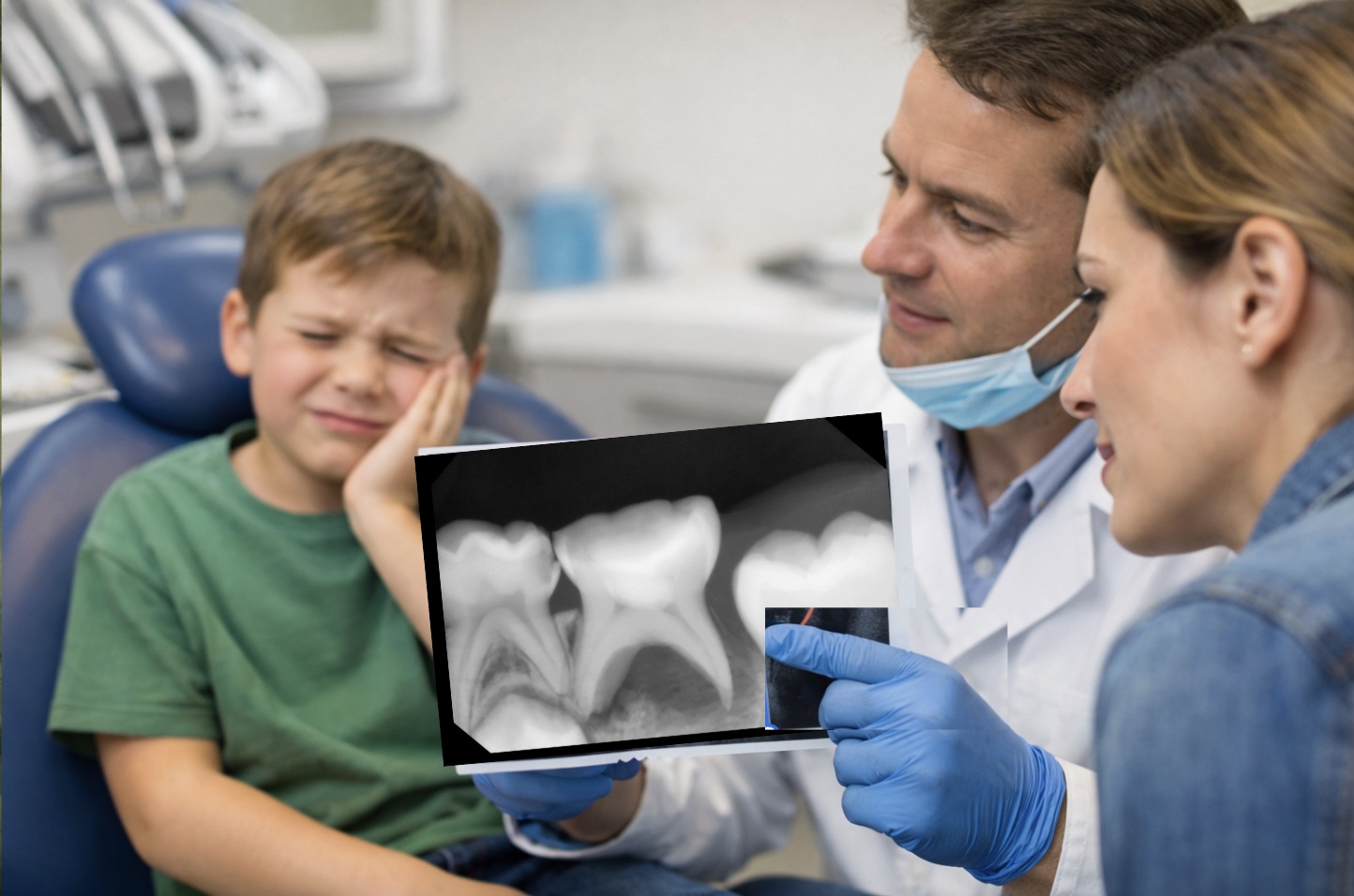
One of the most common, and most harmful, things parents say is: “It’s just a baby tooth. It will fall out anyway.” I’m going to be blunt because kids deserve it: Pus is never normal. An infection is never harmless. And an infected baby tooth is not “temporary” just because the tooth eventually falls out. You know me well enough to know I'm going to show you the actual science. I'm not going to ask you to believe me just because I say so.
Dental infections are not “just in the mouth”
When a tooth is infected, the immune system reacts. That reaction isn’t only local, it shows up in measurable inflammatory chemicals.
1. Palafox-Sánchez CA et al., PMID: 37047720
https://pubmed.ncbi.nlm.nih.gov/37047720/
Kids with acute tooth abscesses had higher inflammatory signals in their blood (including TNF-α and IL-6). After treatment, these levels changed over time. This shows a dental abscess can trigger a whole-body immune reaction, not just a sore tooth.
2. Orzechowska-Wylęgała B et al., PMID: 39201367 https://pubmed.ncbi.nlm.nih.gov/39201367/
Children with serious facial/dental infections had higher levels of immune and growth factors in saliva than kids with simple cavities. These chemicals are part of inflammation and healing. The study supports that pediatric dental infections create a stronger inflammatory environment.
Untreated cavities and infections can affect growth, weight, and anemia
This is one of the biggest “baby teeth are just starter teeth” myths: Many parents think baby teeth don’t matter, but studies show untreated decay is linked to poor growth and can improve after treatment.
1. Sheiham A, PMID: 17128231
https://pubmed.ncbi.nlm.nih.gov/17128231/
Children with severe tooth decay often weigh less. After dental treatment, many gain weight faster. The paper explains how pain, trouble eating, sleep loss, and long-term infection/inflammation can slow growth and worsen health, including lowered hemoglobin.
2. Alkarimi HA et al., PMID: 24534405
https://pubmed.ncbi.nlm.nih.gov/24534405/
In Saudi children, more cavities were linked with being shorter and weighing less. The worse the decay, the worse the height/weight measurements, even after accounting for other factors. This supports that untreated dental disease is tied to poorer growth.
3. Dimaisip-Nabuab J et al., PMID: 30217185
https://pubmed.ncbi.nlm.nih.gov/30217185/
In Cambodia, Indonesia, and Laos, kids with untreated cavities were more likely to be underweight and stunted. They also had delayed eruption of permanent teeth over two years. Untreated decay wasn’t “no big deal” it tracked with real growth problems.
4. Ferrazzano GF et al., PMID: 32575448
https://pubmed.ncbi.nlm.nih.gov/32575448/
After dental treatment under anesthesia, children’s quality of life improved and many showed improvements in growth. Blood tests showed changes in iron status and inflammation markers. This supports that severe dental disease can affect the whole body, and treating it can help.
5. Shim SH et al., PMID: 29248922
https://pubmed.ncbi.nlm.nih.gov/29248922/
Korean children with severe cavities were more likely to have nutritional problems and low body weight. The study supports that dental disease can affect diet, eating ability, and overall health, not just the mouth.
6. Renggli EP et al., PMID: 33498508
https://pubmed.ncbi.nlm.nih.gov/33498508/
Cambodian toddlers with severe decay had almost double the risk of becoming stunted over one year compared with kids with healthy teeth. That means untreated dental disease tracked with long-term malnutrition and slower growth.
7. Shen A et al., PMID: 31039199
https://pubmed.ncbi.nlm.nih.gov/31039199/
Chinese preschoolers with cavities had slower height growth. The relationship worked both ways: underweight kids developed more cavities, and cavities were linked to slower growth. This shows dental disease and growth problems can feed into each other.
8. Turton B et al., PMID: 36217721
https://pubmed.ncbi.nlm.nih.gov/36217721/
Children who developed severe tooth infections later showed worse weight-for-height scores, suggesting acute malnutrition can follow serious dental disease. In plain terms: bad dental infections can contribute to kids becoming “too thin for their height.”
8. Mishu MP et al., PMID: 34837423
https://pubmed.ncbi.nlm.nih.gov/34837423/
Bangladeshi children with cavities had lower height, weight, and BMI. Eating difficulties from dental pain explained much of the connection. This supports the real-life pathway parents see: pain → poor eating → poor growth.
Dental infections can spread: sometimes dangerously
A tooth abscess isn’t “contained.” Bacteria and their toxins can enter the bloodstream and cause problems far from the tooth.
1. Li X et al., PMID: 11023956
https://pubmed.ncbi.nlm.nih.gov/11023956/
This review explains three ways oral infections can affect the body: bacteria can spread through the blood, bacterial toxins can cause damage, and immune inflammation triggered by oral bacteria can affect other organs. It is a classic oral-systemic paper.
2. Holmberg P et al., PMID: 28262381
https://pubmed.ncbi.nlm.nih.gov/28262381/
A healthy 7-year-old developed sepsis (a life-threatening infection in the blood) from a hidden dental abscess. The abscess wasn’t obvious at first. This case shows why “watching it” can be risky, dental infection can become systemic.
Dental disease in kids is linked to long-term cardiovascular risk
Account required
Sign in to see more
Create an account or sign in to unlock the full list.