Resource Libraries
How to Find a Biological Dentist You Can Trust
How to find a biological dentist, which credentials such as IABDM and IAOMT certification matter, what to ask, and why a vetted directory is the safest route.
Suggested Guide to Finding a Biological Dentist
I’ve seen many posts online asking how to find a good biological dentist. I answered this on my professional page before OraBiologics was born, but this platform deserves a clear, neutral, consumer-focused guide. We’ve intentionally positioned ourselves to lead by example, to demonstrate the level of safety, clarity, and ethics real biological dentistry requires. This was never about recognition. It was always about service, integrity, and raising the bar for everyone.
To support that mission, here is a comprehensive, consumer-centered guide, based in part on the IABDM’s recommended questions and in part on what truly matters in real-world biological practice.
INITIAL INTERACTION
1. “May I talk with someone about my dental health situation before making an appointment?”
A biological practice should have a knowledgeable team member, whether a dedicated new-patient coordinator or a well-trained front office assistant, who can answer initial questions, explain the practice philosophy, and help determine the type of appointment you need.
It’s also important to remember that, since COVID, many dental offices have experienced significant staffing turnover. The person answering the phone may be brand-new, still in training, or learning how to communicate complex biological concepts. Training someone to handle biological dentistry questions well often takes years, and just when a practice finally gets someone fully trained, Murphy’s Law seems to strike and the cycle starts all over again.
Please offer grace. Every practice strives to find amazing team members who will stay for years. It’s always an ongoing project. What matters most is that your first point of contact is someone who is being trained to guide you, support you, and make sure you’re scheduled appropriately, even if they are still growing into the role.
You should also be welcomed to tour the office and observe the atmosphere, staff communication, and technologies used.
INITIAL EXAM & CONSULTATION
2. “What should I expect during my first visit?”
A biological dentist will perform extensive data gathering to identify root causes, systemic links, and material sensitivities. Conventional dentistry focuses on mechanics:
find a hole → fill the hole → drill → fill → pull → replace.
Biological dentistry focuses on:
root cause
oral–systemic connections
biocompatibility
prevention of downstream harm
Your initial visit should reflect that difference.
MEDICAL & DENTAL HISTORY
3. “Do you require a comprehensive medical and dental history?”
A legitimate biological dentist will say yes: every time. Without it, they will miss the forest for the trees.
MATERIALS COMPATIBILITY
4. “What kind of materials compatibility testing do you use?”
Where legally possible, a biological office should prioritize biocompatibility. There are several approaches, each with strengths and limitations.
• BioComp Labs (Blood Test)
Objective, measurable, and repeatable, but limited because your immune system can only react to materials it has previously encountered.
• EAV (Electroacupuncture According to Voll)
Rare to find, powerful when used correctly, but technique-sensitive, training-intensive, and costly to maintain.
• Muscle Testing (Applied Kinesiology)
Can be insightful in the hands of gifted practitioners. However, results may be influenced by the practitioner, the patient, or subconscious desires. When other methods are available, muscle testing should not be the sole approach. When it is the only accessible tool, combining it with a BioComp test gives better clarity than no testing at all. This all comes with a caveat - which has to do with State Restrictions.
• STATE RESTRICTIONS
Some states do not allow compatibility testing in dental offices. For example, New York prohibits ANY kind of compatibility testing. So consumers often have to go across state lines to find a place to do compatibility testing so that they can then take it to their dentist. It's ridiculous in the extreme, but this is the reality we deal with, so it just is what it is.
Dentists in such states must rely on:
history
past reactions
symptom patterns
published biocompatibility data
clinical experience
Use whatever tools are accessible. Choose objective methods when possible. Be transparent about limitations. INTENTION is the heart of true biological dentistry.
MERCURY AMALGAM POLICY
5. “What is your position on mercury amalgam?”
A true biological dentist considers mercury toxic at any dose, refuses to place amalgam, and removes existing amalgam only under full SMART/PROTECT protocols.
6. “Is this a mercury-free practice?”
A biological office should be both mercury-free and mercury-safe.
7. “Is your practice mercury-safe?”
They should be able to clearly articulate their mercury-safe protocols, not vaguely imply them.
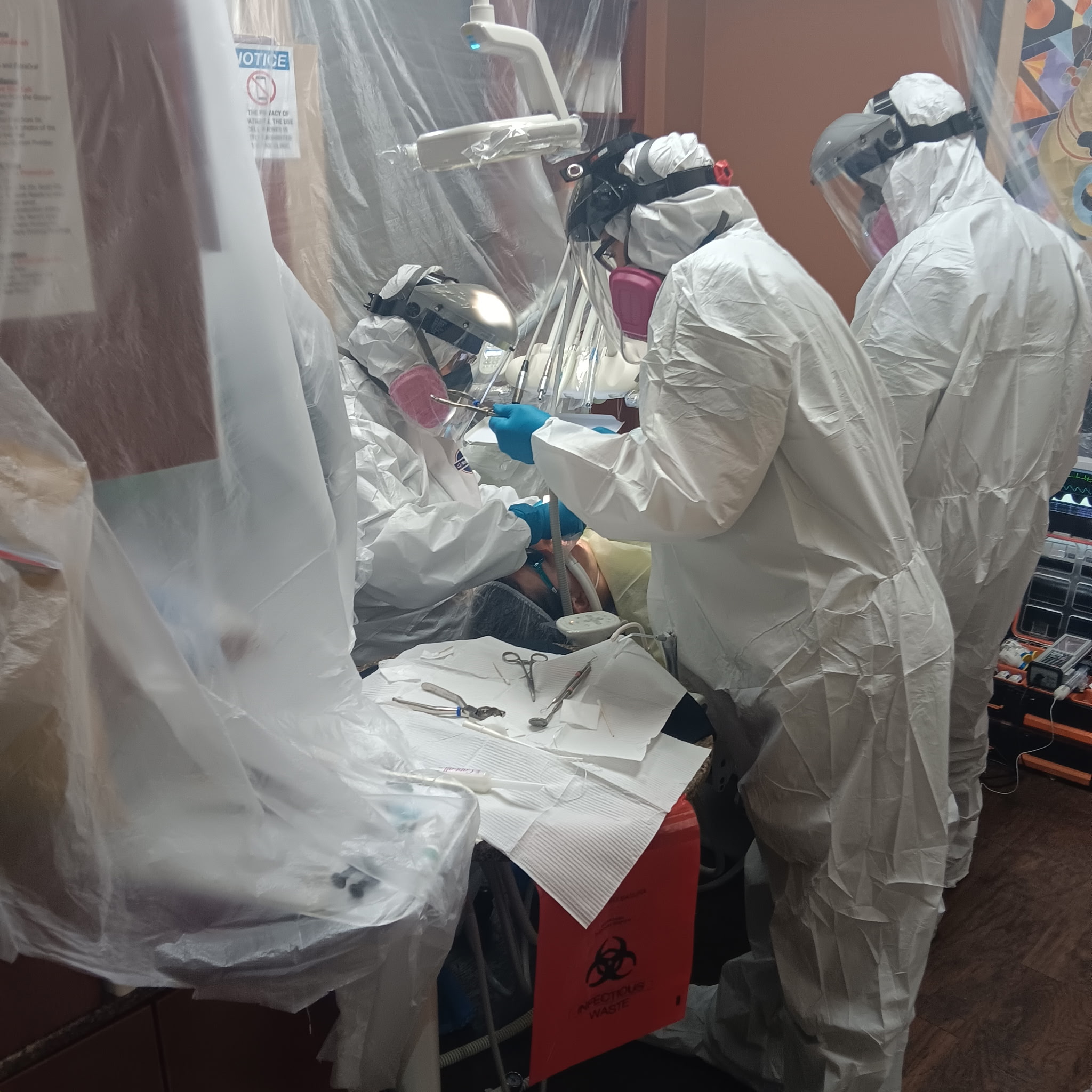
A truly biological office should proudly show what their SMART/PROTECT protocols look like. Photos, videos, written descriptions, something that demonstrates the sheer amount of work required to do this safely. It is NOT just a rubber dam and an oxygen mask.
8. “How long have you practiced mercury-safe dentistry?”
Every biological dentist starts somewhere; what matters is training, transparency, and consistency.
AMALGAM REMOVAL PROTOCOLS
Please see the our list of vetted biological dentists proudly displaying the process in their offices! Here is the link: VETTED Biological Dentists
9. “Do you use a rubber dam?”
A biological dentist uses a non-latex rubber dam, plus numerous additional barriers.
10. “What other safeguards do you use?”
Expect:
P100 mercury vapor respirators
full waterproof coverings
external suction (like DentAirVac)
ozone water
charcoal rinses
strict cleanup procedures
If you're unsure what TRUE mercury-safe removal looks like, versus simply being “mercury-free” these links show the full SMART/PROTECT standards in action:
PROTECT Protocol Checklist (IABDM):
https://files.iabdm.org/writer/open/twdnfe6c5c02c32b74b88842ee8207712d3a0
SMART Protocol Checklist (IAOMT):
https://files.iaomt.org/wp-content/uploads/SMART-Patient-Dentist-Checklist.pdf
Steps of Safe Amalgam Removal (IABDM + IAOMT Guidelines):
https://www.orabiologics.com/resource-library/safe-amalgam-removal-protocol
SMART/PROTECT Protocol at Holistic Dental Associates:
https://www.orabiologics.com/resource-library/safe-amalgam-removal-steps
11. “Do you remove amalgam in large sections?”
Yes, to minimize vapor exposure.
12. “Do you use special rinses?”
Ozone, charcoal, and homeopathic rinses are commonly used.
SEDATION OPTIONS
13. “Do you offer sedation?”
Many biological dentists bring in an anesthesiologist for claustrophobic or complex cases.
When you see the SMART/PROTECT photos, you’ll understand why, the process can look a bit… intimidating. There is zero shame in asking to be sedated during amalgam removal. This is not the time to “tough it out” or try to be a hero. Your comfort, safety, and nervous system regulation matter. SMART/PROTECT protocol in our office to remove mercury amalgams safely includes our Anesthesiologist! They deserve protection as well! There are plenty of people who will make fun of doctors to do this. But those of us who choose to do it this way are proud of the steps that we take to protect our patients, team members, and even our Anesthesiologist! It feels like a lot, doesn’t it? Believe me, it does to us too! This is why safe mercury amalgam removal is so expensive. It costs a lot of money to invest in all of the proper protective gear and equipment. This is not the place or time to do a half baked job. The sheer attention to detail that we put in place to care for our patients in this procedure is just the kind of attention to detail that we put in place for all of the care our patients receive. It is above and beyond, and surpasses the bare minimum standard of care. Everyone deserves to be protected in this manner when removing mercury from their mouths. I’m not sharing this here to try to bring patients to my office. I’m sharing this in this group because all too often, consumers who are searching for safe amalgam removal Don’t know what that needs to look like. So if you need to have your mercury fillings Removed, now that you know what it needs to look like, be sure to ask your dentist if they take the proper precautions. All too many of them will state that they take all the precautions that they were taught in dental school. This was not something I learned in dental school. Don’t be afraid to ask them for photographic evidence of what their SMART process looks like. We are required by the IABDM and IAOMT to present several cases in order to become SMART certified and certified Biological Dentist. So any office that is Truly certified should absolutely have pictures like this one to show what they do. I hope it helps. 
COSMETIC DENTISTRY
14. “Do you provide cosmetic dentistry?”
A biological dentist believes restorative work should always be:
functional
biocompatible
aesthetically beautiful
So of course it’s okay to want that for yourself. Your smile is part of your systemic AND emotional health. Wanting a healthy, beautiful smile that feels like you is absolutely valid.
Account required
Sign in to see more
Create an account or sign in to unlock the full list.