Resource Libraries
Does Acid Reflux Cause Gum Disease? GERD and Oral Health
How GERD changes saliva, oral immunity and gum health, why dental problems recur despite good care, and how siloed training splits oral and systemic health.
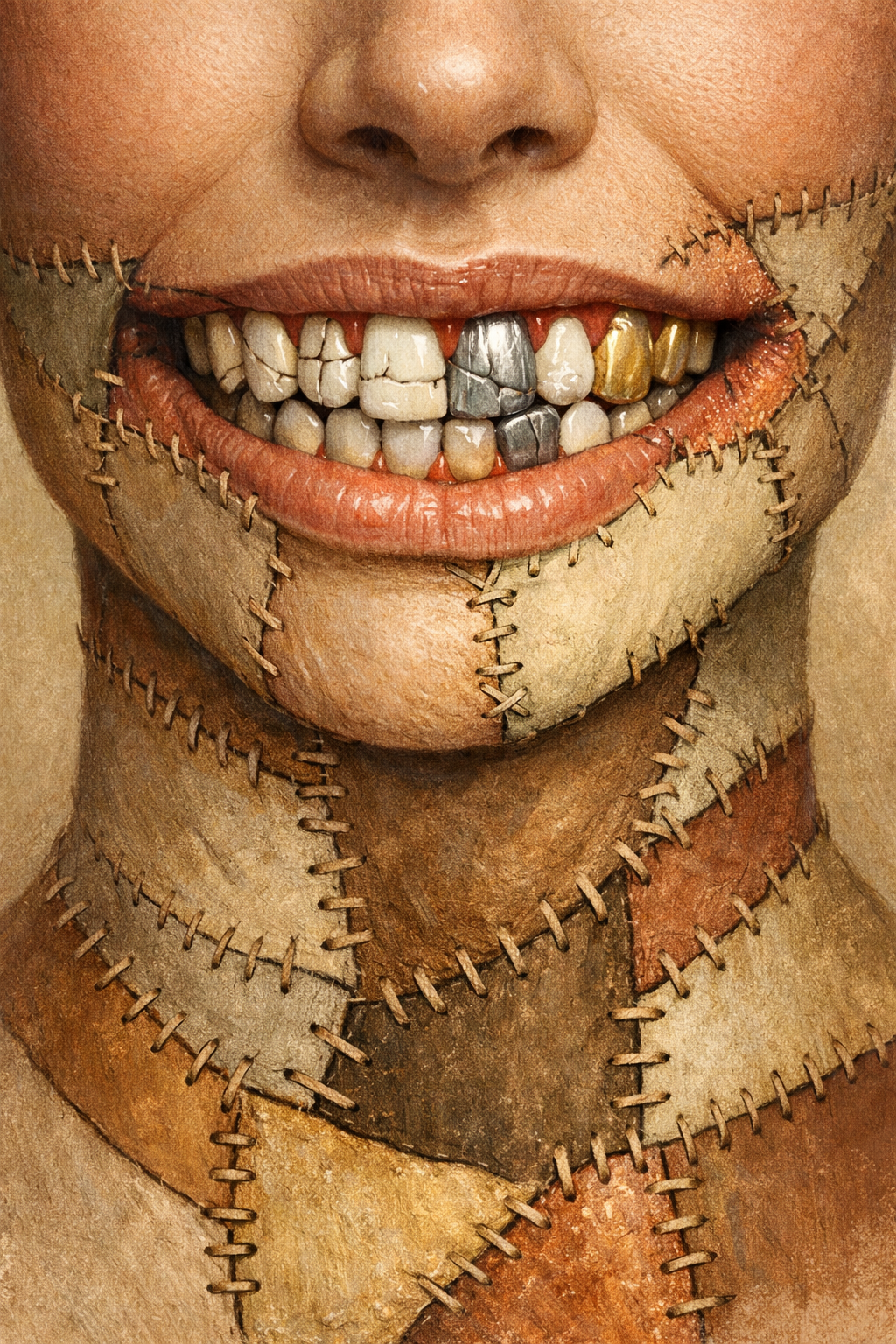
The Patchwork Cycle: How Siloed Training Separates Oral and Systemic Health—and Why Consumers Pay the Price
I started out trying to write an article about GERD and Periodontal Disease. But it took on a life of its own. So rather than trying to direct it, I decided to follow my train of thought to see where it took me. Tooth decay, gum disease, fractured teeth, worn enamel, failed crowns, jaw pain—most people will experience at least one of these over their lifetime. Many experience several. And when they do, the explanation is often familiar: genetics, aging, bad luck, or not brushing well enough.
But when dental problems keep recurring—despite good hygiene, regular dental visits, and repeated treatment—that explanation no longer holds up. What many consumers are actually experiencing is something much larger than isolated dental problems. They are caught in what I call the Patchwork Cycle.
The Patchwork Cycle
Modern dentistry has largely been trained in silos, separated not only from other dental specialties, but from medicine itself. Teeth are treated separately from gums, gums from airway, airway from reflux, reflux from systemic inflammation—and all of it from the rest of the body.
That siloed training naturally produces compartmentalized care, and the result is a predictable pattern:
Damage appears
The damage is repaired
The underlying cause is not addressed
New damage appears
Repairs become larger, more invasive, or more expensive
Eventually, teeth are pulled and replaced
This is not because dentistry is bad at fixing damage. Dentistry is actually very good at that.
The problem is that repairing damage is not the same as interrupting disease.
That repeating loop—repair without resolution—is what I dubbed the "Patchwork Cycle".
This Isn’t Just a Dentistry Problem
Siloed care is not unique to dentistry. It is a defining feature of modern medicine as a whole.
Gastroenterology often operates independently of cardiology. Cardiology rarely coordinates meaningfully with pulmonology or orthopedics. Podiatry and orthopedics don't even recognize each other passing in the hall. Pulmonology, nephrology, endocrinology, neurology, and OB/GYN and all of the other specialties frequently work in parallel rather than in true collaboration. Each specialty becomes highly skilled within its own lane, but the connective tissue between systems is often missing. It has become such a highly specialized career track that there are literally hand specialists in orthopedics who specialize in just the thumb. No joke.
Dentistry exists inside this same framework — and the problem is compounded by the widespread assumption that oral health is somehow separate from “medical” health.
As a result, medicine and dentistry often do not speak the same language, share the same data, or view the same problems through a shared lens. The mouth is treated as peripheral when, in reality, it sits at the intersection of airway, digestion, postural orthopedics, immune signaling, neurology, fascia, and the microbiome. When systems don’t communicate, chronic disease is managed in pieces instead of understood as a whole. You have seen the amount of science I have posted in my resource library. The links are there for anyone who cares to see them. This all started because of ONE article on GERD being linked to periodontal disease, and finding that two other articles say there is no link. Here is the stuff that derailed my article.
Study 1: Mendelian Randomization Analysis (2023)
https://pubmed.ncbi.nlm.nih.gov/36685839/
This genetic study found that GERD causes a higher risk of periodontitis. Using genetic data from large populations, researchers discovered that people with GERD were 23% more likely to develop gum disease. The study also found GERD increased risks of mouth ulcers and loose teeth, suggesting stomach acid reflux genuinely affects oral health.
So you would think there is any more out there, right? Only TWO more studies, both of which say no relation. But what happened is it made me think that nobody talks to each other to figure out what the root cause issue...
Study 2: Systematic Review and Meta-Analysis (2025)
https://pubmed.ncbi.nlm.nih.gov/40319483/
This comprehensive review of multiple studies found no clear connection between GERD and periodontal disease. While initial analysis suggested a possible link, more careful examination of higher-quality studies showed GERD patients weren't actually at increased risk for gum disease. The relationship remains uncertain and needs better research.
Study 3: Japanese Cross-Sectional Study (2016)
https://pubmed.ncbi.nlm.nih.gov/27629943/
Researchers examined 280 people and found no relationship between gum disease and GERD. People with periodontal disease had the same rates of acid reflux as those without gum problems. However, those with gum disease did have higher rates of high blood pressure and cholesterol problems.
Now, from my perspective, I tend to think that EVERYONE missed the boat. Because newborns have a huge issue with GERD. And I honestly think it's related to tongue ties. And over the last 10 years, I have become so airway aware that I understand that most people who have airway inadequacy have ties. And it's not like the issues resolve. SO many people have issues with GERD that anti acid and anti reflux prescriptions are at an all time high. Do people really think that infants grew out of it? I don't. I think as they grew, they learned to compensate, but I don't think they grew out of it. But clearly, nobody has asked the question in the pubmed community. Literally NO studies on the potential relationship.
Here's what I found on infants. But there are ZERO studies on any adults.
Several studies have documented improvement in gastroesophageal reflux symptoms following tongue-tie release. In one prospective study of 84 infants, significant improvements in both gastrointestinal and gastroesophageal reflux symptoms were observed 2 weeks after frenotomy, with younger infants and those with more severe tongue-tie showing the greatest improvements. https://pubmed.ncbi.nlm.nih.gov/35945826/
Another study found that infants with untreated ankyloglossia had mean scores on the Infant Gastroesophageal Reflux Questionnaire-Revised consistent with gastroesophageal reflux disease, and these symptoms improved significantly following surgical release. https://jamanetwork.com/journals/jamaotolaryngology/article-abstract/2756218?utm_source=openevidence&utm_medium=referral
Why Dentistry Feels the Consequences So Clearly
Dentistry often sees the downstream effects of this fragmentation first.
When airway is compromised, digestion and reflux change. When reflux increases, saliva chemistry shifts. When saliva quality declines, the oral microbiome destabilizes. When inflammation rises, gums break down. When protective mechanisms fail, enamel demineralizes. When forces increase, teeth fracture. In siloed care, each of these manifestations is treated as a separate problem. In reality, they are connected.
Why This Applies to Decay and Periodontal Disease
Cavities and gum disease are often treated as unrelated conditions. One gets fillings. The other gets cleanings. But biologically, they share many of the same upstream drivers:
saliva quantity and quality
oral microbiome balance
breathing patterns and airway adequacy
reflux and acid exposure
systemic inflammation
nutrition and immune function
Enamel does not randomly lose minerals. Gums do not become chronically inflamed in isolation.
When these drivers persist, repairing visible damage without addressing the cause virtually guarantees recurrence. This is why people develop new cavities around old fillings and why periodontal disease often “comes back” no matter how many times it is treated.
Why the Patchwork Cycle Also Explains Fractures, Wear, and Failed Dental Work
The Patchwork Cycle does not stop at decay and periodontal disease. It also explains fractured teeth, cracked crowns, worn enamel, bite collapse, jaw pain, and chronic clenching or grinding.
Teeth do not fracture because they are weak. They fracture because forces exceed what they were designed to tolerate. And they exceed this due to traumatic bite relationships and airway inadequacy caused by generational nutritional injury. If you want to read more about these topics, I will link them at the end of this resource.
One of the most common upstream drivers is airway dysfunction. When the airway is inadequate, the nervous system compensates. Mouth breathing, poor tongue posture, clenching, grinding, and forward head posture are not bad habits—they are survival strategies. Over time, these forces crack teeth, wear down enamel, and destroy restorations. In a siloed model, the response looks like this:
The cracked tooth gets crowned
The worn teeth get rebuilt
The bite is adjusted
Account required
Sign in to see more
Create an account or sign in to unlock the full list.