Resource Libraries
Alternatives to Root Canal Treatment in Biological Dentistry
The alternatives to a root canal in biological dentistry, from vital pulp therapy to biologic extraction with a zirconia implant, and why dead teeth matter.
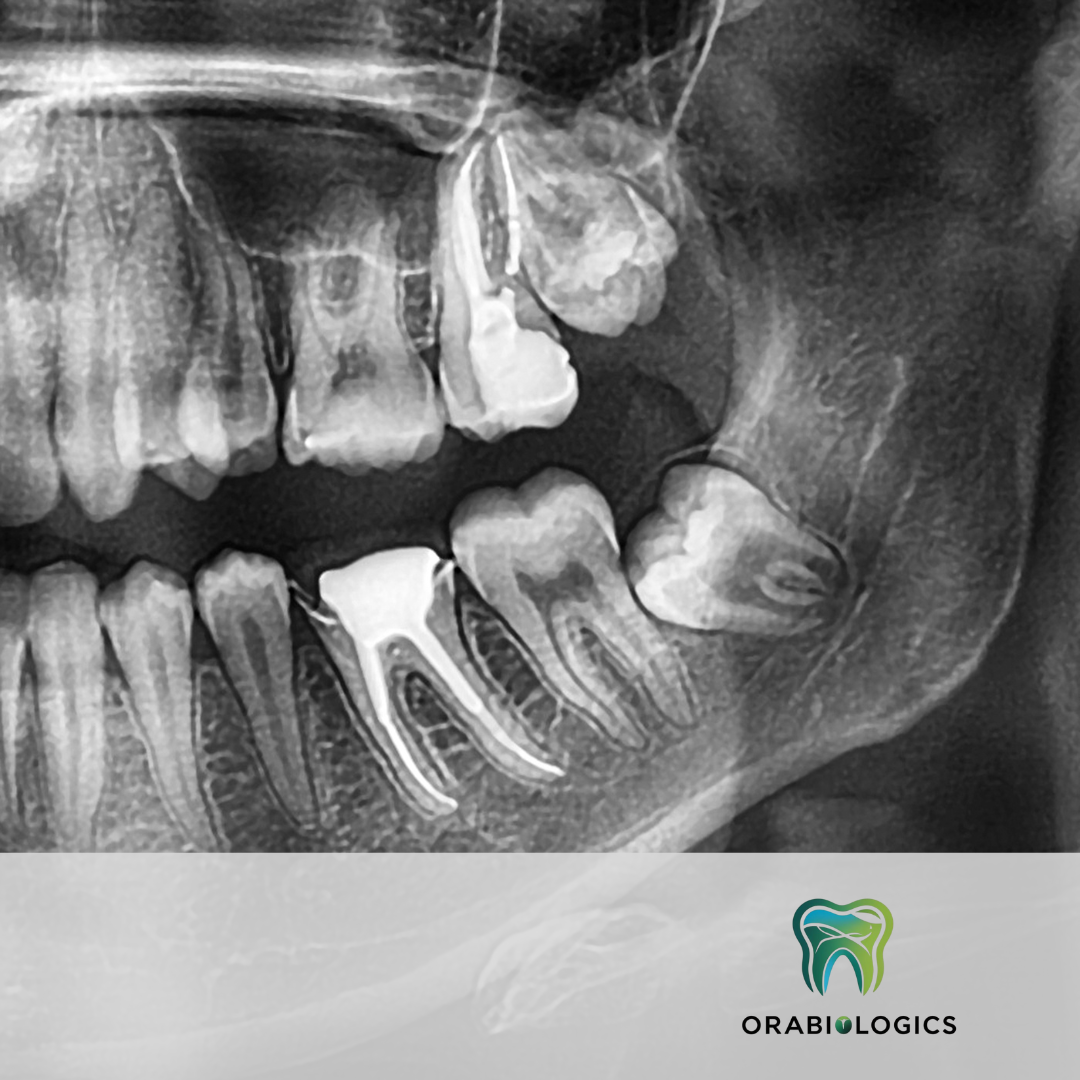
Alternatives to Root Canals in Biological Dentistry
Why does biological dentistry question root canals in the first place?
Let’s talk about alternatives to root canals, but before we can do that honestly, we need to talk about why biological dentistry questions root canals at all. This question comes up constantly, and it’s something many people are understandably curious (and emotional) about. So let’s start with the foundation.
Why We Question Root Canals in Biological Dentistry
The answer is actually quite simple: We are bioelectrical beings. We conduct electricity. Dead tissue does not conduct electricity. Ergo, Dead things don’t belong in the body. If any other part of the body dies, we remove it. A gangrenous limb is amputated. A burst appendix is removed.
A ruptured spleen is removed. Yet conventional dentistry has taught generations of people that it’s acceptable, even ideal, to keep a dead tooth in the body via a root canal.
From a biological perspective, that assumption deserves scrutiny.
The Biological Dentistry Perspective
BIOELECTRIC ENERGY MATTERS
Our bodies conduct bioelectric energy. This is not a belief system, it’s measurable physiology.
A dead tooth disrupts that bioelectric signaling. I often explain it this way: It’s like putting plastic wrap over an electrical plug and then trying to plug it into the wall. No matter how “perfect” the plug looks, the circuit cannot connect properly. Even the most meticulously performed root canal: done with lasers, ozone, advanced sterilization, and by the most skilled endodontist, still leaves behind a dead structure. That tooth no longer has blood supply, immune surveillance, or the ability to clear toxins. It is functionally disconnected from the body’s electrical and immune systems.
Respecting Patient Choice
Many patients are not emotionally ready to lose a tooth, and that matters. In biological dentistry, we respect medical freedom and informed consent over literally anything else. We present all options honestly. If a tooth is considered “restorable” by conventional standards, we will explain that a root canal is an option. We explain that if they choose the root canal, we have a fantastic endodontist that we will refer them to, who will do their root canal with laser and ozone.
But we also believe patients deserve to understand the biological consequences of that choice.
My role is not to decide for my patients. My role is to inform them, clearly, honestly, and without coercion.
The Science (Because of Course We Look at the Science)
Conventional dentistry often frames systemic complications as the result of untreated endodontic infections, implying that once a root canal is performed, the issue is resolved.
I wish I could say I believe that. The defining feature of biological dentistry is that we follow evidence, and we also pay close attention to what we observe repeatedly in real patients: not just theory.
Across biological dental practices worldwide, clinicians see consistent patterns. I share my own patient videos simply because those are the ones I personally have access to. My vetted biological colleagues see the same things in their practices.
Now let’s look at the published research.
Cardiovascular and Thrombotic Disease
-
PMID 23418311 (Pessi et al.)
Bacterial DNA typical of endodontic infections, primarily oral viridans streptococci, was found in 78.2% of coronary thrombi from patients with ST-elevation myocardial infarction.
That means nearly 78% of heart attacks studied contained bacteria associated with infected teeth. -
PMID 31117858 (Patrakka et al.)
Bacterial DNA was detected in 84% of cerebral thrombi from acute ischemic stroke patients. Streptococcus species (mainly the S. mitis group) were present in 79% of samples, with a median 5.1-fold higher concentration in thrombi compared to control blood from the same patients. -
PMID 28847664 (Vakhitov et al.)
Bacterial DNA was found in 57.9% of arterial thrombus aspirates from lower-limb ischemia patients, with 80% containing DNA from the S. mitis group.
These studies don’t prove causation, but they do demonstrate migration of oral pathogens into critical vascular events. That matters.
Root Canal–Associated Bacteria and Cancer Risk
Some of the strongest evidence involves specific oral pathogens commonly found in root canal–treated teeth, particularly:
-
Porphyromonas gingivalis
-
Fusobacterium nucleatum
These organisms have been associated with cancer development, especially oral squamous cell carcinoma, through mechanisms including:
-
activation of pro-tumorigenic pathways (NF-κB, STAT3)
-
suppression of tumor suppressor genes (like p53)
-
promotion of angiogenesis
-
inhibition of apoptosis
Key references:
-
Impact of Endodontic Infections on Oral Carcinogenesis – https://pubmed.ncbi.nlm.nih.gov/38791123/
-
Porphyromonas gingivalis and Cancer Association – https://pubmed.ncbi.nlm.nih.gov/24506890/
-
Role of Oral Microbiota in Cancer Development – https://pubmed.ncbi.nlm.nih.gov/30642137/
-
Oral Microbiome and Oral Cancer Pathogenesis – https://pubmed.ncbi.nlm.nih.gov/41155504/
Population-Level Cancer Data
-
A Swedish nationwide cohort study of over 5 million individuals found that root canal infection at baseline was associated with a 41% increased risk of esophageal adenocarcinoma
(PMID 35477184). -
A separate 24-year Swedish follow-up study found that missing molars, used as a proxy for past deep dental infections, predicted cancer risk even in periodontally healthy individuals
(PMID 24494025).
Microbial Reality of Root Canal–Treated Teeth
Root canal–treated teeth cannot be sterilized. Teeth contain millions of microscopic dentinal tubules. Once the pulp is removed, there is no blood flow, no immune response, and no mechanism for detoxification. When these teeth are extracted, we frequently find anaerobic and facultative anaerobic organisms that are not dominant in healthy mouths, including bacteria, fungi, viruses, protozoa, and even stealth pathogens. A non-exhaustive list includes:
Bacteria
-
Fusobacterium nucleatum
-
Porphyromonas endodontalis
-
Prevotella species
-
Dialister invisus
-
Tannerella forsythia
-
Treponema denticola
-
Enterococcus faecalis
-
Staphylococcus aureus
-
Chlamydia pneumoniae
Fungi
-
Candida albicans
-
Aspergillus species
Viruses
-
CMV
-
EBV
-
HSV-1
-
HPV
-
Torque Teno Virus
Protozoa & Archaea
-
Entamoeba gingivalis
-
Trichomonas tenax
-
Methanobrevibacter oralis
Lyme-Associated Pathogens
-
Borrelia burgdorferi
-
Bartonella henselae
-
Mycoplasma fermentans
-
Rickettsia species
Low-oxygen environments like root canal–treated teeth and jawbone cavitations are ideal hiding places for these organisms, contributing to immune dysregulation and chronic illness.
(Full pathogen overview is available here:
https://www.orabiologics.com/resource-library/oral-pathogens-%26-systemic-disease%3A-a-scientific-overview)
Risks, Benefits, Pros, Cons, and Consequences of Root Canals
BENEFITS/PROS
-
The natural tooth remains in the mouth longer
(This is considered a benefit in conventional dentistry, and patients have every right to value it.)
RISKS/CONS/CONSEQUENCES
-
The tooth is dead and permanently disconnected from bioelectrical signaling
-
It cannot be sterilized
-
It may act as a chronic microbial reservoir
-
It may disrupt meridian and immune communication
-
It may contribute to systemic inflammation and disease burden
You have the right to decide how much risk you are comfortable with. My responsibility is to make sure you understand what those risks actually are.
Options, tradeoffs, airway considerations, and special cases
Now that we’ve covered why biological dentistry questions root canals, the next question is the one everyone really wants answered: If I decide I don’t want a root canal… what are my options?
And just as importantly: What are the pros, cons, and long-term consequences of each choice?
Medical Freedom and Informed Consent (This Matters)
Let me be very clear before we go further. I'm going to repeat that AD NAUSEUM on our platform. Nobody wants you to feel coerced into ANY treatment EVER. It's YOUR body, YOUR choice. Every time. If you want a root canal, that is your right. We believe deeply in medical freedom and truly informed consent. Always.
If a patient in my office chooses a root canal, I will happily refer them to my excellent endodontist who uses laser and ozone. I may not agree with the decision from a biological standpoint, but I will fully support their autonomy, without trying to convince them that they should go in one direction or the other. This is the part when conventional medicine and dentistry fail. They don't give people all of the information they need, and they don't truly provide informed consent.
My job is not to force decisions. My job is to clearly educate you so you understand the real trade-offs.
The Only True Alternative to a Root Canal: Extraction
There is no middle ground. If a tooth is dead or dying, the only alternative to a root canal is removal of the tooth. From there, you can choose to replace it, or not. You can't leave a dead and infected tooth in your mouth and just treat it with herbs, or ozone injections, or laser therapy or saunas or whatever other natural options exist to help the body modulate inflammation and infection. Dead teeth need to be dealt with in one of two ways: Root Canal or Extraction.
Let’s walk through those options honestly.
Functional Takeaway (Before We Talk Replacements)
Teeth are not interchangeable.
-
Losing one single first molar can reduce chewing efficiency by 15–20%
-
Premolars contribute roughly 5–8% each
Account required
Sign in to see more
Create an account or sign in to unlock the full list.