Resource Libraries
Tooth Sensitive After a Filling? Causes and What It Means
Why a tooth is sensitive after a filling, crown or onlay, how cold, bite and lingering sensitivity differ, and when the pulp is healing versus in trouble.
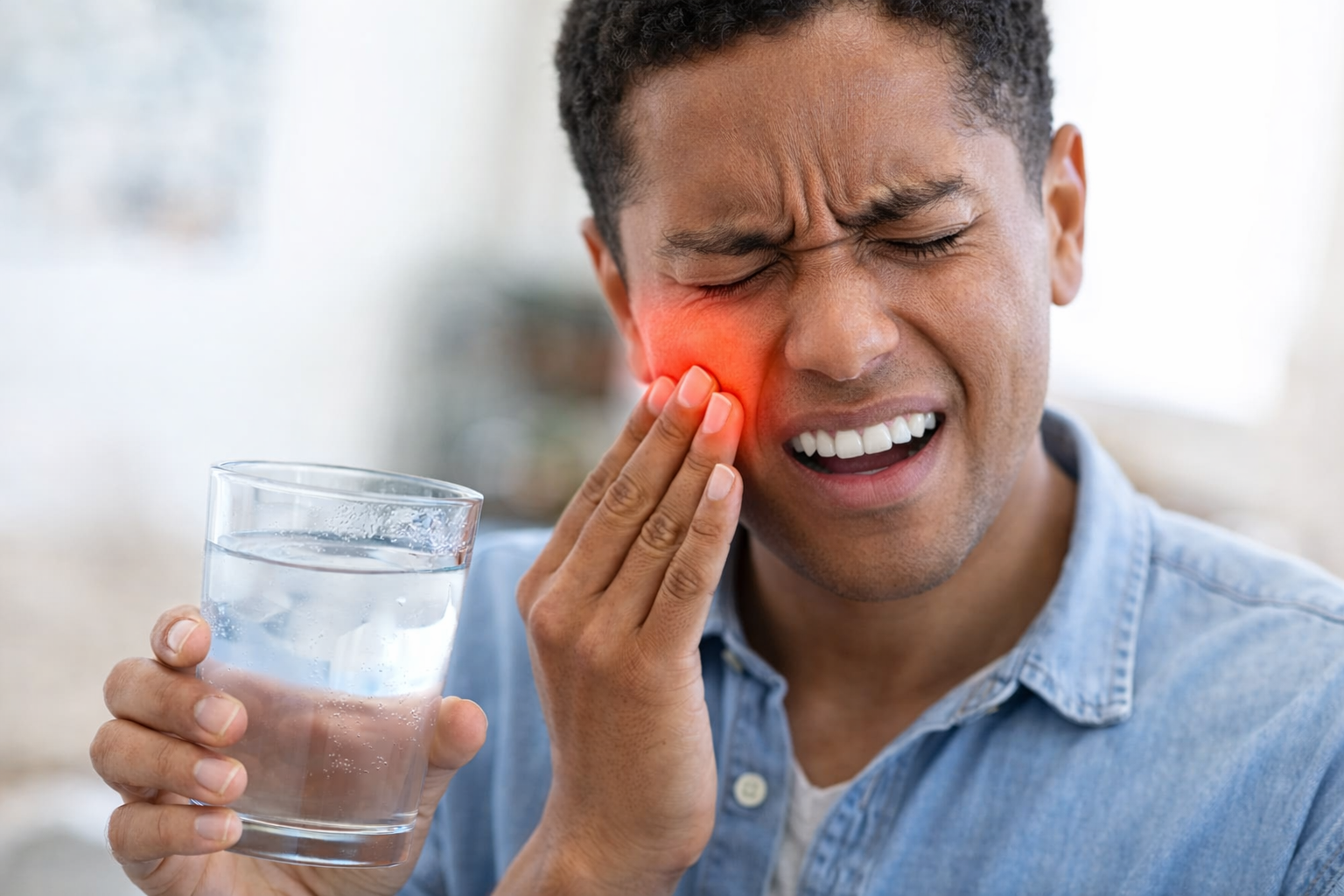
Why Your Tooth Is Sensitive AFTER Dental Work (Not To Be Confused With When Teeth Hurt BEFORE Dental Work)
(Fillings, crowns, onlays — all of it.)
This is an incredibly common question, so it deserves an easy to access response. If you recently had dental work and now your tooth feels sensitive, zingy, or just “not right,” here are the real reasons why — based on what we see every single day in a biological, airway-centered practice.
1. Your bite is slightly off (even by a hair)
This is BY FAR the most common cause. Your bite can be off by the thickness of a hair and your tooth will absolutely let you know. Have you ever had a hair stuck in your mouth? Do you remember how insanely irritating it was for the 30 seconds it took to track it down? Now imagine that level of irritation… but happening every time you chew… for days or weeks. No wonder your tooth would protest!
What it feels like:
• Sharp “zing” when chewing
• Pain on release (major clue)
• A tooth that suddenly feels tall or “high”
• Sensitivity to temperature or pressure
Fix: A quick bite adjustment. It’s a simple 2-minute appointment that prevents weeks of unnecessary discomfort.
2. The nerve is just irritated
Even perfectly done dentistry can irritate the nerve temporarily. We’re working on a tiny, very sensitive living structure. Most nerves settle down quickly. Some nerves are a bit more… dramatic.
What you feel:
• Cold sensitivity
• Short, sharp zings
• Gradual improvement over 1–8 weeks
Fix:
• Time — slow, steady improvement is what we want
• Ozone therapy (calms the pulp)
• Laser photobiomodulation therapy (reduces inflammation, supports healing)
• Avoiding extreme temperatures until it settles
If the trend is improvement — even a little — that’s a great sign.
3. Micro-fractures or stress cracks
This one surprises people, but it’s the truth: About 50% of cracked teeth will die. And in the vast majority of cases, the crack was already there before the new filling or crown was ever done.
Cracks are incredibly common in:
• Clenchers and grinders (airway issues)
• People who have traumatic bite relationships
• Anyone who has (or had) amalgam fillings
Amalgam expands and contracts with temperature changes (hot coffee, cold ice cream) at a completely different rate than natural tooth structure, and over time it wedges teeth apart. That’s exactly why I never placed amalgam after dental school — because amalgams crack teeth. Period.
In fact, the majority of the crowns we do today as dentists are because the tooth was already cracked, not because the current dentist “did something wrong.” The new dental work simply changed the pressure dynamics enough to reveal the existing crack that was hiding underneath. The tooth, in those situations, is a ticking time bomb. It was going to happen anyway — which is why this risk is usually mentioned in the informed consent.
What it feels like:
• Sharp pain when biting
• Pain on release
• Occasional “electric jolt”
• Sensitivity that’s inconsistent or position-dependent
Fix:
• Address grinding/bruxism (nightguard or airway evaluation)
• Reduce pressure on that tooth
• Crown/onlay for structural support in many cases
• Some cracks may go all the way to the nerve, requiring root canal or extraction and replacement
This is a biological dentistry platform, and we've written extensively about why we do not like root canals in biological dentistry. However, we are even bigger fans of informed consent — and to do true informed consent, we must mention root canals as an option.
All of the options are discussed in detail in the links below, so I won’t go into them here. If you need that information, here are the resources:
-
Alternatives to Root Canals in Biological Dentistry Part 1: https://www.orabiologics.com/resource-library/alternatives-to-root-canals-in-biological-dentistry%3A--part-one
-
Alternatives to Root Canals in Biological Dentistry Part 2: https://www.orabiologics.com/resource-library/alternatives-to-root-canals%2C-part-2
-
Oral Pathogens That Can Damage Your Whole Body: https://www.orabiologics.com/resource-library/oral-pathogens-%26-systemic-disease%3A-a-scientific-overview
-
MTA and Root Canals: https://www.orabiologics.com/resource-library/mta-and-root-canals
-
Root Canals in Permanent Front Teeth on Children: https://www.orabiologics.com/resource-library/root-canals-on-permanent-front-teeth-in-children
4. Materials sensitivity or incompatibility
This is where biological dentistry really matters. Some people truly are sensitive to certain dental materials, including:
• Composite resins
• Adhesives
• Metals
• Temporaries
• Bonding agents and primers
There are published studies showing immune and inflammatory responses to various resin monomers and metals (https://pubmed.ncbi.nlm.nih.gov/37161951/).
What it feels like:
• Throbbing that doesn’t improve
• A tooth that feels “inflamed”
• Burning or irritation near the gumline
• Sensitivity that feels wrong or atypical
Fix:
• Biocompatibility testing prior to dental work whenever possible
• Laser and ozone therapies to calm the tissue and reduce reaction
• NAET treatments to help modulate the body’s response to certain materials
• Or simply change materials to something more compatible
• Use pure ceramics or BPA-free composites when appropriate
5. Irreversible Pulpitis
ALL sensitivity is considered pulpitis (nerve inflammation). The key is determining whether the pulpitis is reversible or irreversible.
What reversible pulpitis feels like:
-
Sometimes the nerve reacts strongly to heat, drilling, or deep decay removal. If the sensitivity goes away as soon as the stimulus is removed — meaning the moment you stop eating or drinking something cold or hot, the pain stops — that is reversible pulpitis.
-
The nerve is irritated, but it still has the ability to heal.
Account required
Sign in to see more
Create an account or sign in to unlock the full list.