Resource Libraries
Why Do Teeth Shift After Braces? It Is a Force Problem
Why teeth move after braces, how airway resistance, tongue posture and muscle force drive orthodontic relapse, and why retainers are part of honest care.
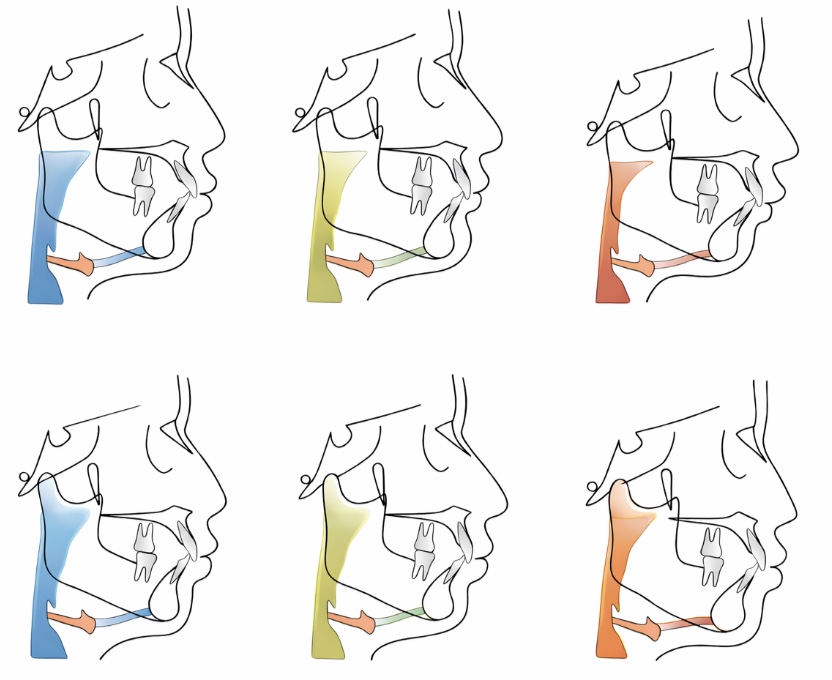
Why Orthodontic Relapse Is a Force Problem, Not a Compliance Problem
Orthodontic relapse is one of the most emotionally charged outcomes in dentistry. Patients feel discouraged. Clinicians feel frustrated. And too often, the explanation collapses into a single word: compliance. “You didn’t wear your retainer enough.” MAYBE that’s true. But quite often, it’s not the whole story. Because if it was, then every single person who ever didn't wear their retainer consistently would relapse. And that isn't happening either. I know people who were TERRIBLE at compliance. And they didn't relapse. Orthodontic relapse is rarely about effort alone. Much more often, it is the result of persistent force acting on a biologic system that has not fully adapted.
Teeth Do Not Exist in Isolation
Orthodontics moves teeth — but teeth do not exist in a vacuum. They are embedded in a system shaped by:
airway resistance
neuromuscular tone
tongue posture
jaw size and skeletal pattern
sleep physiology
clenching and bruxism
developmental and nutritional history
When orthodontic treatment changes tooth position without sufficiently changing the forces acting on those teeth, the body often attempts to return to its previous equilibrium. That is not defiance. It is physiology.
Relapse Is the System Reasserting Itself
Bone remodels in response to load. Muscles adapt to airway resistance. The nervous system seeks efficiency, not aesthetics. It's physics in a biological system. If force vectors remain unchanged, the system may respond by:
narrowing arches again
rotating teeth toward former positions
re-establishing compensatory contacts
increasing nighttime muscle activity
Retention can slow this process. It cannot always eliminate it.
“The Tongue Is the Best Retainer” — When the System Can Support It
The statement “the tongue is the best retainer” is biologically sound in an ideal system:
a patent nasal airway
balanced neuromuscular tone
adequate skeletal volume
stable sleep physiology
In those systems, tongue posture and myofunctional therapy can provide remarkable stability.
But many modern patients do not live in that system.
Why Myofunctional Therapy Is Necessary — and Sometimes Not Sufficient
Myofunctional therapy is powerful. I'm a HUGE fan. It improves tongue posture, muscle coordination, and awareness. In many patients, it meaningfully reduces relapse risk. But it does not always overcome:
persistent airway resistance during sleep
nocturnal clenching that returns under fatigue
skeletal constraints from early development
long-standing neuromuscular compensation
subconscious/unconscious neuromuscular function
The daytime tongue is not the nighttime tongue. It's relatively easy to train a tongue consciously. When a person knows how to do their exercises, when they know how to position their tongue and keep it in the optimal place consciously, that is GREAT. For daytime, conscious function. But sleep stability and function are a different thing entirely. And orthodontic stability is tested at night. When force reduction is incomplete, relapse can occur despite excellent therapy and genuine patient effort.
Generational Nutritional Injury Has a Long Memory
CENTURIES long. Modern craniofacial patterns did not arise overnight. They happened over MANY generations of cellular communication and memory. The cells remembered and passed on their memories to successive generations over hundreds of years. The theory is based on the generational nutritional injury studies that have been done, though none of them have gone past 3 generations. Modern scientific attention span isn't that long, though we do have a single 50 generation rat study to go by to make a decent theory, based on what has happened in our own society in terms of health outcomes over generations. The idea is that skeletal constraint, airway compromise, and neuromuscular compensation we now see reflect hundreds of years of cumulative nutritional and environmental change:
progressively softer, more processed diets
altered weaning and chewing demands
reduced mineral density
chronic inflammatory exposure
epigenetic signaling passed across generations
This is not damage that occurred in a single lifetime. And it is not damage that can always be undone in one. Even the most advanced interventions — including comprehensive orthodontics, airway expansion, myofunctional therapy, and double jaw surgery — work within the existing biologic envelope. They can improve capacity, reduce resistance, and enhance function, but they cannot fully erase the downstream effects of centuries of developmental constraint. Sometimes, even after “doing everything right,” the system never reaches a truly low-force baseline.
That is not failure. It is history expressing itself through biology.
Key Multi-Generational Studies
1. Hardikar et al. - 50 Generation Rat Study. PMID: 26166746
Researchers studied rats undernourished for 50 generations and found they developed obesity, diabetes, and insulin resistance that persisted even after two generations of normal feeding, suggesting epigenetic changes can last multiple generations.
https://pubmed.ncbi.nlm.nih.gov/26166746
2. Ramakrishnan - INCAP Longitudinal Study. PMID: 33172290
This Guatemalan study (1969-1977) gave pregnant women and young children nutritional supplements, then tracked their children and grandchildren for decades, showing that better maternal nutrition improved growth in the next generation, especially for boys.
https://pubmed.ncbi.nlm.nih.gov/33172290
3. Ramirez-Zea et al. - INCAP 40-Year Follow-up. PMID: 20032472
This describes 40 years of follow-up from the original Guatemala nutrition study (1969-2007), tracking participants from before birth through adulthood to understand how early nutrition affects lifelong health and development.
https://pubmed.ncbi.nlm.nih.gov/20032472
4. Victora et al. - Multi-Cohort Analysis. PMID: 18206223
This study combined data from five countries showing that grandmother's height affected grandchildren's birth weight, demonstrating nutritional effects can span three generations, though the effects were small.
https://pubmed.ncbi.nlm.nih.gov/18206223
The INCAP studies represent the longest-running human studies (40+ years), while the Hardikar rat model represents the most generations studied (50 generations over approximately 12 years).
Why Airway Improvement Is Essential — but Not Always Curative
Airway-centered care is critical. It is also not universally curative. Some patients continue to:
clench during sleep
generate high nocturnal forces
exhibit neuromuscular compensation
relapse orthodontically
even after significant airway improvement — including surgical intervention. This does not invalidate airway care. It clarifies its limits. Biology does not always reset to a pre-industrial baseline simply because one variable improves.
Epigenetics Changes the Playing Field
Epigenetic influences affect:
muscle tone
Account required
Sign in to see more
Create an account or sign in to unlock the full list.