Resource Libraries
Are Dental X-Rays Safe? Radiation Fear vs the Real Risk
Whether dental X-rays are safe, how today's digital radiation compares with a day of background exposure, and why avoiding them can do more harm than good.
Dental X-Rays, Radiation Fear, and Why Avoidance Can Do More Harm Than Good
As a stage IV cancer survivor who received a lifetime’s worth of radiation in just 13 treatment sessions in December 2015, I do not take radiation exposure lightly. I understand the fear around it on a cellular, personal level. That said, it’s important to separate avoidable radiation from necessary diagnostic radiation: because avoiding the latter can actually lead to far greater harm.
Why Dental X-Rays Are Not Optional
Dental X-rays are not a convenience. They are a diagnostic necessity. As dentists, we cannot properly diagnose or treat without them. Period. It is not only impractical, it is malpractice to perform dental treatment without appropriate diagnostic imaging. If you ever encounter a dentist who is willing to treat you without taking X-rays, that is a major red flag. No dentist who is practicing within the minimum standard of care will agree to work blind. And they shouldn’t.
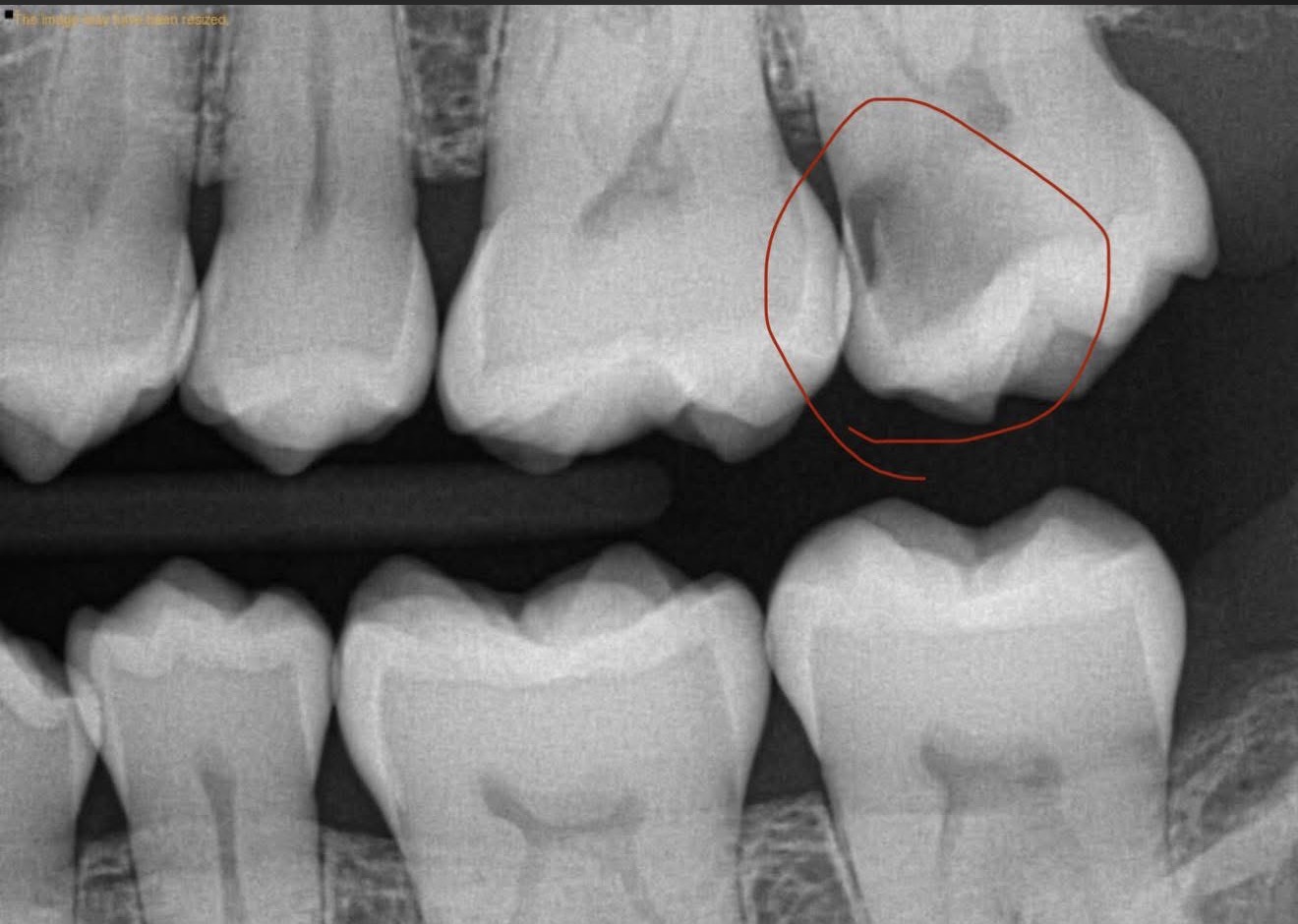
In the images I’ve shared here, you’ll see teeth and mouths that looked completely normal during a clinical exam, but the X-rays told a very different story. Infections, bone loss, fractures, and pathology often live below the surface, invisible to the naked eye.
Modern Dental X-Rays Are Not What They Used to Be
This is where context matters. Digital dental X-rays today emit approximately 50 to 80% less radiation than dental X-rays taken just 20 years ago. When I started in private practice in 1997, I was one of the first dentists to invest in digital X-ray technology for my practice. It was one of the best decisions I ever made. Today, the vast majority of dental offices use digital imaging, and if your dentist is still using old-fashioned film X-rays, it may be worth reconsidering where you receive care. Multiple studies have shown that the radiation dose from modern digital dental X-rays is comparable to everyday background radiation: the ambient radiation we are all exposed to simply by living on Earth.
A Personal Example: When X-Rays Prevent Harm
In December 2024, I broke my arm while on vacation. I required X-rays at the hospital and four additional imaging sessions during healing. Those X-rays revealed a non-displaced spiral fracture of my radius. Without imaging, I would have been placed in a simple wrist splint instead of the over-the-elbow immobilization I actually needed. Months later, when the pain persisted, I would have been told I was “being dramatic.” I wasn’t. The X-rays mattered. This is exactly why diagnostic imaging exists, to prevent missed diagnoses and long-term harm.
What About Lead Aprons and Thyroid Collars?
You may be surprised to learn that lead aprons and thyroid collars are no longer universally recommended for dental X-rays. The American Dental Association and other governing bodies have updated their guidance based on modern equipment and beam direction. You can read more about that here:
https://us.dental-tribune.com/news/ada-announces-major-changes-to-radiography-safety-protocols/?
That said, because standard dental X-rays are not directed toward the body areas typically covered by lead aprons, many of my patients still prefer to use them: and I have no problem with that. Patient comfort and trust matter.
Supporting the Body, Not Avoiding Care
In our office, we recognize that radiation anxiety is real. Rather than refusing necessary diagnostic imaging, we focus on supporting the body intelligently. We offer two supportive options:
1. X-Ray Homeopathic
This functions like other homeopathics, working on an energetic level.
This is the product we use:
https://castleremedies.com/products/x-ray
(Boiron previously made one, but it has since been discontinued.)
2. Delta Tocotrienol (a specific form of Vitamin E)
Delta tocotrienol has been extensively studied and shown to help mitigate and repair damage caused by ionizing radiation.
This is the product we use in our office:
https://allergyresearchgroup.com/.../delta-fraction...
And because SCIENCE is our driver always, Here are just a few PubMed-indexed studies supporting its role in radiation protection and recovery:
PMID: 38417343
Delta-tocotrienol (a vitamin E form) given after radiation improved blood cell recovery in mice and monkeys by stimulating G-CSF production. It worked as well as standard FDA-approved treatments but is stable at room temperature, making it practical for mass casualty situations. https://pubmed.ncbi.nlm.nih.gov/38417343/
PMID: 25815474
Delta-tocotrienol protected mice and human blood stem cells from radiation damage by blocking inflammatory signals (IL-1β and microRNA-30). It reduced cell death and improved survival when given before radiation exposure.
https://pubmed.ncbi.nlm.nih.gov/25815474/
PMID: 21434782
Delta-tocotrienol protected mice from lethal radiation when given before or after exposure. It prevented blood cell loss, reduced oxidative damage, and improved 30-day survival rates significantly.
https://pubmed.ncbi.nlm.nih.gov/21434782/
PMID: 24294967
Account required
Sign in to see more
Create an account or sign in to unlock the full list.