Resource Libraries
Is Dental Sedation Safe for Kids? What Parents Should Know
How dental sedation works for children, the safety record of nitrous oxide and IV sedation, how it prevents dental trauma, and what detoxing afterward means.
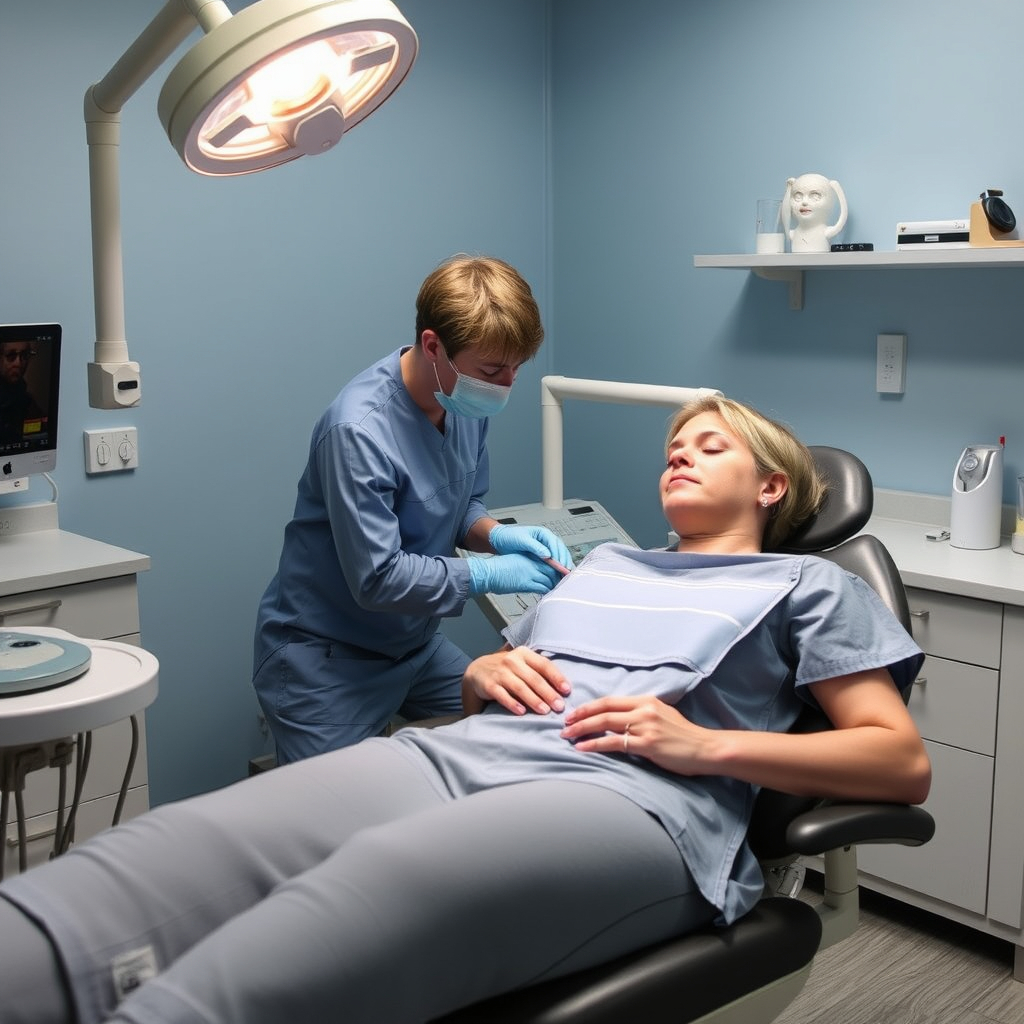
Sedation & Sleep Dentistry: Safety, Science & Trauma-Free Care
Let’s Talk SEDATION (a.k.a. “Sleep Dentistry”) — With Actual Science, Not Internet Horror Stories.
Trauma has been a BIG topic lately. Like… HUGE.
Whether you’re an adult who needs sedation or the parent of a child who needs sedation, it’s time we talk about this clearly, calmly, and with actual science behind us. In this group, the same questions pop up on repeat:
“Is it toxic?”
“Is my child actually safe?”
“What if something goes wrong?”
“How do we detox afterward?”
So here it is — the deep dive.
We are discussing sedation in this resource - fully backed by evidence that actually exists in the literature. With real PubMed links you can click.
FIRST: Sedation isn’t what’s dangerous.
Improperly supervised sedation is. The tragic, heartbreaking cases you see in the news have one or more of the following in common:
The dentist was trying to perform the dentistry AND manage the anesthesia.
An unqualified provider was watching the airway.
There was inadequate monitoring.
NOT because sedation itself is inherently unsafe. Any biological or conventional dentist who uses a board-certified anesthesiologist is using the same:
safety standards
monitoring systems
emergency equipment
medications
…that you’d see in a hospital outpatient suite. There is no such thing as “herbal sedation.” (Well, I'm sure there is with some plant medicines, but they are not well studied and I would not recommend giving them to a child).
WHAT MEDICATIONS ARE ACTUALLY USED?
Mobile dental anesthesia teams do NOT usually use the fluorinated gases (like sevoflurane) that get most of the online controversy. But please check with your dentist and their anesthesiologist because I have heard of ONE in my career who does. So it's smart to at least check.
They use:
Propofol
Ketamine
Dexmedetomidine
Midazolam (Versed)
Triazolam (Halcion)
These are:
short-acting
non-fluorinated
fast on, fast off
not stored in fat
cleared quickly
If only unresolved childhood trauma metabolized as fast as propofol, the world would be thriving.
THE NERVOUS SYSTEM MATTERS MORE THAN THE DRUGS
Little kids are not developmentally capable of getting hours of dentistry awake. Their nervous systems are simply not there yet. Maturity comes when it's good and ready and not a moment sooner. It cannot be bribed or punished into existence. And ANY adult who has been traumatized by dentistry? Their bodies enter fight-or-flight before they even sit down. They literally start finding reasons why they can't go to the dentist before they ever walk into the office. They avoid going until they are in agony, compounding their trauma again, because they are never in the dental office when they AREN'T in pain. Trauma raises cortisol, spikes adrenaline, destabilizes the airway, and gets stored in the nervous system. Sedation prevents that entire cascade.
When sedation is done correctly:
the child doesn’t encode the memory as danger
the adult doesn’t relive past trauma
the meridians aren’t cross-firing
the procedure becomes a non-event emotionally
This is why I love “one-and-done” sedation for big cases. You calm the system, take care of everything, and then life becomes boring little check-ups — not horror-movie dentistry.
NOW… LET’S DO THE PART EVERYONE IS WAITING FOR: THE ACTUAL SCIENCE (with real, working PubMed links)
Below is the real literature — tens of thousands of cases, from multiple countries, across multiple decades — showing that when sedation is done correctly, with proper monitoring and a dedicated anesthesia provider, the safety profile is extremely high.
I. OUTPATIENT DENTAL SEDATION — MASSIVE DATA SETS
1. Ontario Dental Anesthesia Outcomes (Millions of Cases)
Nkansah et al., 1997 — Mortality incidence in outpatient dental anesthesia
Mortality rate: 1.4 per 1,000,000.
https://pubmed.ncbi.nlm.nih.gov/9195616/
This remains one of the classic anchor papers showing that properly run dental anesthesia systems are as safe as other ambulatory anesthesia settings.
2. Massachusetts OMS Sedation Safety
D’Eramo et al., 2003
https://pubmed.ncbi.nlm.nih.gov/12856247/
Wardius et al., 2019
https://pubmed.ncbi.nlm.nih.gov/31545669/
Both studies (separated by 16 years) examined office-based anesthesia delivered by oral surgeons in Massachusetts. Both concluded:
adverse events were rare
systems with trained anesthesia providers produced excellent safety outcomes
3. 61,237 Office-Based Sedations (Large Private Practice Consortium)
Wiemer et al., 2024
https://pubmed.ncbi.nlm.nih.gov/38561207/
Findings:
Extremely low complication rates
No pattern suggesting office-based anesthesia is unsafe
Reinforces how crucial protocols + monitoring are
4. Mayo Clinic — 17,634 Sedations
Wiemer et al., 2021
https://pubmed.ncbi.nlm.nih.gov/33359152/
17,634 sedations, 15 years of data.
Conclusion:
Office-based sedation delivered by trained OMS teams is safe and effective, with serious events extremely rare.
5. Japan — National Dental Anesthesiology Data (5-Year Survey)
Sanuki et al., 2023
https://pubmed.ncbi.nlm.nih.gov/37213342/
This is one of the largest datasets on dental anesthesiologists specifically, showing:
Extremely low rate of serious complications
High safety profile when anesthesia is provided by specialists trained in airway management
6. Australia — Office-Based Anesthesia Clinical Audit
Silvers et al., 2018
https://pubmed.ncbi.nlm.nih.gov/30132304/
Audit of a structured office-based anesthesia service:
High safety
Low complication rates
Reinforces that infrastructure + protocols matter
7. UK — Deaths Associated With GA for Dentistry (1948–2016)
Roberts et al., 2020
https://pubmed.ncbi.nlm.nih.gov/31956372/
This paper shows the evolution from unsafe environments to modern, regulated systems — and the dramatic drop in mortality as anesthetic care improved and training increased.
II. PEDIATRIC DEEP SEDATION (SPONTANEOUS BREATHING WORK)
These are the studies parents care about most — because they involve children breathing on their own with full monitoring, just like in mobile dental anesthesia setups.
1. Razavi et al., 2022 – Deep Sedation in Pediatric Dental Patients
Account required
Sign in to see more
Create an account or sign in to unlock the full list.