Resource Libraries
Medications That Cause Dry Mouth and Cavities: Full List
Which medications cause dry mouth, cavities and erosion, from antidepressants and antihistamines to inhalers, and how to reduce harm without stopping them.
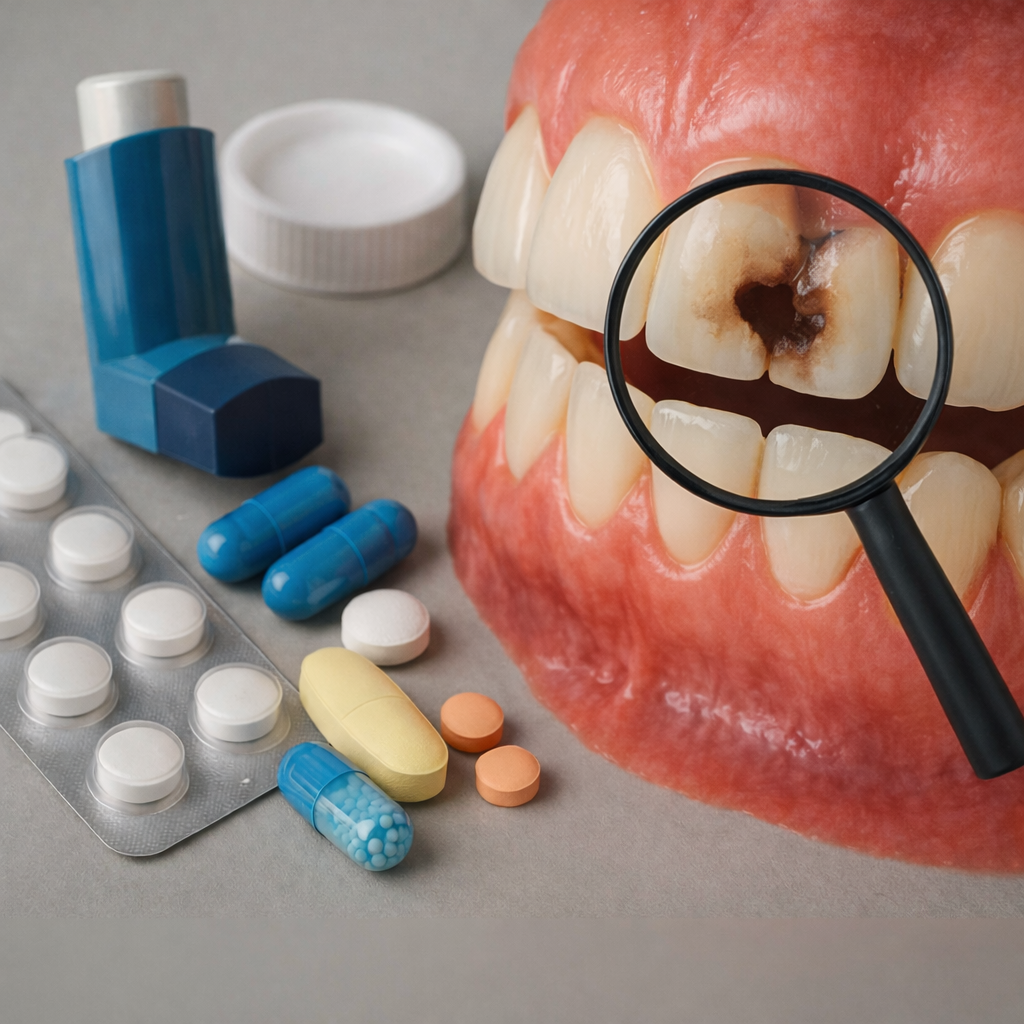
Medications & Your Mouth: Why “I’m doing everything right” can still end in decay, erosion, gum changes, or weird symptoms
One of the most misunderstood contributors to dental breakdown is medication—not because medications are inherently “bad,” but because many of them change the oral environment in ways patients are rarely warned about. And yes—our community leans holistic. But we also live in the real world, where patients (and our own families and staff), and even some of us (because I'm certainly not going to say we are perfectly healthy and on no medications) may be on prescriptions, inhalers, compounded meds, topicals, or “gentler”, "more natural" pharmaceuticals.
This article is not about telling anyone to stop their medication. It’s about understanding how certain medications—and how they’re delivered—affect oral biology, and how we can reduce harm without compromising overall health. If you’ve had rapid decay, erosion, gum inflammation, oral burning, taste changes, or repeated dental failure while “doing everything right,” medications may be part of the story.
The Big Idea
Your mouth is an ecosystem. It needs:
saliva (to buffer acids, deliver minerals, wash food away, control microbes)
healthy tissues (gums and oral lining)
balanced forces (clenching + airway issues can magnify problems)
stable bone biology (especially for surgery, implants, extractions)
Many medications change one or more of these. I'm not kidding when I say it's close to 90% of pharmaceuticals have some kind of oral side effect. When they do, the mouth becomes more vulnerable—even with great brushing.
The #1 oral side effect: Dry mouth (xerostomia)
Dry mouth is the most common medication-related oral problem, and it’s not “just annoying.” Saliva is your natural anti-cavity system. When saliva drops:
acids stay acidic longer
plaque becomes more aggressive
gums inflame more easily
decay can explode (especially at the gumline and between teeth)
yeast/candida risk rises
Tan et al., PMID: 29071719
https://pubmed.ncbi.nlm.nih.gov/29071719
This systematic review and meta-analysis of 52 studies in older adults (aged ≥60) found that many medication classes—including urological medications, antidepressants, and psycholeptics—significantly increase dry mouth risk. Polypharmacy was strongly associated with xerostomia and salivary gland hypofunction across multiple observational studies.
Common medication groups that cause dry mouth
Examples (not a complete list):
Anticholinergics (e.g., atropine; many bladder meds like oxybutynin)
Antidepressants (especially tricyclics like amitriptyline)
Antihistamines (many “allergy” meds—first gen worst)
Decongestants (pseudoephedrine/phenylephrine)
Blood pressure meds & diuretics (e.g., hydrochlorothiazide)
Anxiolytics (e.g., alprazolam)
Opioids
Bronchodilators (e.g., albuterol)
What these medication classes are used to treat
Anticholinergics
1. Examples: atropine, oxybutynin, tolterodine, benztropine
2. Used for:
Overactive bladder / urinary urgency & frequency
GI spasms (IBS-type cramping)
Parkinson’s disease (tremor control)
Motion sickness
Pre-anesthesia secretions
Bradycardia (atropine, emergency use)
3. Clinical reality check: They trade symptom control for systemic drying, cognitive effects, and autonomic imbalance — especially problematic long-term and in older adults.
Antidepressants
1. Examples:
SSRIs (Selective Serotonin Reuptake Inhibitors) fluoxetine, sertraline, escitalopram
SNRIs (Serotonin–Norepinephrine Reuptake Inhibitors). venlafaxine, duloxetine
Tricyclic antidepressants (TCAs): amitriptyline, nortriptyline
MAOIs (Monoamine Oxidase Inhibitors). phenelzine, tranylcypromine
Atypical antidepressants (mixed mechanisms). Bupropion, Mirtazapine, Trazodone
2. Used for:
Major depressive disorder
Anxiety disorders
Chronic neuropathic pain
Migraine prevention
Fibromyalgia
Insomnia (off-label, low dose)
3. Clinical reality check:
TCAs are often prescribed for pain or sleep, not depression — and they carry strong anticholinergic effects despite not being labeled that way.
Antihistamines
1. First-generation (worst offenders): diphenhydramine (Benadryl), chlorpheniramine
Second-generation: loratadine, cetirizine, fexofenadine
2. Used for:
Allergic rhinitis (hay fever)
Urticaria (hives)
Anaphylaxis (adjunct only — epinephrine is primary)
Motion sickness & nausea (first gen)
Sleep aid (first gen, off-label)
3. Clinical reality check:
First-generation antihistamines are also anticholinergics, which explains sedation, dry mouth, constipation, and cognitive fog.
Decongestants
1. Examples: pseudoephedrine, phenylephrine
2. Used for:
Nasal and sinus congestion
Eustachian tube dysfunction
Short-term cold or allergy relief
3. Clinical reality check:
They shrink inflamed nasal blood vessels. They do nothing for mucus quality or inflammation and can worsen blood pressure, anxiety, and sleep — phenylephrine in particular has poor evidence of effectiveness.
Blood Pressure Medications & Diuretics
1. Examples:
Diuretics: hydrochlorothiazide, furosemide
Others often lumped in: ACE inhibitors, beta blockers, calcium channel blockers
2. Used for:
Hypertension
Heart failure
Edema (fluid overload)
Kidney disease management
Stroke and heart attack prevention
3. Clinical reality check:
Diuretics don’t “fix” blood pressure — they manage volume and electrolytes, often at the expense of hydration and mineral balance.
Anxiolytics (Benzodiazepines)
1. Examples: alprazolam (Xanax), lorazepam (Ativan), clonazepam
2. Used for:
Acute anxiety and panic attacks
Status epilepticus / seizure control
Muscle spasms
Alcohol withdrawal
Short-term insomnia
3. Clinical reality check:
Effective short-term. High risk long-term. Tolerance, dependence, and nervous system dysregulation are common with chronic use.
Opioids
1. Examples: hydrocodone, oxycodone, morphine, fentanyl
2. Used for:
Acute severe pain
Cancer-related pain
Post-operative pain
Palliative and end-of-life care
3. Clinical reality check:
They treat pain perception, not tissue healing — and alter GI motility, immunity, hormone balance, and respiratory drive.
Bronchodilators
1. Examples: albuterol (short-acting), salmeterol (long-acting)
2. Used for:
Asthma
COPD
Exercise-induced bronchospasm
Acute bronchospasm emergencies
3. Clinical reality check:
They relax smooth muscle in the airways. They open airways but do not address why the airways are inflamed or hyperreactive — which is why over-reliance often signals upstream issues.
If you’re thinking: “That’s basically everyone’s med list.” …YES. That’s the point.
Delivery method matters (sometimes more than the drug)
Some meds aren’t just “dry mouth.” They’re also acid + sugar exposure.
High-risk delivery patterns
inhalers (especially with mouth dryness + mouth breathing; also increases oral yeast risk)
A review of asthma and oral health reports increased risk of caries, erosion, periodontal issues, and candidiasis in patients using asthma medications and calls for targeted prevention. PubMedsweetened/acidic syrups (kids’ meds are notorious—understandable for compliance, brutal for teeth)
dissolving tablets/lozenges held in the mouth
frequent dosing (even low sugar/low acid becomes high-risk if it touches teeth all day)
Account required
Sign in to see more
Create an account or sign in to unlock the full list.