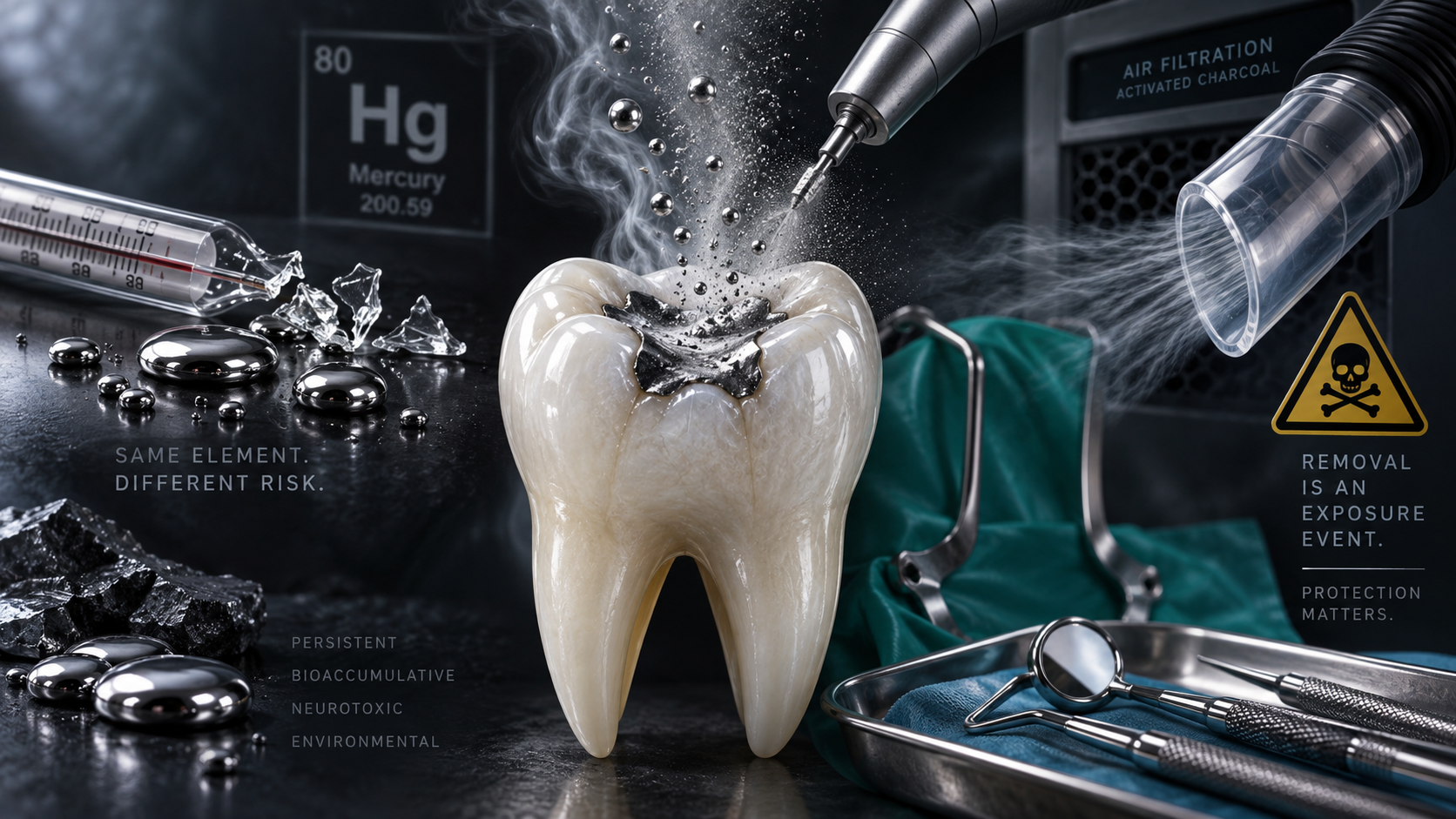
Dental amalgam is about 50 percent elemental mercury, yet patients are often told that once it hardens in a tooth, the mercury is essentially locked away. The science tells a much more complicated story. This article walks through what researchers have actually measured—from mercury vapor released during chewing, brushing, heat, polishing, placement, and removal to what happens after mercury enters the body. We’ll look at biomonitoring, individual susceptibility, kidney effects, pregnancy, placental transfer, breast milk, developmental neurotoxicity, and genetics. The goal isn’t to scare anyone or claim that every amalgam causes disease. It’s to explain the science clearly enough that patients can make informed decisions—and to show why I believe it’s time for dentistry to stop placing mercury amalgam altogether.
Dr. Teresa Scott
Read resource